


AI-Generated Content: 15 Powerful Benefits, Risks, and Trends for 2026
What if you could produce a full blog post, a product description, a social media caption, and an email newsletter all in under 10 minutes? That is exactly what AI-generated content is making possible right now, and the pace of change in 2026 is unlike anything we have seen before.
The problem is real: businesses and creators are drowning in content demands. Websites need fresh articles every week. Social media channels need daily posts. Email lists need regular newsletters. Marketing teams need ad copy, landing pages, and product descriptions all at once. Human writers alone simply cannot keep up with this volume without burning out or blowing budgets.
The solution is AI-generated content. Powered by large language models and advanced machine learning, AI content generation tools can now draft high-quality text, images, videos, and audio in seconds. Whether you are a solo blogger, a startup founder, or a Fortune 500 marketing director, ai generated content is changing the way the world communicates.
In this article, we will cover 15 powerful benefits, the real risks you need to know, the top trends shaping 2026, the best ai content generator tools available today, and exactly how to choose the right one for your needs.
What Is AI-Generated Content?
AI-generated content refers to any text, image, audio, or video that has been created in full or in part by an artificial intelligence system rather than a human. Modern ai content generation relies on large language models (LLMs) like GPT-4, Claude, and Gemini, which are trained on massive datasets to understand and produce human-like language.
An ai content generator takes a prompt or a set of instructions from a user and produces a complete piece of content in response. This could be a 2,000-word blog post, a 30-second video script, a product description, or even a complete website copy deck.
AI-generated content in 2026 is no longer a novelty — it is a standard part of digital marketing, e-commerce, education, journalism, and corporate communications worldwide.
15 Powerful Benefits of AI-Generated Content
1. Speed and Scalability
The most immediate benefit of AI-generated content is speed. An ai content generator can produce a full article in seconds. What takes a human writer three to four hours can be completed in under a minute. This allows businesses to scale their content output without scaling their team size.
2. Cost Efficiency
Hiring a team of professional writers is expensive. AI content generation dramatically reduces the per-word cost of producing content. For high-volume use cases — like e-commerce product descriptions or blog content at scale — this cost saving can be transformative.
3. Consistency in Brand Voice
When you train an ai content generator on your brand guidelines and previous content, it can produce AI-generated content that maintains a consistent tone, style, and voice across thousands of pieces. Human teams often struggle to maintain this level of uniformity.
4. SEO Optimization
Most leading ai content generator tools are built with SEO in mind. They can research keywords, structure content with proper heading hierarchies, optimize meta descriptions, and produce AI-generated content that search engines can easily index and rank.
5. Multilingual Content Creation
AI content generation can instantly translate or natively write content in dozens of languages. This makes international expansion far more accessible for small and mid-sized businesses that previously could not afford multilingual content teams.
6. 24/7 Availability
An ai content generator never sleeps, never calls in sick, and never takes a vacation. AI-generated content can be produced at any hour of the day or night, which is especially valuable for global teams working across time zones.
7. Rapid Ideation and Brainstorming
Beyond producing finished content, ai content generation tools are powerful brainstorming partners. They can generate dozens of headline options, content angle ideas, or campaign concepts in seconds, helping human creatives break through blocks and move faster.
8. Personalization at Scale
AI-generated content can be dynamically personalized based on user data. E-commerce sites, email marketing platforms, and news aggregators are using ai content generation to serve each user slightly different versions of content tailored to their preferences and behavior.
9. Repurposing Existing Content
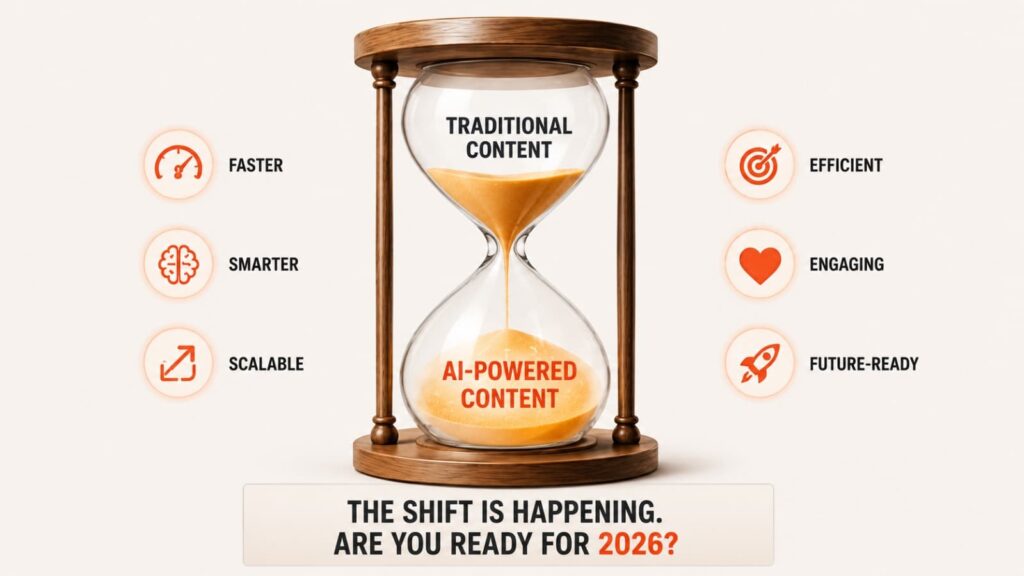
An ai content generator can take a long-form blog post and instantly produce a Twitter thread, a LinkedIn article, a podcast script, and a YouTube description from the same source material. This kind of content repurposing multiplies the value of every piece of original content you create.
10. Reduced Writer Burnout
Content teams that use AI-generated content for first drafts, outlines, and research summaries report significantly lower burnout rates. Writers can focus on strategy, editing, and creative thinking instead of repetitive production tasks.
11. Data-Driven Content
Advanced ai content generation platforms can pull in real-time data — market trends, competitor analysis, search volume data — and incorporate it directly into AI-generated content. This means your articles can be grounded in current facts and figures automatically.
12. Accessibility for Non-Writers
Not every business owner or entrepreneur is a skilled writer. AI-generated content levels the playing field by allowing anyone with an idea to produce professional-quality written content without formal writing training.
13. Faster A/B Testing
Marketing teams can use an ai content generator to produce dozens of variations of ad copy, email subject lines, or landing page headlines and test them simultaneously. This accelerates the optimization process and produces better results faster.
14. Improved Content Research
Many ai content generation tools now include built-in research capabilities, pulling from verified sources to help writers produce factually grounded AI-generated content. This reduces the time spent on manual research significantly.
15. Future-Proof Content Operations
As search engines, social platforms, and digital media continue to evolve, businesses with strong ai content generation workflows are better positioned to adapt quickly. AI-generated content infrastructure is becoming a core competitive advantage in 2026.
Limitations and Risks of AI-Generated Content
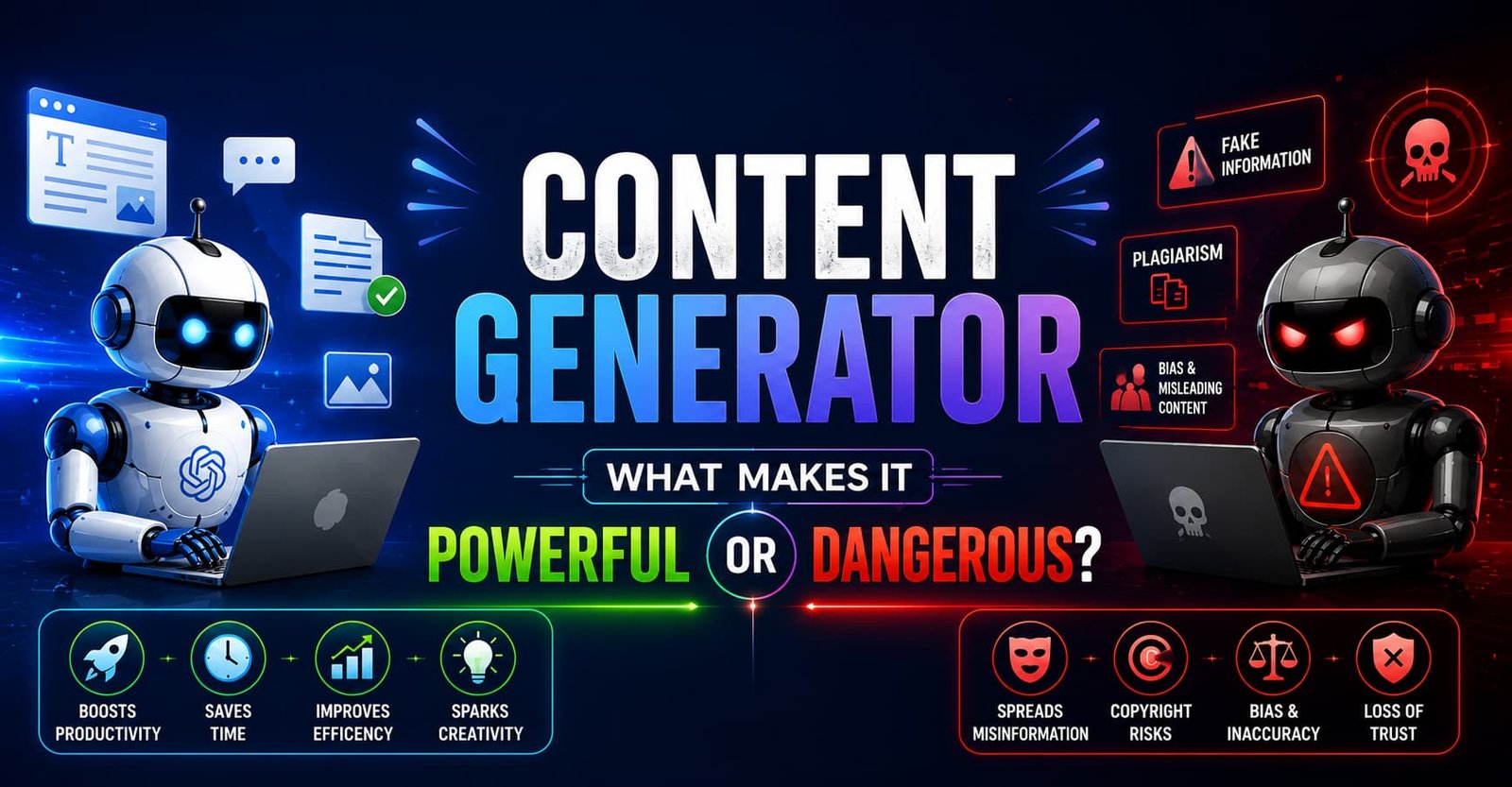
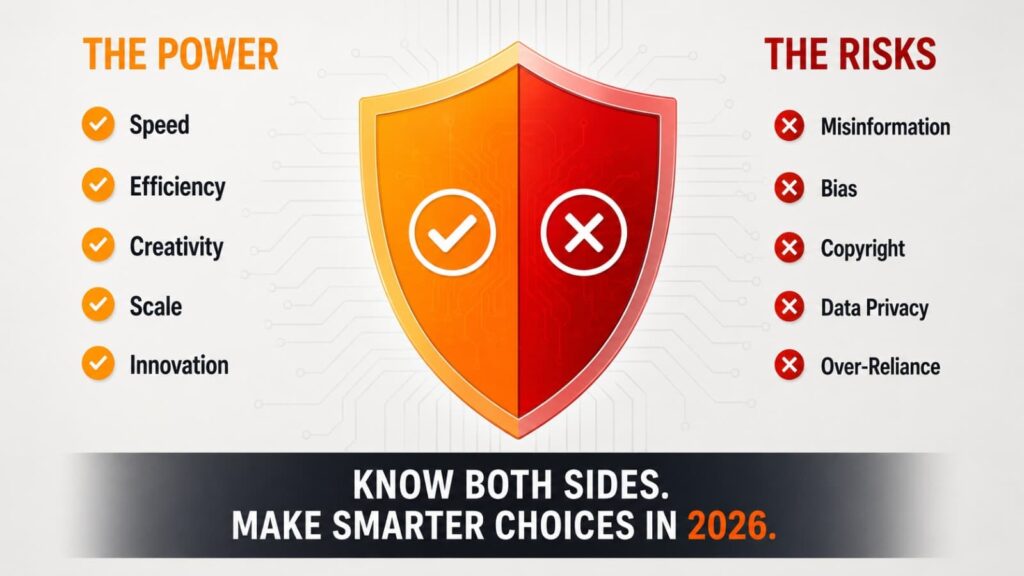
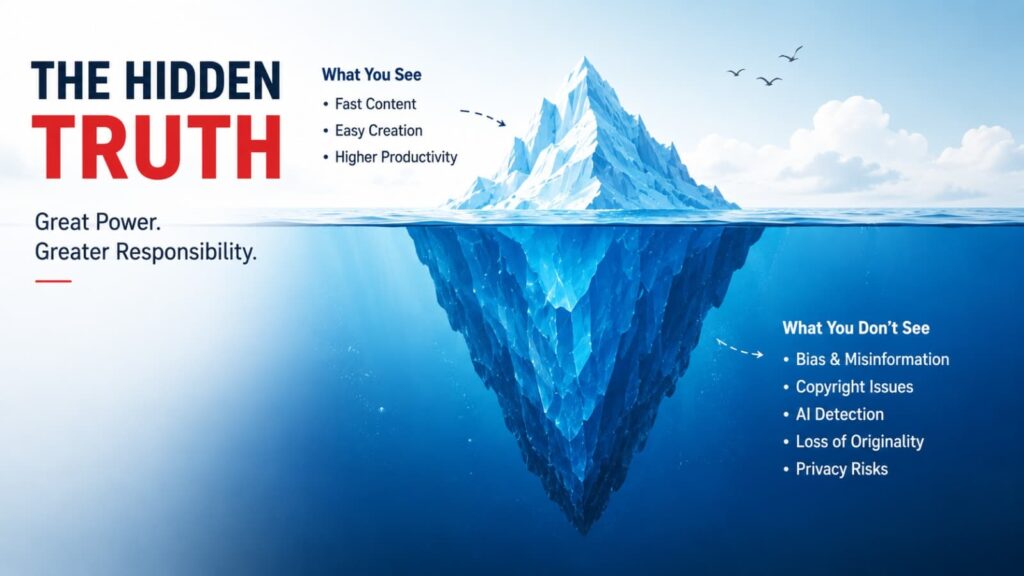
Despite its many advantages, AI-generated content comes with real risks that every user should understand before deploying it at scale.
Accuracy and Hallucination AI content generation models can confidently produce incorrect information. This is known as “hallucination.” Any AI-generated content that involves facts, statistics, medical advice, legal guidance, or financial information must be carefully fact-checked by a human expert before publication.
Lack of Original Thought An ai content generator produces content by predicting patterns based on existing training data. It does not have lived experiences, opinions, or genuine creativity. AI-generated content can lack the unique perspective and original insight that makes truly great writing memorable.
Plagiarism and Duplication Risks Because ai content generation draws from existing data, there is a risk of producing content that closely resembles already-published material. Always run AI-generated content through plagiarism detection tools before publishing.
SEO Penalties Search engines like Google have become increasingly sophisticated at detecting low-quality AI-generated content published purely for traffic manipulation. Publishing thin, repetitive, or unhelpful AI-generated content at scale can result in ranking penalties.
Ethical Concerns The rise of ai content generation has sparked legitimate ethical debates around authenticity, disclosure, the impact on professional writers, and the potential for misinformation. Responsible use of AI-generated content means being transparent with your audience when content is AI-assisted.
Over-Reliance Teams that become overly dependent on an ai content generator may gradually lose their own writing skills and strategic content thinking. AI-generated content should be treated as a tool that supports human creativity, not replaces it.
Top AI Content Generator Tools in 2026
The market for ai content generation tools has exploded. Here are the most widely used and highly rated platforms shaping AI-generated content production in 2026.
1. ChatGPT (OpenAI) Still the most recognized name in ai content generation, ChatGPT produces AI-generated content for virtually any use case — articles, emails, scripts, code, and more. Its GPT-4o model is particularly strong for long-form ai generated content.
2. Claude (Anthropic) Claude is widely praised for producing AI-generated content that reads naturally and follows nuanced instructions. It excels at long documents, brand voice matching, and producing ai generated content with strong reasoning depth.
3. Gemini (Google DeepMind) Google’s Gemini integrates directly with Search and Google Workspace, making it a powerful tool for SEO-focused AI-generated content and productivity workflows.
4. Jasper AI Jasper is purpose-built for marketing teams and remains one of the top dedicated ai content generator platforms. It offers brand voice training, team collaboration features, and templates for every major content format.
5. Copy.ai Copy.ai has evolved into a full go-to-market ai content generation platform, helping sales and marketing teams produce AI-generated content across the entire customer journey.
6. Writesonic Writesonic is a strong choice for SEO-focused AI-generated content, with built-in keyword optimization, competitor analysis, and a dedicated ai content generator for blog posts, ads, and product pages.
7. Surfer SEO + AI Surfer combines AI content generation with deep SEO analysis, producing AI-generated content that is specifically optimized to rank for target keywords based on real-time SERP data.
8. Notion AI For teams already using Notion as their knowledge base, Notion AI offers seamless ai content generation within their existing workflows — ideal for internal documentation, meeting summaries, and project briefs.
Comparing AI Content Generator Tools
When comparing ai content generator platforms, the most important factors are output quality, SEO capability, ease of use, and pricing.
ChatGPT and Claude lead in raw output quality and versatility. Both produce AI-generated content that reads naturally and handles complex instructions well. Claude tends to perform better on longer documents and nuanced brand voice matching, while ChatGPT’s ecosystem of plugins and integrations makes it more flexible for technical users.
Jasper and Writesonic are the strongest choices for marketing-focused teams that need AI-generated content at volume, with built-in templates and brand controls. Surfer SEO is the go-to for teams where search rankings are the primary goal.
For solopreneurs and small businesses, Copy.ai and Writesonic offer the best balance of capability and affordability in the ai content generation space.
Key Benefits of AI-Generated Content
- Faster Content Creation: Generate articles, emails, and social media posts in minutes.
- Increased Productivity: Automate repetitive writing tasks and focus on strategy.
- Cost Savings: Reduce content production costs for businesses of all sizes.
- Scalability: Create large volumes of content across multiple channels.
- Improved Personalization: Deliver customized content for different audiences.
- Better Content Ideas: Generate topic suggestions and content outlines quickly.
- Multilingual Support: Create content in multiple languages for global audiences.
- Enhanced SEO Optimization: Produce keyword-rich content that improves search engine visibility.
How to Choose the Right AI Content Generator
Choosing the right ai content generator depends on your specific needs. Here is a simple framework to guide your decision.
Define Your Primary Use Case Are you producing SEO blog content, social media posts, email marketing copy, or product descriptions? Different ai content generation tools excel in different areas. Match the tool to your dominant use case.
Assess Your Volume Needs If you need to produce hundreds of pieces of AI-generated content per month, prioritize tools with robust API access, bulk generation features, and scalable pricing.
Evaluate Output Quality Always test an ai content generator with your actual use cases before committing. Generate a sample piece of AI-generated content on a real topic you cover and evaluate it honestly for accuracy, tone, and usefulness.
Consider Team Size and Collaboration For larger teams, choose an ai content generation platform with role management, shared workspaces, and brand voice controls. Jasper and Copy.ai are strong here.
Check SEO Features If organic search traffic is important to you, choose an ai content generator that includes keyword optimization, readability scoring, and integration with tools like Google Search Console or Surfer SEO.
Budget Realistically AI-generated content tools range from free tiers to enterprise contracts costing thousands per month. Start with a trial, measure the ROI of your ai content generation investment, and scale from there.
Final Verdict
AI-generated content is not the future it is the present. In 2026, businesses and creators that are not using ai content generation tools are already falling behind on speed, cost efficiency, and content output volume.
The 15 benefits we covered from speed and scalability to personalization and reduced burnout — are real and measurable. But so are the risks. Low-quality AI-generated content, unchecked for accuracy and published at scale, can damage your SEO rankings, your credibility, and your audience’s trust.
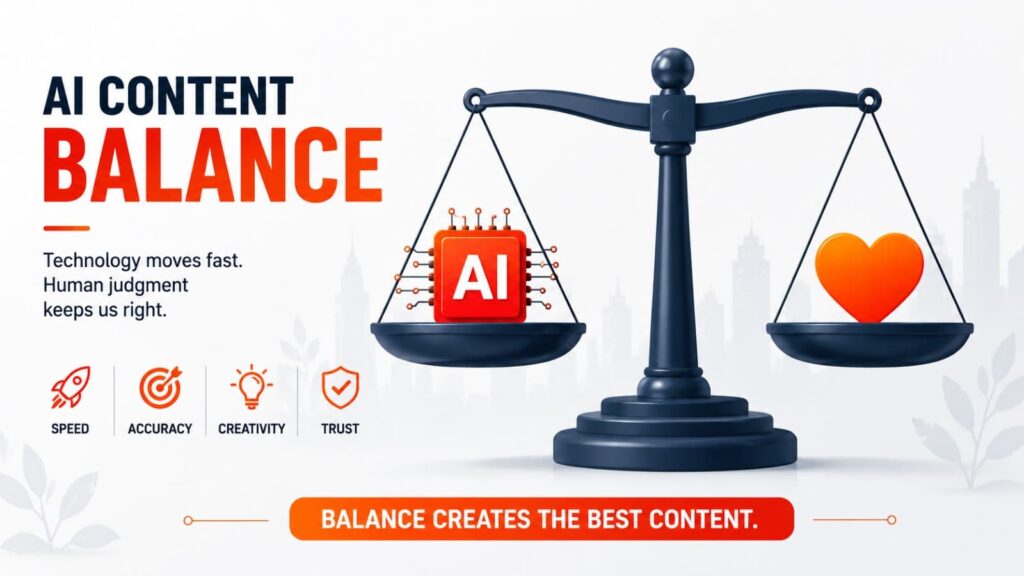
The winning approach is human-AI collaboration. Use an ai content generator to handle the heavy lifting — research, first drafts, ideation, repurposing — and let your human team focus on strategy, fact-checking, and the creative refinements that make AI-generated content truly excellent.
Whether you choose ChatGPT, Claude, Jasper, or Writesonic, the key is to build a sustainable ai content generation workflow that produces AI-generated content your audience actually values. That combination of intelligent ai content generation and genuine human editorial judgment is what will define the best content operations of 2026 and beyond.
Frequently Asked Questions
What is AI-generated content? AI-generated content is any text, image, video, or audio created by an artificial intelligence system based on user prompts or automated inputs. It uses machine learning models to produce human-like content at high speed and scale.
Is AI-generated content good for SEO? Yes, when done correctly. High-quality AI-generated content that is accurate, helpful, and well-structured can rank well on search engines. However, thin or repetitive ai generated content published purely for traffic can be penalized by Google.
What is the best ai content generator in 2026? The best ai content generator depends on your use case. ChatGPT and Claude lead in overall quality. Jasper and Writesonic are top choices for marketing teams. Surfer SEO is ideal for search-optimized AI-generated content.
Can AI content generation replace human writers? Not entirely. AI content generation tools are powerful assistants, but they lack genuine creativity, original perspective, and the ability to verify facts. The best results come from combining ai generated content production with strong human editorial oversight.
How do I avoid plagiarism with AI-generated content? Always run AI-generated content through a plagiarism detection tool like Copyscape or Grammarly’s plagiarism checker before publishing. Also review for accuracy and add original insights to differentiate your ai content generation output.
Is AI-generated content ethical to use? Yes, when used responsibly. Be transparent with your audience where appropriate, always fact-check AI-generated content, and ensure it provides genuine value rather than just gaming search algorithms.
How much does an ai content generator cost? Prices vary widely. Many ai content generation tools offer free tiers for limited use. Paid plans typically range from $20 to $100 per month for individuals, with enterprise ai content generation plans reaching several hundred to several thousand dollars per month.
What are the benefits of AI-generated content?AI-generated content helps businesses save time, reduce content creation costs, improve productivity, scale content marketing efforts, and generate ideas quickly.
Why AI-Generated Content Matters in 2026 ?As competition for online visibility increases, businesses need faster and smarter ways to create engaging content. AI-generated content helps marketers streamline workflows, improve efficiency, and reach audiences more effectively. However, combining AI capabilities with human expertise remains the best approach to ensure accuracy, creativity, and authenticity
How can you identify AI-generated content? Some clues include unusual phrasing, lack of personal experience, factual errors, repeated patterns, or detection tools, though no method is perfectly reliable.
Follows Us on social media

Mohammed Viqar Ali is a Digital Marketer, UI/UX Designer, and content creator passionate about AI, technology, SEO, and digital growth. As the UI/UX Designer of aiblogmind, he focuses on creating user-friendly digital experiences while sharing practical insights on artificial intelligence, marketing trends, productivity tools, and online business growth. Through his content, he helps readers discover innovative solutions, stay updated with emerging technologies, and make informed decisions in the digital world.