


ChatGPT vs Gemini: 11 Major Differences in 2026
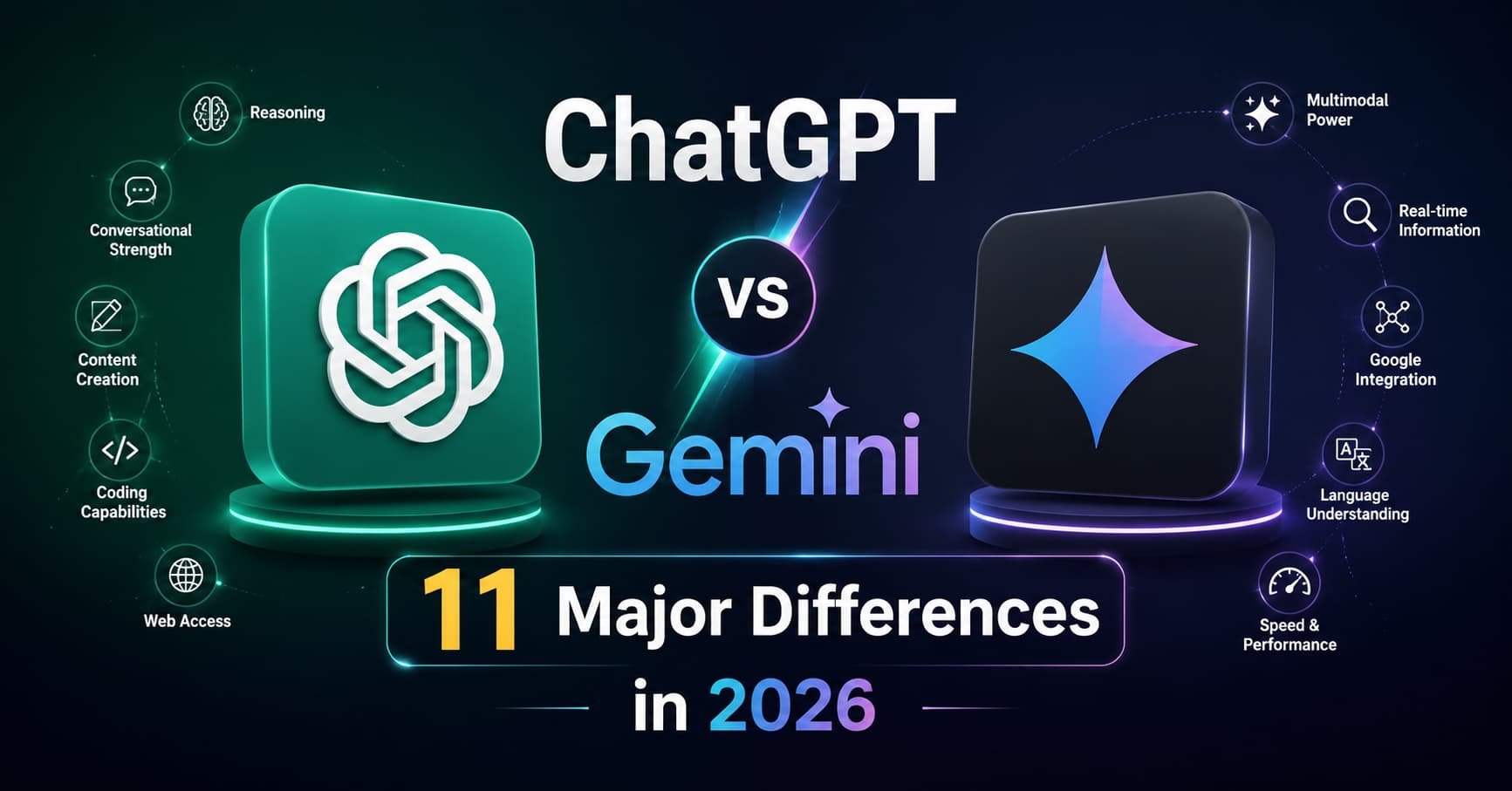
Every week, someone asks me the same question: “Should I use ChatGPT or Gemini?” And honestly, it’s a fair question because both tools have gotten really good, and the wrong choice can cost you time and money.Here’s the problem. Most comparison articles were written in 2023 or early 2024. A lot has changed. ChatGPT vs Gemini in 2026 is a completely different conversation than it was two years ago.
Both tools have been updated, repriced, and repositioned. Picking the right one now depends on how you actually work not on outdated benchmarks.This guide breaks down the 11 biggest differences between ChatGPT vs Gemini so you can stop guessing and start using the right tool for your needs. Whether you’re a marketer, a student, a developer, or just someone who wants to get more done, this ChatGPT vs Gemini comparison will help you decide.
Benefits of AI Tools in 2026
Before we get into the ChatGPT vs Gemini breakdown, it’s worth pausing on why AI tools matter at all.
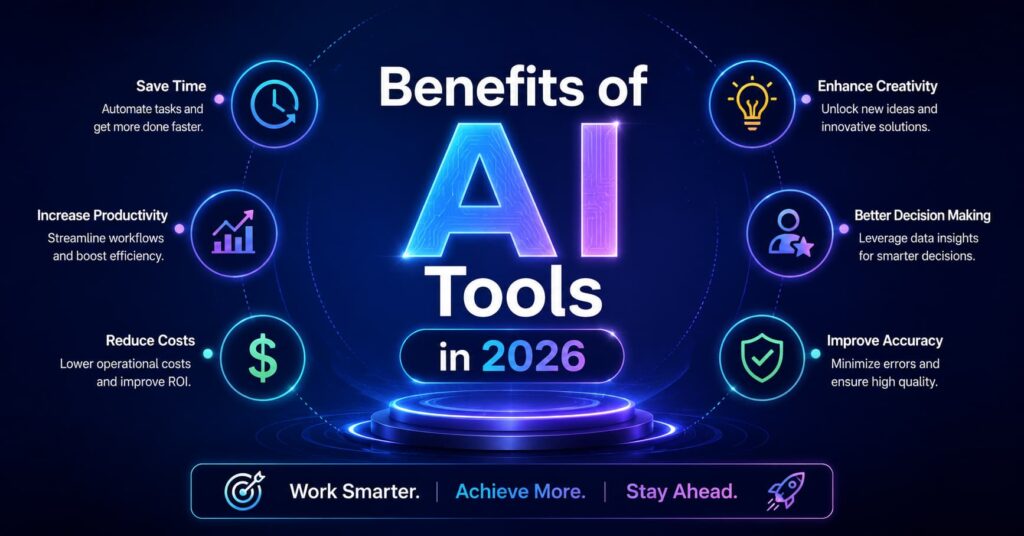
AI assistants like ChatGPT and Gemini can write content, summarize documents, generate code, answer research questions, and help with creative projects, often in seconds. For people building a business or managing a workload, that kind of speed adds up fast. ChatGPT alternatives have multiplied over the past few years, but ChatGPT and Gemini remain the two most widely used consumer AI tools. Between them, they cover most use cases that regular users and professionals run into every day.
The Google Gemini comparison to ChatGPT is particularly useful because both tools are general-purpose assistants, not niche tools, so the differences between them are practical and direct.What makes this comparison worth your time is that the choice isn’t just about which tool is “smarter” it’s about fit. ChatGPT and Gemini are built on different strengths, different ecosystems, and different assumptions about how you work.
Someone who lives inside Google Docs and Gmail all day will experience Gemini very differently than someone who’s used to plugging into third-party apps and workflows built around ChatGPT. Knowing where each tool actually excels, rather than just going by general reputation, helps you avoid picking the wrong assistant for your specific needs.
Limitations of AI Tools in 2026
Stay connected with us on social media for real-time updates.
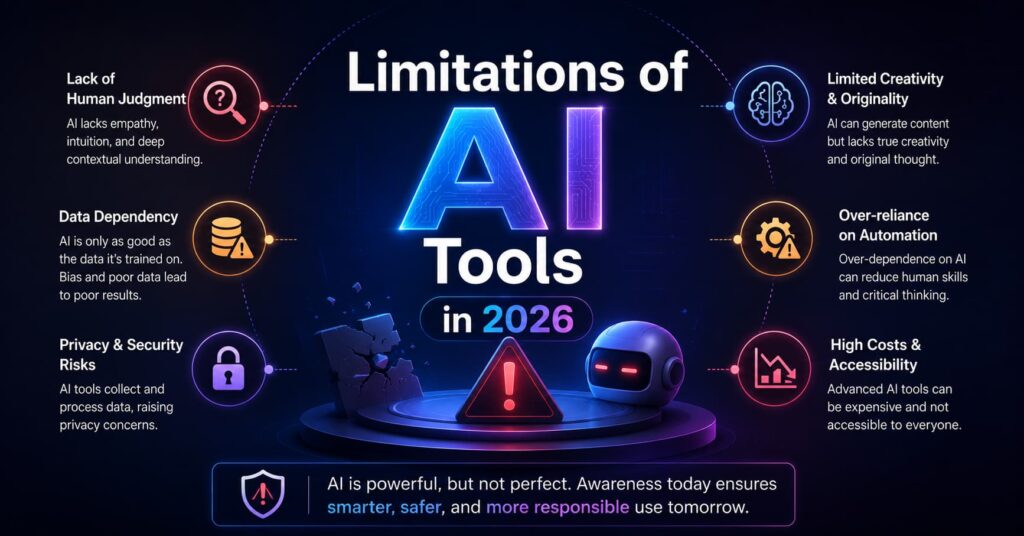
That said, no AI tool is perfect. Both ChatGPT and Gemini still make mistakes. They can hallucinate facts, misunderstand context, and give confident-sounding answers that are just wrong.Neither the ChatGPT vs Gemini debate nor any Google Gemini comparison will tell you that one tool is flawless.
What they can tell you is which tool is better for specific tasks, and that’s where real value comes from.Knowing the limits helps you use them smarter. Don’t hand either tool your final draft without checking it. Don’t trust either one with legal or medical decisions without verification. Use them as a starting point, not a final answer.
These limitations aren’t a reason to avoid AI tools altogether they’re a reason to build a habit of verification around them. The most effective users treat ChatGPT and Gemini the way a good editor treats a first draft from a junior writer: useful, often surprisingly good, but never assumed to be final.
A quick fact-check on names, dates, or statistics, a second look at any code before it ships, and a healthy skepticism toward anything that sounds a little too confident will save you far more trouble than switching tools ever will. In practice, the gap between “AI tool that helps you” and “AI tool that gets you in trouble” usually comes down to how carefully the human on the other end reviews the output.
ChatGPT vs Gemini: 11 Major Differences in 2026
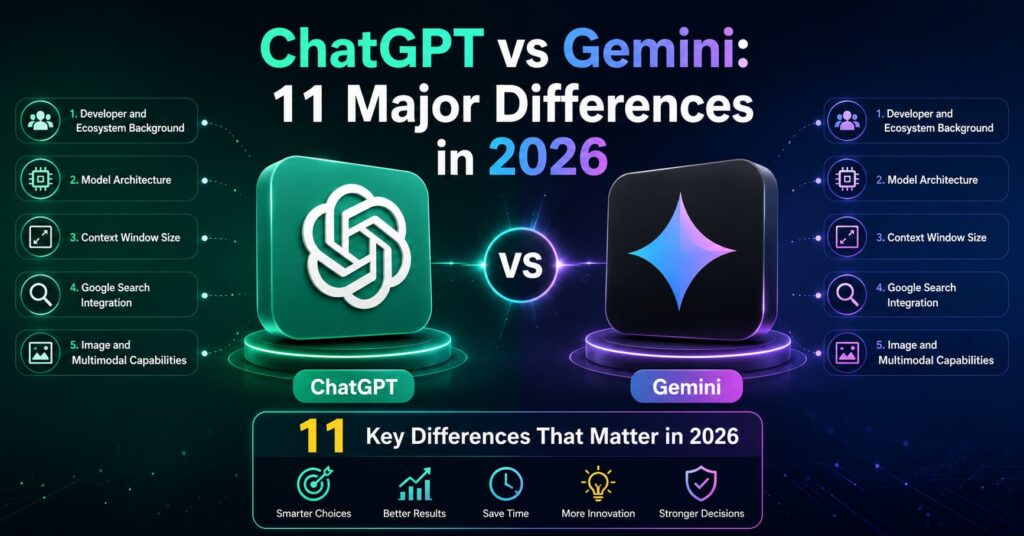
1. Developer and Ecosystem Background
ChatGPT is built by OpenAI, an independent AI company. Gemini is built by Google DeepMind. This matters more than most people think.Google built Gemini with deep integration into its own products, Search, Docs, Gmail, YouTube, and more. OpenAI built ChatGPT as a standalone product with integrations added over time. If you live in the Google ecosystem, Gemini AI vs ChatGPT tilts toward Gemini. If you use tools like Notion, Zapier, or Slack, ChatGPT integrations tend to be more mature.
2. Model Architecture
In 2026, ChatGPT runs primarily on GPT-4o and newer variants. Gemini runs on Google’s Gemini 1.5 and 2.0 series. Both are multimodal, meaning they handle text, images, audio, and video.The difference in ChatGPT vs Gemini here is less about which is “smarter” and more about what each model is optimized for. Gemini 1.5 Pro has a massive context window (up to 1 million tokens), which is useful for processing large documents. GPT-4o is generally faster for everyday tasks and chat-based workflows.
3. Context Window Size
This is a concrete difference in the ChatGPT vs Gemini comparison. Gemini 1.5 Pro handles up to 1 million tokens in a single conversation. ChatGPT’s context window, even on GPT-4o, maxes out at 128,000 tokens for most users. What does that mean practically? If you’re uploading an entire book, a long legal contract, or a full codebase, Gemini wins in this ChatGPT vs Gemini round. For most everyday tasks, emails, articles, customer service drafts 128K is more than enough.
4. Google Search Integration
Gemini has real-time Google Search built in. It can pull fresh information directly from the web when you ask a question. ChatGPT vs Gemini has web browsing too, but it uses Bing rather than Google, and its search behavior is less tightly integrated. In a Gemini AI vs ChatGPT comparison for research tasks, this is a real advantage for Gemini. Current events, recent product launches, live data, Gemini tends to handle these with more accuracy because it has direct access to Google’s index.
5. Image and Multimodal Capabilities
Both tools handle images, but they behave differently. ChatGPT has DALL-E 3 built in for image generation, which is a feature Gemini doesn’t match natively (though Gemini can use Imagen). For analyzing uploaded images, both are capable, but ChatGPT vs Gemini testing in 2025 showed ChatGPT performing better on detailed visual analysis, while Gemini was stronger on OCR-type tasks.
6. Coding Assistance
ChatGPT has been the go-to coding assistant for most developers since 2023. It works well with long code blocks, explains errors clearly, and handles debugging conversations naturally. Google Gemini, with its larger context window, is better suited for reviewing full codebases at once. For everyday coding help, this ChatGPT vs Gemini difference is minor. Both are solid. If you’re working on a complex project where you need to feed in thousands of lines of code, Gemini’s context advantage matters.
7. Pricing and Free Tier
ChatGPT offers a free tier using GPT-3.5, with GPT-4o available on the Plus plan at around $20/month. Gemini’s free tier uses Gemini 1.0 Pro, and the Advanced plan (Gemini 1.5 Pro) is included with Google One at $19.99/month.In the ChatGPT vs Gemini pricing comparison, the cost is roughly equal at the premium tier. The difference is in what you get. Google’s plan bundles Gemini with Google One storage benefits. OpenAI’s plan is more focused on AI features. Neither is a bad deal it depends what you value.
8. Mobile App Experience
Both tools have mobile apps. Gemini is more tightly woven into Android devices, sometimes appearing as a built-in assistant. ChatGPT’s iOS and Android apps are standalone but polished.
For Android users especially, this is where the Gemini AI vs ChatGPT gap shows up in daily use. Gemini can replace Google Assistant on Android, making it more useful in quick, voice-based interactions. ChatGPT’s mobile experience is better suited to focused, deliberate tasks writing, research, analysis.
9. Memory and Personalization
ChatGPT added persistent memory for paying users it can remember things about you across conversations, like your job, preferences, or recurring projects. Gemini has memory features too, but they’re newer and less configurable as of 2026.
In the ChatGPT vs Gemini comparison for personalization, ChatGPT is ahead. If you want an AI that gets better the more you use it and doesn’t ask you to re-explain your context every time, ChatGPT’s memory is a genuine advantage.
10. Business and Enterprise Features
Both tools offer enterprise plans. ChatGPT Enterprise gives companies custom data privacy, admin controls, and higher usage limits. Gemini for Workspace integrates directly into Google’s business suite, Docs, Sheets, Gmail, Meet, and that integration runs deep.
For businesses already on Google Workspace, the Google Gemini comparison to ChatGPT Enterprise often favors Gemini simply because of how tightly it plugs into existing tools. For businesses using Microsoft products or custom stacks, ChatGPT tends to be easier to implement.
11. Creative Writing and Tone
This one is subjective, but worth mentioning in any ChatGPT vs Gemini comparison. ChatGPT consistently gets higher marks from writers for creative tasks, blog posts, storytelling, marketing copy. It tends to produce more varied sentence structures and a more natural reading voice.
Gemini is improving here, but most users working on content marketing or creative writing still prefer ChatGPT for purely text-based creative work. For factual, research-heavy writing with up-to-date information, Gemini is a strong choice.
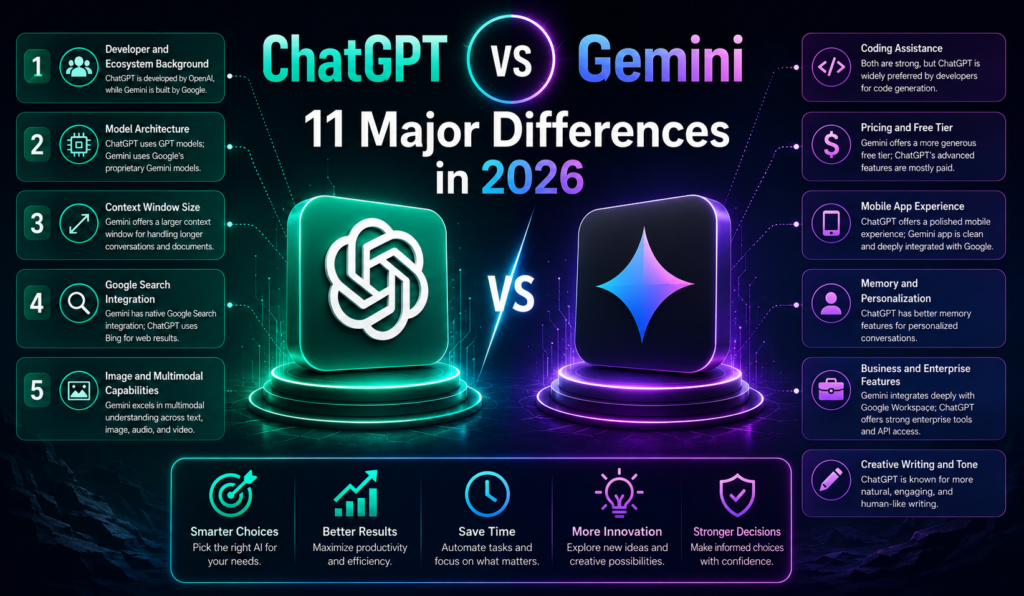
ChatGPT vs Gemini: Direct Comparison Summary
ChatGPT vs Gemini comes down to this:
ChatGPT is better for creative writing, persistent memory, image generation, and users who want a polished standalone AI experience with deep third-party integrations.Gemini is better for users in the Google ecosystem, research tasks requiring live web data, processing very large documents, and businesses on Google Workspace. Neither tool is universally better.
The right answer in any ChatGPT vs Gemini debate depends on where you work and what you’re trying to do.If you’re already deep in the Google ecosystem Gmail, Docs, Sheets, Drive Gemini’s tight integration means less friction and fewer copy-paste steps between your AI assistant and your actual work.
But if your workflow is built around a broader mix of tools, or you value a more consistent personality and memory across sessions, ChatGPT’s standalone approach and wider plugin ecosystem may serve you better. Some users even end up running both, using ChatGPT for drafting and brainstorming and Gemini for research or document-heavy tasks, treating them as complementary rather than competing tools. The smartest move isn’t picking a “winner” once and sticking with it forever it’s re-evaluating periodically as both tools evolve and as your own workflow changes.
Here’s a quick point-by-point breakdown to make the choice easier:
Learning curve and consistency:- ChatGPT’s interface and behavior tend to feel more consistent across use cases, which some users find easier to build habits around.
Creative and long-form writing:- ChatGPT tends to produce more natural, stylistically flexible prose for blogs, scripts, and marketing copy.
Memory across conversations:- ChatGPT’s persistent memory feature makes it better at picking up context from past chats without you re-explaining things.
Image generation:- ChatGPT’s built-in image tools are generally more polished for standalone visual content creation.
Third-party integrations:- ChatGPT has a wider ecosystem of plugins and API-based tools built around it.
Live web data and research:- Gemini has an edge when tasks need up-to-date information pulled directly from the web.
Large document handling:- Gemini’s larger context window makes it stronger for summarizing or analyzing lengthy files, contracts, or reports.
Google Workspace integration:- Gemini works directly inside Gmail, Docs, Sheets, and Slides, cutting out a lot of copy-paste work.
Business and team use:- Companies already on Google Workspace often find Gemini easier to roll out organization-wide.
Multimodal input:- Both tools handle text, images, and files well, but Gemini’s tight Google integration gives it an edge with Google-native file types.
How to Choose the Right Tool
Start with your ecosystem. If you’re already using Gmail, Google Docs, and Google Drive every day, Gemini AI vs ChatGPT tilts toward Gemini, not because it’s technically superior in every way, but because the integration will save you real time.If you’re a content creator, marketer, or writer, ChatGPT is likely to feel more natural. Its output tends to be more conversational and easier to edit into a final draft.If you need to process huge documents, think legal contracts, research papers, or full codebases Gemini’s context window is the practical choice in this ChatGPT vs Gemini decision.If you’re a developer, try both.
ChatGPT vs Gemini is the current default for most coding workflows, but Gemini’s long-context support can be genuinely useful for larger projects.For students and researchers, Gemini’s real-time Google Search integration gives it an edge in staying current. For anyone on a tight budget, both tools have capable free tiers, though you’ll hit limits quickly on either one.
Final Verdict
In the ChatGPT vs Gemini debate in 2026, there isn’t a clear overall winner. What’s clear is that both tools are genuinely useful, and the gap between them has narrowed.ChatGPT is better for creative, writing-heavy workflows. Gemini is better for research, Google product integration, and large-context tasks. Both are credible ChatGPT alternatives to each other, which sounds strange to say, but it’s true.
Each can fill the role the other plays, depending on the day.The smartest approach for most users is to try both. Many people end up using ChatGPT for writing and Gemini for research, two tools, different jobs. Given that both offer free tiers, there’s no reason to commit without testing.If you have to pick one: default to ChatGPT if your work is content-heavy, and Gemini if your work is Google-heavy. That’s the most practical summary of the ChatGPT vs Gemini comparison in 2026.
If you found this helpful, read our related blog post next.
FAQs
Is ChatGPT better than Gemini in 2026?
It depends on the task. ChatGPT is generally better for creative writing and has stronger memory features. Gemini is better for real-time research and large document processing. Neither is universally better in the ChatGPT vs Gemini comparison.
Is Gemini free to use?
Yes, Gemini has a free tier using Gemini 1.0 Pro. The more powerful Gemini 1.5 Pro requires a Google One subscription, which starts at around $19.99/month.
What are the best ChatGPT alternatives in 2026?
Gemini is the most direct ChatGPT alternative for most users. Other options include Claude (by Anthropic), Copilot (Microsoft), and Perplexity for research-focused tasks.
Which is better for coding, ChatGPT vs Gemini?
ChatGPT has been the preferred coding assistant for most developers. Gemini’s larger context window makes it better for reviewing full codebases, but for day-to-day debugging and code generation, ChatGPT is still the standard in the ChatGPT vs Gemini debate.
Can Gemini access the internet in real time?
Yes. Gemini has Google Search integration built in, giving it access to current information. This is one of Gemini’s clearest advantages in the Google Gemini comparison to ChatGPT.
Which is better for content marketing, ChatGPT or Gemini? ChatGPT tends to produce more natural, varied writing for content marketing. Most marketers and bloggers prefer it for drafting blog posts, social content, and email copy. Gemini AI vs ChatGPT comparisons for content work typically favor ChatGPT, though Gemini is improving.
Is the ChatGPT vs Gemini difference worth paying for?
If you use AI tools regularly for work, the paid tiers of both are worth it. The free versions have meaningful limitations. For most professionals, either paid plan around $20/month, pays for itself quickly in time saved.

Mohammed Viqar Ali is a Digital Marketer, UI/UX Designer, and content creator passionate about AI, technology, SEO, and digital growth. As the UI/UX Designer of aiblogmind, he focuses on creating user-friendly digital experiences while sharing practical insights on artificial intelligence, marketing trends, productivity tools, and online business growth. Through his content, he helps readers discover innovative solutions, stay updated with emerging technologies, and make informed decisions in the digital world.