

Social Media Ethics: Simple Guide for Everyone
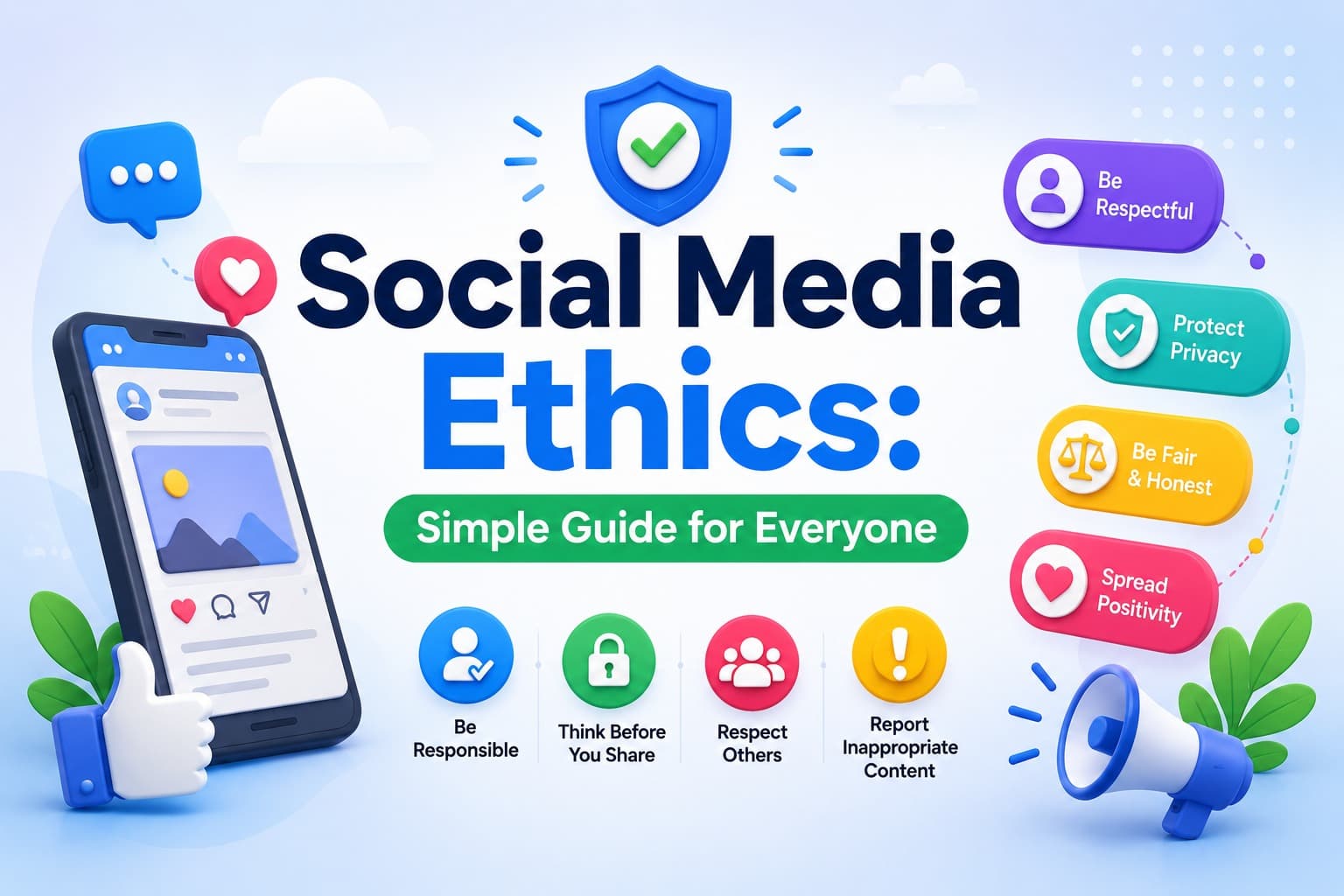
Social media ethics is not a rulebook handed down by governments or tech companies. It is a living, breathing set of principles that guides how we behave online, how we treat others in digital spaces, and how we take responsibility for the information we spread. Whether you are a teenager posting on Instagram, a professional building a LinkedIn brand, a journalist sharing breaking news, or a business engaging customers, social media ethics applies to you.
This guide is designed for everyone – no technical background required. By the end, you will understand what social media ethics means, why it matters, how it shows up in daily online life, and how you can practice it starting today.
What Is Social Media Ethics?
At its core, social media ethics is the study of right and wrong behavior in digital social environments. It draws from classical ethics – honesty, fairness, respect, accountability – and applies them to the unique challenges of platforms like Facebook, X (formerly Twitter), Instagram, TikTok, YouTube, LinkedIn, and beyond.
Social media ethics covers a wide range of questions:
- Should you share a news story before verifying if it is true?
- Is it acceptable to post photos of others without their permission?
- What responsibility do influencers have when promoting products?
- How should companies respond to criticism online?
- When does online humor become cyberbullying?
These are not abstract philosophical puzzles. They are decisions real people make every single day, and those decisions have real consequences. This is why understanding social media ethics has become one of the most important digital skills of our time.
The Foundations of Social Media Ethics
1. Honesty and Transparency
One of the most fundamental pillars of social media ethics is honesty. In an era of deepfakes, misinformation, and sponsored content disguised as organic opinion, being truthful online is both a moral obligation and a practical necessity.
Transparency means disclosing when a post is paid for, when an image has been heavily edited, or when an opinion is based on limited information. Influencers who secretly accept money to promote products without disclosure, for example, are violating social media ethics – and in many countries, they are also breaking the law.
2. Respect for Privacy
Social media ethics demands that we respect the privacy of others. This includes not sharing someone’s personal information without consent (a practice known as “doxxing”), not posting photos or videos of people in private settings, and not tagging people in content that could embarrass or harm them.
Privacy is not just about protecting celebrities or public figures. It applies to your friends, family members, coworkers, and strangers. Every person has a right to control their own digital identity.
3. Accountability
When we make mistakes online – spreading false information, making a hurtful comment, misrepresenting a situation – social media ethics calls us to be accountable. This means acknowledging errors, correcting them publicly, and taking responsibility rather than deleting posts silently or deflecting blame.
Accountability is especially important for brands, journalists, and public figures, whose online behavior influences large audiences.
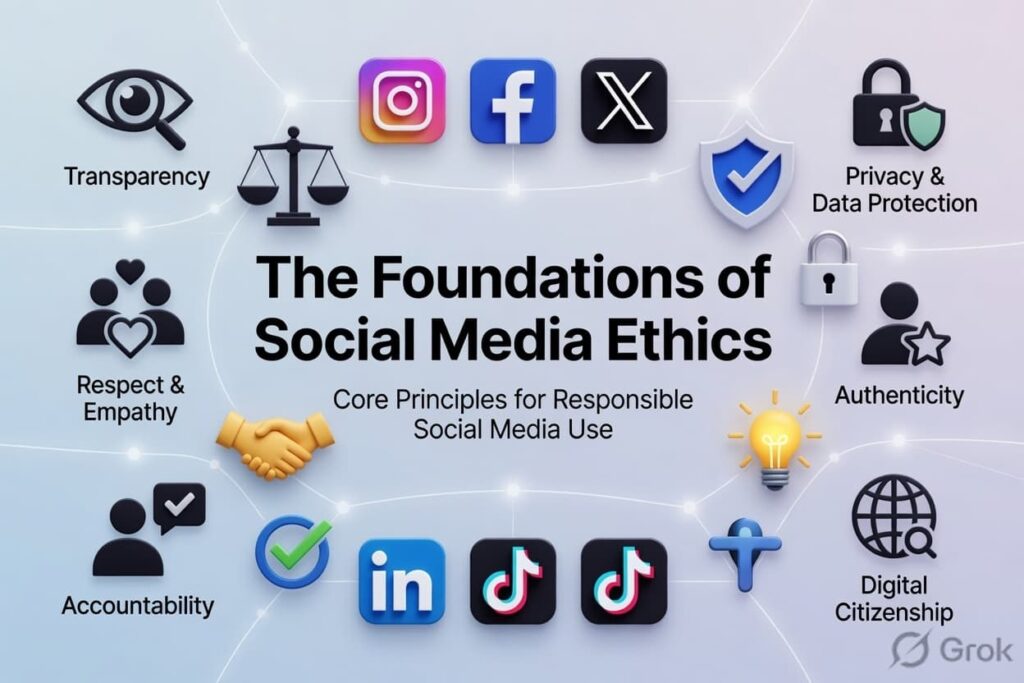
4. Fairness and Non-Discrimination
Social media ethics requires that we treat people fairly regardless of their race, religion, gender, sexuality, nationality, or political beliefs. Online spaces should not be tools for harassment, stereotyping, or exclusion. Fairness online means engaging in good faith, listening to different perspectives, and refusing to participate in coordinated attacks against individuals or communities.
5. Do No Harm
Perhaps the simplest ethical principle – and the hardest to follow – is the commitment to not cause harm. Social media ethics asks us to think before we post: Could this hurt someone? Could this spread fear? Could this damage someone’s reputation unfairly? These questions do not mean we should never say anything critical, but they do mean we should be thoughtful about how and why we speak.
Ethics and Social Media: The Platform Responsibility Question
When we talk about ethics and social media, we cannot ignore the role of the platforms themselves. Facebook, TikTok, YouTube, and others are not neutral pipes that simply carry content. They are powerful actors that design algorithms, set content policies, and shape what billions of people see and believe.
The ethical responsibilities of platforms include:
Algorithm transparency: Users deserve to understand – at least broadly – why certain content is promoted over others. Algorithms that amplify rage, division, or misinformation are ethically problematic, even if they are profitable.
Content moderation: Platforms have a duty to remove content that promotes violence, hate speech, or illegal activity. However, they must do so in ways that are consistent, fair, and respectful of free expression.
Data protection: Users trust platforms with enormous amounts of personal data. Ethical platforms collect only what is necessary, protect it rigorously, and do not sell it without meaningful informed consent.
Mental health considerations: Research increasingly links heavy social media use to anxiety, depression, and low self-esteem — particularly among young people. Platforms that knowingly design addictive features without regard for user wellbeing raise serious ethical concerns.
Understanding ethics and social media means holding both individual users and platform corporations to high standards of behavior.
Ethics in Social Media and Technology: A Broader View
The conversation around ethics in social media and technology extends beyond individual behavior and platform policy. It touches on the very architecture of our digital world.
Artificial intelligence now moderates content, personalizes feeds, generates images and text, and even creates synthetic voices and faces. The ethical implications of these technologies are vast:
- Deepfakes can put words in people’s mouths they never said.
- Automated bots can flood platforms with disinformation.
- Algorithmic bias can amplify prejudice at scale.
- Surveillance advertising can track users across the internet without their awareness.
Thinking carefully about ethics in social media and technology requires asking who benefits from these systems, who is harmed, and whether the current balance of power between users and corporations is just.
This is not a niche concern for tech experts. These are civic questions that affect democracy, public health, economic opportunity, and human dignity.
Social Media Ethics in Everyday Life
Let’s bring social media ethics down from the abstract to the concrete. Here are real scenarios where social media ethics comes into play:
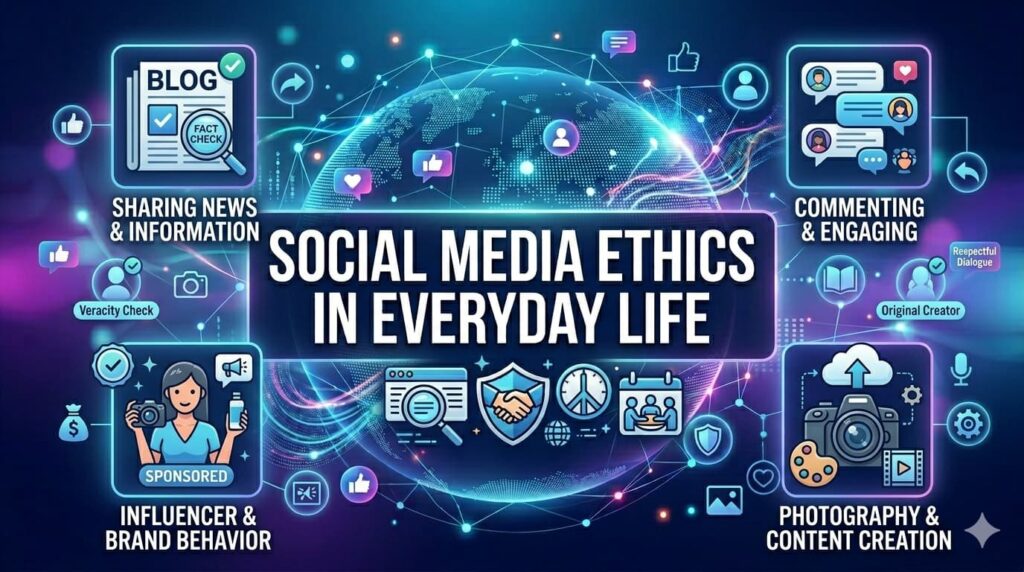
Sharing News and Information
Before you share a news story or a viral claim, social media ethics asks you to pause and verify. Check the source. Look for corroboration from multiple reputable outlets. Ask yourself: am I sharing this because it is true, or because it confirms what I already believe?
Spreading misinformation even unintentionally can damage reputations, incite panic, and erode public trust. Responsible sharing is a core part of social media ethics.
Commenting and Engaging
Online anonymity can lower inhibitions and lead to behavior people would never exhibit in person. Social media ethics encourages us to apply the same standards online that we would in a face-to-face conversation. Would you call someone stupid or worthless to their face? If not, there is no ethical justification for doing so online.
Constructive criticism, spirited debate, and passionate disagreement are all healthy and valuable. Personal attacks, threats, and harassment are not.
Influencer and Brand Behavior
Influencers wield enormous social power, particularly over younger audiences. Social media ethics for influencers means disclosing paid partnerships, being honest about products that did or did not work for them, and being mindful of the mental health implications of promoting unrealistic beauty or lifestyle standards.
For brands, social media ethics means engaging authentically, responding to complaints fairly, and never manufacturing fake reviews or astroturfing online conversations.
Photography and Content Creation
Taking photos in public spaces is generally legal, but social media ethics goes beyond legality. Before posting a photo or video involving other people, ask: have they consented to being shared online? Would they be comfortable seeing themselves in this post? Content creators who share images of strangers, children, or people in vulnerable situations without consideration for their dignity are falling short of social media ethics standards.
Social Media Ethics for Young People
Young people are among the heaviest users of social media, and they are also among the most vulnerable to its harms. Teaching social media ethics to children and teenagers is essential.
Key lessons include:
- Think before you post: Once something is online, it can be very difficult to remove permanently.
- Be kind: Cyberbullying has devastating effects on mental health and has been linked to tragic outcomes.
- Protect your privacy: Do not share your location, phone number, school, or other identifying information with strangers.
- Question what you see: Not everything on social media is true. Developing critical thinking skills is a form of social media ethics in action.
- Speak up: If you see bullying or harassment, reporting it or supporting the target is the ethical response.
Parents, educators, and platforms all share responsibility for nurturing social media ethics among the next generation.
Social Media Ethics in Professional Settings
Social media ethics also extends into the workplace. Employees who post negative comments about colleagues, share confidential company information, or misrepresent their professional credentials online are creating serious ethical – and legal – problems.
Professionals must also navigate the blurred line between personal and professional personas online. A private opinion posted on a personal account can still affect an employer’s reputation. Social media ethics in professional contexts requires thoughtfulness about what you share, how it represents you, and who might see it.
Journalists face particularly acute challenges. Social media ethics for journalists includes verifying information before tweeting it, correcting errors promptly, avoiding the appearance of bias through likes and follows, and not harassing sources or subjects online.
Common Violations of Social Media Ethics
Understanding social media ethics also means recognizing when it is being violated. Common breaches include:
| Violation | Description |
| Misinformation | Sharing false or unverified information |
| Cyberbullying | Using platforms to harass, threaten, or humiliate |
| Doxxing | Publishing someone’s private information without consent |
| Astroturfing | Creating fake grassroots campaigns or reviews |
| Impersonation | Creating fake accounts to deceive others |
| Plagiarism | Sharing others’ content without credit |
| Exploitation | Using viral suffering or tragedy for clicks and engagement |
| Undisclosed advertising | Promoting products without revealing financial relationships |
Recognizing these violations is the first step toward refusing to participate in them.
How to Practice Social Media Ethics Every Day
Practicing social media ethics does not require perfection. It requires intention. Here are practical steps everyone can take:
- Pause before posting: Ask yourself – is this true? Is this kind? Is this necessary?
- Check your sources: Use reliable fact-checking resources before sharing news.
- Give credit: Tag creators and sources when sharing their work.
- Disclose sponsorships: If you are paid to promote something, say so clearly.
- Protect others’ privacy: Do not share personal information or images without permission.
- Engage respectfully: Disagree constructively; avoid personal attacks.
- Report harm: Use platform tools to flag harassment, misinformation, and illegal content.
- Review your past content: Periodically audit your old posts and remove anything you now find harmful or untrue.
- Listen and learn: Be open to feedback about your online behavior.
- Model good behavior: Especially if you are a parent, educator, or leader.
Social media ethics is not a destination – it is a daily practice.
The Future of Social Media Ethics
As technology evolves, the ethical challenges of social media will become more complex. The rise of generative AI, virtual reality social spaces, decentralized platforms, and brain-computer interfaces will all raise new questions that our current ethical frameworks may not fully address.
What will remain constant, however, is the need for social media ethics rooted in human dignity, truth, and accountability. Technology changes. Human values do not.
Institutions, educators, governments, civil society organizations, and tech companies all have roles to play in shaping a digital future that is more ethical, more equitable, and more humane. But so does every individual who picks up a phone, opens an app, and decides what to say.
Social media ethics ultimately comes back to a simple question: What kind of person do I want to be online?
Benefits of a Social Media Ethics Framework
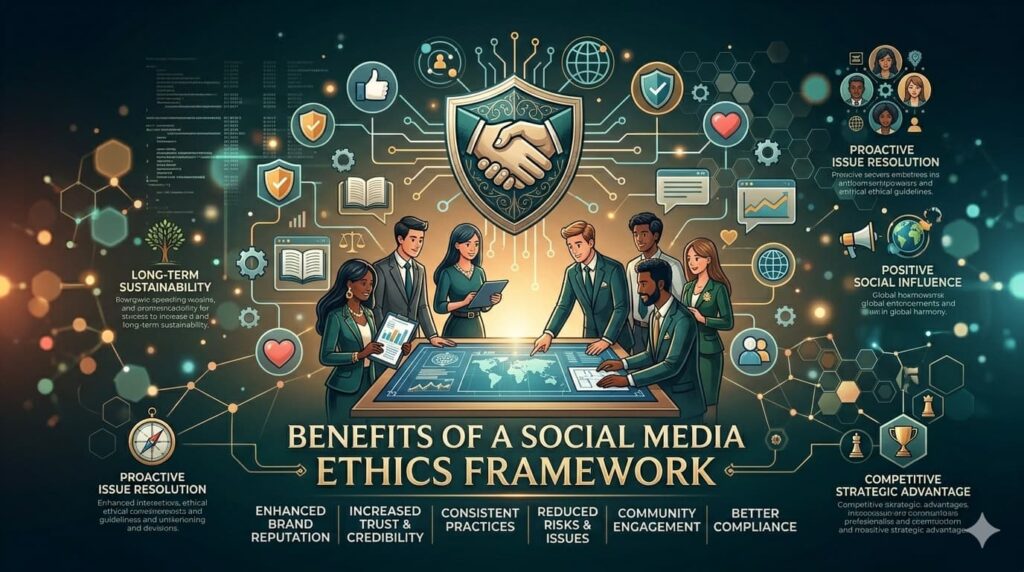
Understanding and applying social media ethics delivers genuine, measurable benefits to individuals, organizations, and society:
Follow on LinkedIn
- Builds trust: Ethical behavior online builds credibility with audiences, clients, and peers. People follow and engage with those they trust.
- Protects reputation: A commitment to social media ethics reduces the risk of public scandals, viral controversies, or legal action.
- Supports mental health: Ethical online spaces are less toxic, which is better for everyone’s psychological wellbeing.
- Strengthens democracy: When people share accurate information and engage in good faith, public discourse improves.
- Reduces harm: Ethical behavior directly reduces cyberbullying, misinformation, privacy violations, and discrimination.
- Empowers individuals: Understanding social media ethics helps people make informed, confident decisions about their own digital lives.
- Encourages accountability: Ethical frameworks give communities tools to hold bad actors – including powerful platforms – accountable.
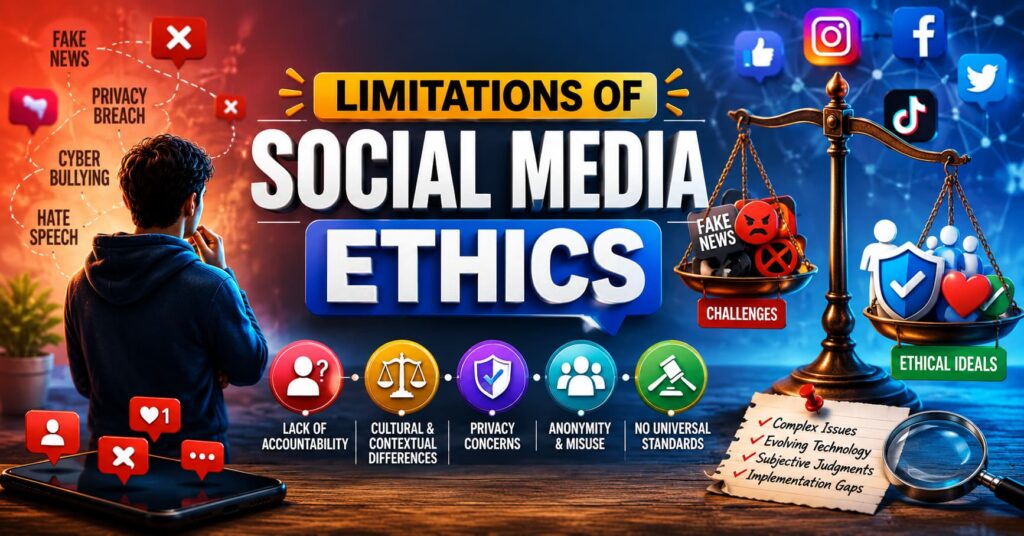
Limitations of Social Media Ethics as a Framework
No framework is without its challenges. Social media ethics also has real limitations:
- Lack of enforcement: Ethical principles are not laws. Platforms, individuals, and corporations can ignore them without legal consequence.
- Cultural relativity: What is considered ethical varies across cultures, making universal standards difficult to apply globally.
- Evolving technology: New platforms, AI tools, and digital spaces emerge faster than ethical norms can develop.
- Ambiguity: Many ethical questions have no clear right answer, leading to disagreement and inconsistent application.
- Power imbalances: Large corporations have far more power to shape online behavior than individual users, creating an uneven ethical playing field.
- Ethical fatigue: People bombarded with information and decisions may find it difficult to maintain ethical vigilance consistently.
Detailed Tool Features: Social Media Ethics Audit Frameworks
For organizations and individuals serious about improving their social media ethics practices, structured audit tools and frameworks are invaluable. Here is a detailed look at what robust social media ethics tools typically include:
Content Review Module
Allows users to systematically assess posts, campaigns, and profiles against ethical criteria including accuracy, transparency, fairness, and harm potential. Flags content that may contain misinformation, undisclosed advertising, or discriminatory language.
Privacy Compliance Checker
Evaluates whether social media practices comply with major data privacy regulations (GDPR, CCPA) and ethical privacy standards. Identifies gaps in consent processes, data collection disclosures, and user rights communications.
Transparency Reporting Dashboard
Tracks disclosure rates for sponsored content, partnership posts, and affiliate links. Generates reports showing how consistently transparency standards are being met over time.
Misinformation Detection Integration
Links with third-party fact-checking databases and AI tools to flag potentially false or misleading content before it is published or shared.
Engagement Ethics Monitor
Analyses comment sections, replies, and DM patterns to identify signs of harassment, bullying, coordinated inauthentic behavior, or bot activity.
Accessibility Assessment Tool
Checks whether content meets accessibility standards – including alt text for images, captioned videos, and readable font sizes – ensuring ethical inclusion of users with disabilities.
Crisis Response Protocol Guide
Provides step-by-step guidance for responding ethically to online controversies, mistakes, or public criticism — including when and how to issue corrections, apologies, or statements.
Training and Education Module
Includes interactive case studies, scenario-based quizzes, and policy templates to help teams build their social media ethics knowledge and apply it consistently.
Frequently Asked Questions (FAQs)
1. What is social media ethics in simple terms?
Social media ethics refers to the principles and standards that guide responsible, honest, and respectful behavior on social media platforms. It covers everything from how we share information and protect others’ privacy to how companies disclose paid content and how platforms design their products. In simple terms, social media ethics is about doing the right thing online – treating people with dignity, being truthful, and taking responsibility for the impact of your digital actions.
2. Why is social media ethics important for businesses?
For businesses, social media ethics is not just a moral concern – it is a strategic one. Brands that practice ethical social media behavior build stronger customer trust, avoid damaging controversies, and create more authentic communities. Conversely, businesses that engage in deceptive advertising, fake reviews, or insensitive content risk severe reputational and financial consequences. In an age where consumers can publicly hold brands accountable in seconds, social media ethics is essential to long-term business success.
3. How does social media ethics relate to freedom of speech?
Social media ethics and freedom of speech are related but distinct concepts. Freedom of speech protects people from government censorship of their views. Social media ethics, however, recognizes that not all speech is equally responsible or harmless. You may have the legal right to spread misinformation, harass others, or post without regard for consequences – but social media ethics holds that doing so is wrong. Ethical behavior online means exercising your speech in ways that are honest, fair, and respectful of others’ dignity, even when you are not legally required to.
4. What are the most common social media ethics violations?
The most common violations of social media ethics include spreading unverified information or misinformation, cyberbullying and online harassment, doxxing (sharing private information without consent), undisclosed advertising and influencer sponsorships, plagiarism and content theft, creating fake accounts to deceive others, and exploiting vulnerable situations for engagement or profit. Many of these violations also have legal consequences depending on jurisdiction, but all of them cause harm to individuals and to public trust in digital spaces.
5. How can individuals improve their social media ethics?
Improving your personal social media ethics starts with awareness and intention. Practical steps include verifying information before sharing it, disclosing any financial relationships when promoting products, respecting others’ privacy by not sharing their images or data without consent, engaging in disagreements respectfully without personal attacks, reporting harmful content when you encounter it, and periodically reviewing your own past posts for content you now recognize as harmful. Social media ethics is a skill that improves with practice, reflection, and a genuine commitment to treating others well – both online and off.
Know more About Us

Hi, I’m Rufqha, the SEO Manager at AIBlogMind. I focus on building content strategies that help websites improve visibility, attract the right audience, and create sustainable organic growth. My expertise includes on-page SEO, keyword research, content optimization, and aligning SEO with user experience and business goals.