

9 Ways AI Influencers Are Making Money on Instagram in 2026
Introduction
Imagine waking up to a million Instagram followers who never sleep, never argue with a brand manager, and never have a bad hair day. That is the world of AI influencers in 2026, and it is more real — and more profitable — than most people expected even two years ago.
Social media has always rewarded consistency, visual appeal, and audience connection. For years, human creators dominated that space. But today, AI influencers are rewriting the rules. These digitally generated personalities are flooding Instagram feeds, racking up engagement numbers, and quietly building revenue streams that rival — and in some cases exceed — those of human creators.
The problem for many brands, marketers, and even aspiring digital entrepreneurs is simple: they are still watching from the sidelines, unsure how AI Instagram influencers actually make money or whether the model is sustainable. The hesitation is understandable. When something moves this fast, it is hard to know what is hype and what is a genuine shift in the industry.
The solution is clarity. This article breaks down exactly how AI influencers are generating income on Instagram in 2026, what tools power them, what the limitations are, and how you can use this knowledge to make smarter decisions — whether you are a brand, an investor, or someone thinking about creating your own AI content creator.
By the end of this guide, you will have a complete picture of the AI influencer economy: how it works, who is winning, and what separates the AI models making real money from the ones that fade into the digital noise.
What Are AI Influencers?
Before diving into the money, it helps to define the term clearly. AI influencers are computer-generated characters or personas that exist and operate on social media platforms like Instagram. They are built using a combination of generative AI, 3D modeling, image synthesis, and automated content pipelines.
Unlike human influencers, AI Instagram influencers do not have personal lives, off-days, or controversies (unless their creators design them that way). They post consistently, maintain a visual identity with near-perfect precision, and can be programmed to speak directly to a niche audience.
Some AI influencers look hyper-realistic, blurring the line between human and machine. Others lean into their synthetic identity as a feature, not a flaw. Either way, virtual influencers have proven that audiences will follow and engage with a digital persona just as readily as a human one — sometimes more so.
By 2026, there are thousands of AI content creators active on Instagram, ranging from boutique fashion models to fitness coaches, travel personalities, and even AI musicians. The market has matured quickly, and with that maturity have come sophisticated, diverse revenue strategies.
Benefits of AI Influencers as a Business Model
The rise of AI influencers is not accidental. There are concrete business advantages that make this model attractive to brands and creators alike.
Total brand control. When a company partners with an AI influencer, they are not negotiating with a human ego. The brand controls the messaging, the aesthetic, the posting schedule, and the tone — completely. There is no risk of the influencer posting something off-brand at 2 a.m.
Scalability. A single AI content creator can be repurposed across multiple platforms, languages, and markets simultaneously. One well-designed virtual influencer can serve audiences in New York, Tokyo, and São Paulo at the same time with localized content.
Consistency. AI Instagram influencers show up every day. They do not get sick, burn out, or take extended breaks. This consistency is enormously valuable for brands that depend on regular audience touchpoints.
Cost efficiency over time. While building a high-quality AI influencer requires upfront investment, the ongoing cost per post is significantly lower than hiring human talent for every campaign.
Lower risk profile. Human influencers carry reputational risk. AI influencers are as risky as their creators choose them to be — no surprise scandals, no public meltdowns.
Limitations of AI Influencers
No model is without its drawbacks, and AI influencers come with real limitations that brands and creators need to understand before committing.
Authenticity perception. A portion of the public remains skeptical of or uncomfortable with virtual influencers. Some audiences feel deceived when they discover they have been following an AI model rather than a human. Transparency is increasingly demanded by regulators and audiences alike.
Emotional depth. Human influencers build deep parasocial relationships through raw, unscripted emotion. While AI content creators are getting better at mimicking emotional nuance, they still lag behind the genuine vulnerability that drives the strongest human influencer communities.
Creative ceiling. AI influencers are only as creative as the teams and tools behind them. Without skilled human oversight, content can become repetitive or generic quickly.
Regulatory scrutiny. In 2026, several markets now require clear disclosure when content is generated or represented by an AI entity. Navigating these rules across jurisdictions adds operational complexity.
Platform dependency. AI Instagram influencers live and die by Instagram’s algorithm and policies. A platform shift in rules can immediately affect revenue.
9 Ways AI Influencers Are Making Money on Instagram in 2026
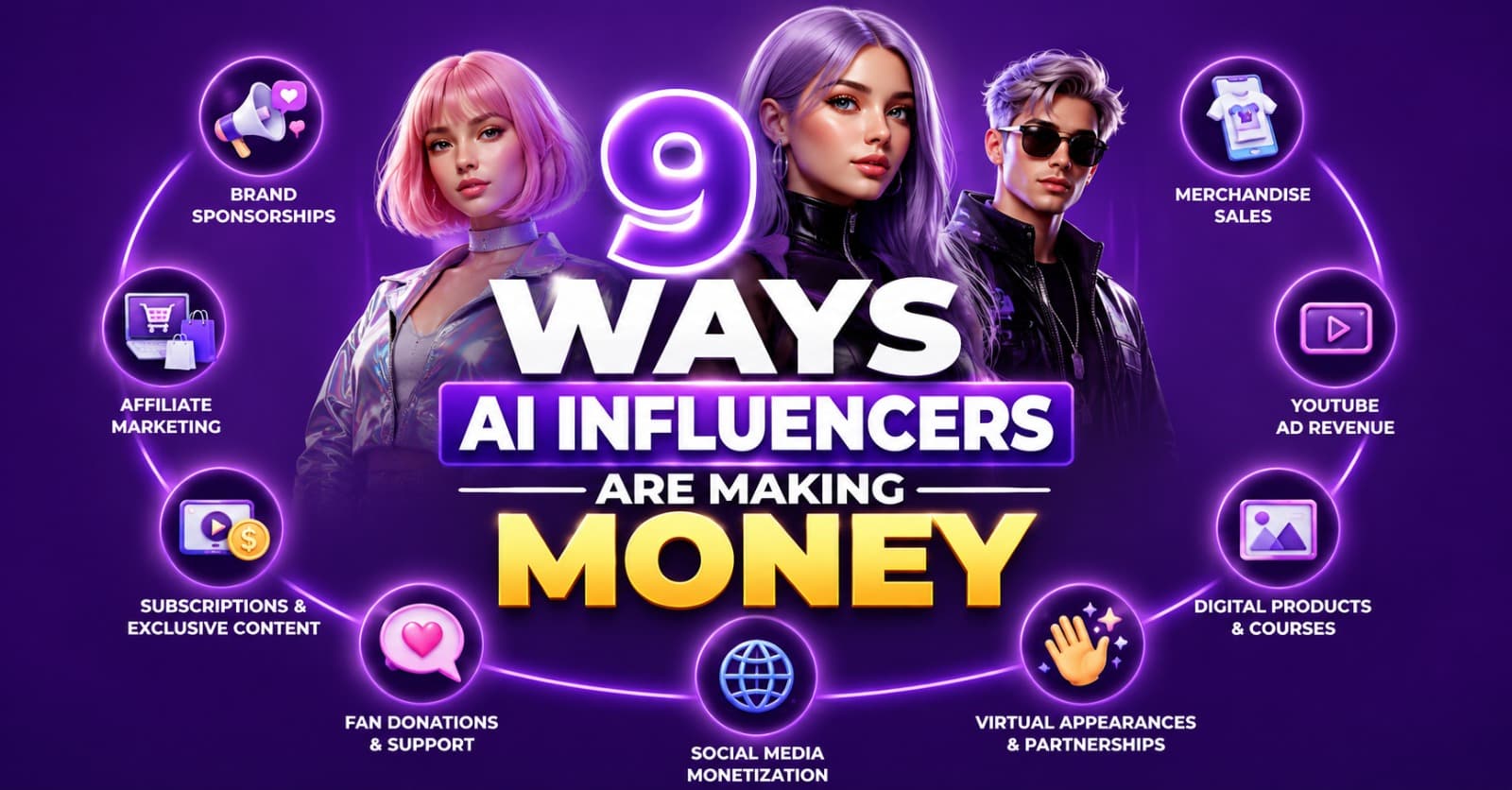
Now to the core of the question. Here are the nine primary revenue strategies that successful AI influencers and the teams behind them are using to generate income right now.
1. Sponsored Posts and Brand Partnerships
This is the most familiar monetization method and remains the backbone of most AI influencer income. Brands pay to have their products featured in the AI influencer’s feed, stories, or reels.
What makes AI Instagram influencers especially attractive for sponsorships is the guarantee of brand-safe content. Fashion houses, beauty brands, tech companies, and consumer goods giants have all signed sponsorship agreements with virtual influencers. In 2026, top-tier AI influencers command rates per sponsored post that rival mid-tier human influencers — and in some verticals, exceed them.
The key differentiator is niche precision. AI content creators built around specific aesthetics or lifestyles can deliver audiences with extraordinarily high purchase intent, making the ROI on sponsored posts very clear for brands.
2. Affiliate Marketing
Affiliate marketing is a natural fit for AI influencers because it is performance-based and trackable. An AI Instagram influencer promotes a product with a unique link or code, and earns a commission on every sale generated.
AI content creators are particularly effective in affiliate marketing because their content pipelines can be optimized to promote products at peak buying moments — seasonal campaigns, product launches, trending categories. With AI-driven analytics, the teams behind virtual influencers can test multiple versions of a post and deploy the highest-converting option automatically.
In 2026, affiliate commissions represent a growing share of total AI influencer revenue, particularly in niches like beauty, fitness, tech gadgets, and home décor.
3. Digital Product Sales
Many AI influencers have evolved beyond promotion into product creation. Virtual influencers now sell digital products directly through Instagram — presets, templates, e-books, workout guides, recipe books, and more.
Because AI content creators can generate text, image, and design assets at scale, digital product creation is highly efficient. An AI influencer in the fitness space, for example, can release a training guide built almost entirely through AI generation, market it through its own Instagram presence, and collect revenue with minimal ongoing overhead.
This model works because followers who trust a virtual influencer’s content are often willing to pay for deeper access to that content in a packaged format.
4. Merchandise and Physical Products
Some of the most successful AI Instagram influencers have moved into physical merchandise — apparel, accessories, limited-edition collectibles, and lifestyle products. Print-on-demand and dropshipping integrations make this possible without significant inventory investment.
The brand identity of a well-designed AI influencer can be as strong as any fashion label. Virtual influencers with distinctive visual styles have leveraged their aesthetics into merchandise lines that sell to engaged fan bases who want to feel connected to the digital persona they follow.
In 2026, AI content creators at the premium tier have even launched exclusive physical drops that sell out within hours, generating both revenue and buzz.
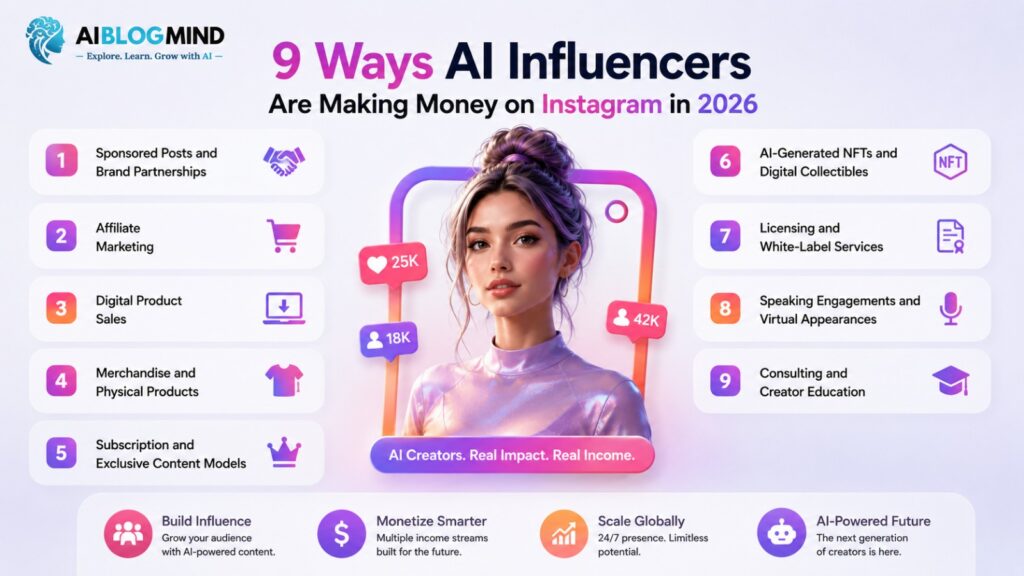
5. Subscription and Exclusive Content Models
Instagram’s native subscription features and linked platforms like Patreon or similar services allow AI influencers to monetize their most engaged followers directly. Subscribers pay a monthly fee for access to exclusive content — behind-the-scenes material, early access to posts, personalized messages, or premium visual content.
Virtual influencers are well-suited to this model because content production can be systematized. The team behind an AI influencer can create tiered subscription packages and deliver consistent value at each level without proportional increases in labor.
For AI Instagram influencers operating in lifestyle, fashion, or entertainment niches, subscriptions provide reliable recurring revenue that is less dependent on algorithm performance.
6. AI-Generated NFTs and Digital Collectibles
The digital collectible market evolved significantly between 2023 and 2026. While the early NFT boom brought chaos, a more stable market for limited-edition digital art and collectibles has emerged — and AI influencers are active participants.
Some virtual influencers release limited series of AI-generated digital artworks tied to their brand identity. These are sold directly through Instagram-linked storefronts or blockchain-based marketplaces. Fans and collectors pay for exclusivity, and the scarcity of each release drives demand.
This revenue stream suits AI content creators particularly well because they can generate high-quality visual assets that carry genuine aesthetic value while maintaining strict supply control.
7. Licensing and White-Label Services
This is a less visible but highly lucrative revenue stream. The teams behind AI influencers license their technology, personas, or content pipelines to third parties — typically brands that want to create their own AI Instagram influencers without building the infrastructure from scratch.
In this model, the original AI influencer becomes a proof of concept that demonstrates what is possible. Brands pay licensing fees to use the underlying visual model, content templates, or persona architecture. Some white-label operations generate more revenue from licensing than from the influencer’s own Instagram presence.
Virtual influencers that have cracked a particular niche — say, luxury travel or sustainable fashion — are especially valuable as licensing assets because they come with proven content frameworks.
8. Speaking Engagements and Virtual Appearances
This may sound counterintuitive — how does a digital persona give a speech? In 2026, virtual influencers are being booked for digital events, brand activations, panel appearances (via live-rendered video), and virtual conferences. The AI influencer appears as a live or pre-rendered avatar, delivering scripted or semi-dynamic presentations.
Brands pay significant fees to have recognizable AI Instagram influencers appear at their events, both for the novelty factor and for the audience pull. For the creators behind virtual influencers, this represents premium revenue tied to the influencer’s visibility and perceived authority.
As augmented reality and virtual event technology improved between 2024 and 2026, this revenue category grew considerably. Some AI content creators now operate dedicated booking arms that handle event and appearance requests.
9. Consulting and Creator Education
The most established AI influencer brands have built secondary businesses around teaching others how to create, manage, and monetize virtual influencers. This takes the form of online courses, consulting services, mastermind groups, and paid workshops promoted through Instagram.
There is enormous demand for this knowledge. Entrepreneurs, marketers, agencies, and brands all want to understand how the AI influencer model works. The teams behind successful AI content creators are uniquely positioned to monetize that expertise.
Instagram is often the primary channel for marketing these education products — short-form video content, carousel posts, and stories demonstrating the results achievable with the right approach funnel audiences toward paid educational offerings.
Comparing These Revenue Streams
Not all nine revenue streams are equal, and the right mix depends on the AI influencer’s niche, audience size, and the resources available to the team behind it.
Sponsored posts and affiliate marketing are the fastest paths to revenue for newer AI Instagram influencers with growing but not yet massive followings. They require less infrastructure and can begin generating income relatively early.
Digital products, subscriptions, and merchandise scale well once an audience is established. They move the revenue model from brand-dependent to audience-dependent, which provides more stability.
Licensing, virtual appearances, and consulting are high-ticket but require the AI influencer to have a demonstrated track record and significant industry visibility. These are typically later-stage revenue streams.
NFTs and digital collectibles are niche but can be extremely high-margin for AI content creators operating in art, fashion, or pop culture spaces where collector communities exist.
How to Choose the Right Monetization Path for Your AI Influencer
If you are building an AI influencer or advising a brand on virtual influencer strategy, the right monetization approach comes down to four factors.
Audience clarity. Who follows this AI influencer and what do they want? A deeply niche, highly engaged audience of 50,000 is often more valuable than a broad audience of 500,000. Know what your audience buys and what they aspire to.
Content production capacity. Some revenue streams — especially subscriptions and digital products — require consistent, high-quality content output. Assess whether your team and tools can support that before committing.
Brand partnerships vs. audience monetization. These are two different businesses. Sponsored content requires constant brand outreach and relationship management. Audience monetization requires deep community trust. Most successful AI Instagram influencers eventually pursue both, but it helps to anchor in one direction first.
Long-term vs. short-term revenue. Sponsorships generate quick cash. Subscriptions and products generate long-term value. Build a revenue stack with both components if sustainability is the goal.
For more Guidance ContactUs
Final Verdict
AI influencers are not a passing trend. In 2026, they represent a mature, multi-revenue business model that is being adopted by solo entrepreneurs, marketing agencies, and major consumer brands alike. The nine monetization strategies outlined in this article — from sponsored posts to consulting — show just how diverse and resilient this model has become.
The most successful AI Instagram influencers are not the ones with the most followers. They are the ones with the clearest brand identity, the most engaged audiences, and the most thoughtfully diversified revenue streams. Virtual influencers that depend on a single income source remain fragile. Those that layer multiple strategies are building durable digital businesses.
Follow us our Instagram Page for Latest tips
Whether you are a brand evaluating AI content creators as partners, an entrepreneur considering building your first AI influencer, or a marketer trying to understand where the industry is going, the opportunity in this space is real — and it is still early enough to move strategically.
Frequently Asked Questions
What is an AI influencer? An AI influencer is a computer-generated digital persona that operates on social media platforms like Instagram. These virtual influencers are created using generative AI, 3D modeling, and automated content tools, and they interact with audiences in ways similar to human content creators.
How do AI influencers make money on Instagram? AI Instagram influencers generate income through sponsored posts, affiliate marketing, digital product sales, merchandise, subscription content, digital collectibles, licensing deals, virtual appearances, and education-based consulting.
Are AI influencers more profitable than human influencers? It depends on the scale and niche. Top AI content creators can generate comparable revenue to human influencers at a lower ongoing operational cost. However, building a successful AI influencer requires significant upfront investment in technology, design, and strategy.
Do brands trust AI Instagram influencers? Yes, increasingly so. Brands value the control, consistency, and brand safety that virtual influencers provide. Many major brands have run campaigns with AI influencers and report positive ROI, especially in fashion, beauty, and tech sectors.
Is it legal to run an AI influencer on Instagram? Yes, but transparency requirements apply. In many markets, AI content creators must disclose their non-human nature to audiences. Instagram’s own policies also require disclosure of AI-generated content in certain contexts. Staying compliant with both platform rules and local regulations is essential.
How much does it cost to create an AI influencer? The range is wide. A basic AI influencer can be launched with relatively modest investment using existing AI image generation and content tools. A premium, hyper-realistic virtual influencer with professional 3D modeling and a full content pipeline can require substantial development budgets. The ROI potential scales with the quality of the initial build.
What niches work best for AI influencers? Fashion, beauty, fitness, travel, tech, gaming, and lifestyle are currently the strongest niches for AI Instagram influencers. These categories are visually driven, have active brand sponsorship markets, and attract audiences with demonstrated purchase intent.

Mohammed Viqar Ali is a Digital Marketer, UI/UX Designer, and content creator passionate about AI, technology, SEO, and digital growth. As the UI/UX Designer of aiblogmind, he focuses on creating user-friendly digital experiences while sharing practical insights on artificial intelligence, marketing trends, productivity tools, and online business growth. Through his content, he helps readers discover innovative solutions, stay updated with emerging technologies, and make informed decisions in the digital world.