


Best AI Face Swap Tools for Avatar Video Generation in 2026
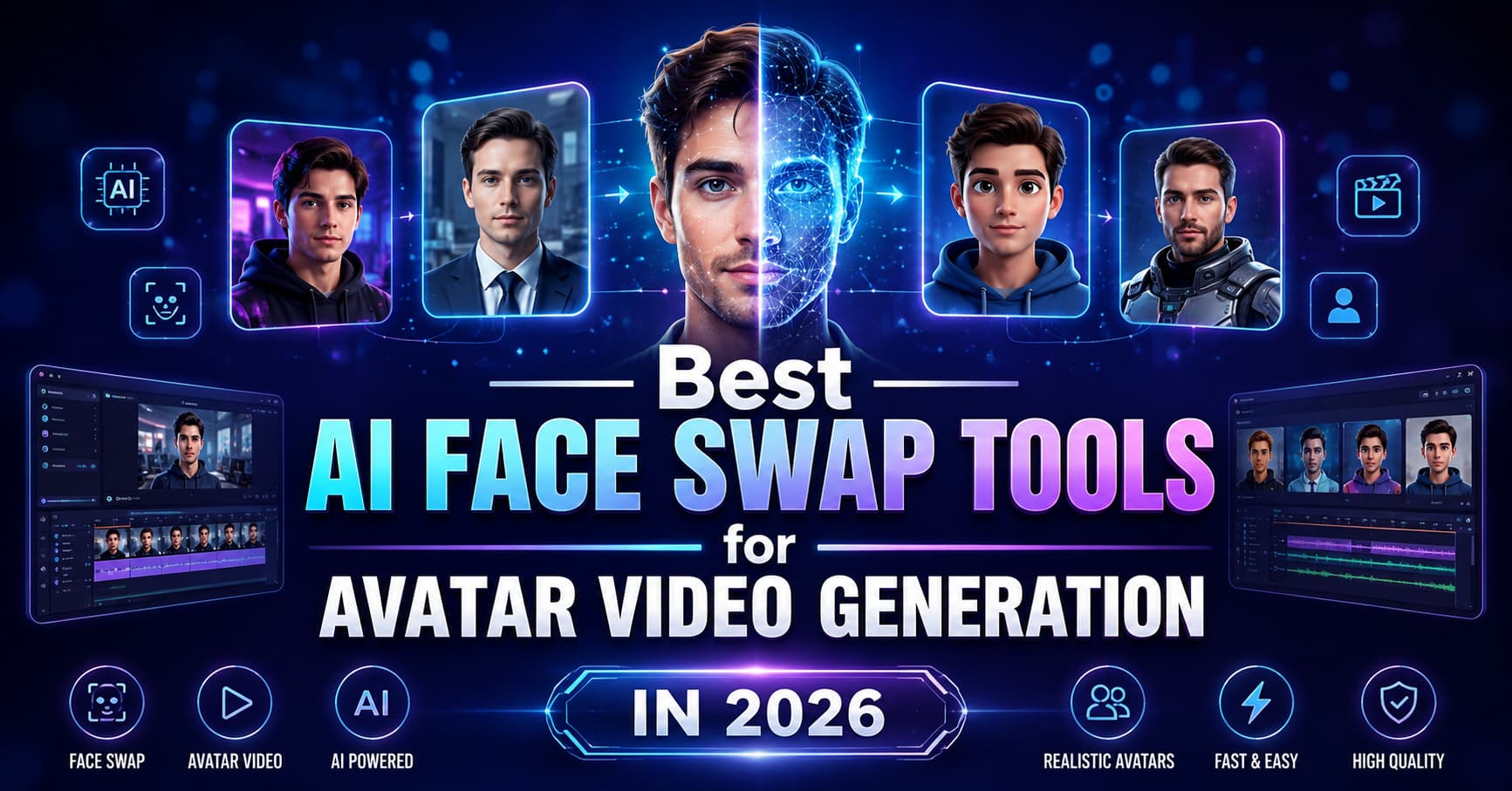
AI-generated video content has exploded in 2026. From TikTok creators and YouTubers to digital marketers and faceless content channels, everyone is using AI face swap tools to create realistic avatar videos in minutes instead of spending hours filming. What once looked awkward and robotic now feels shockingly human. Lip-sync accuracy, facial tracking, emotion transfer, and real-time rendering have improved so much that many viewers cannot even tell whether a video was recorded traditionally or generated by AI.
The rise of AI avatar generators and AI talking avatar platforms has completely changed short-form content creation. Businesses are using AI presenters for onboarding videos, influencers are cloning themselves into multilingual reels, and creators are building entire faceless channels powered by realistic avatars. According to recent industry testing and tool comparisons published in 2026, platforms like Magic Hour, HeyGen, Synthesia, Reface, and Akool are leading the race for hyper-realistic AI video generation.
Why AI Face Swap Technology Is Exploding in 2026
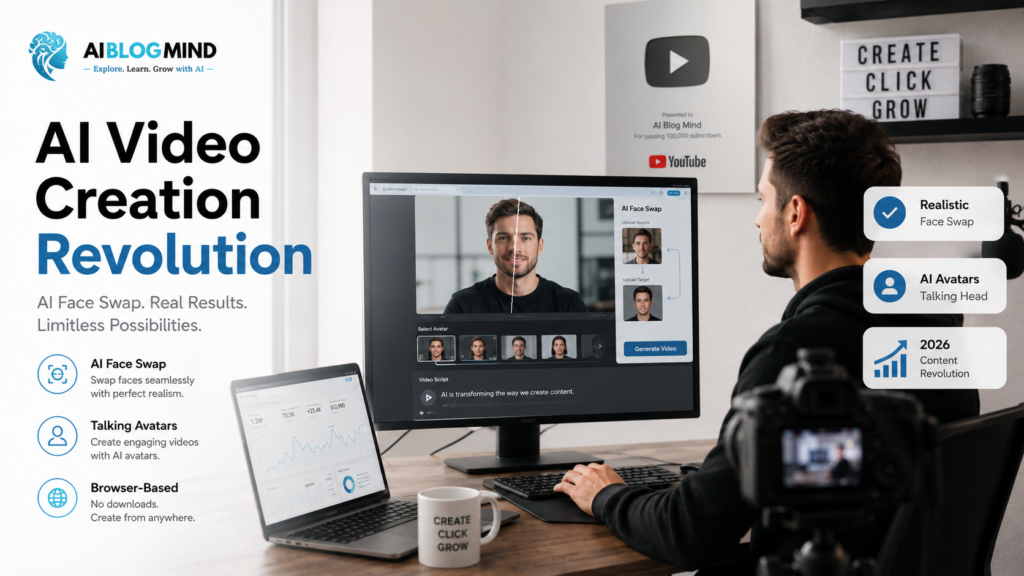
The AI video industry feels a lot like the smartphone revolution from a decade ago. At first, only tech enthusiasts experimented with it. Then suddenly everyone realized these tools were becoming easier, cheaper, and unbelievably powerful. In 2026, AI face swap video technology has reached a point where creators can generate cinematic-quality avatar content directly from a browser. You no longer need expensive cameras, studios, or video editing skills. Upload a selfie, choose a voice, paste a script, and the AI handles almost everything.
Short-form video platforms have accelerated this growth massively. TikTok, Instagram Reels, YouTube Shorts, and even business training platforms now reward fast content production. Creators who publish consistently usually outperform those who spend weeks producing a single polished video. AI avatars solve this problem perfectly because they allow endless scaling. One creator can now produce videos in multiple languages, different styles, and varied emotional tones without stepping in front of a camera every day.
What Makes a Great AI Face Swap Tool
Choosing the best AI avatar video tools is harder than it looks because every platform focuses on different strengths. Some prioritize realism, while others focus on speed, automation, or social media workflows. The perfect tool for a YouTube creator may not work well for a corporate marketing team. Understanding the core features behind these platforms helps separate the gimmicks from the genuinely useful software.
The first thing users notice is realism. A high-quality AI face swap should preserve skin texture, eye movement, lighting consistency, and natural facial expressions. If the AI fails at even one of those elements, viewers immediately sense something strange. It is similar to watching a movie with slightly broken CGI. You may not identify the exact problem instantly, but your brain knows something feels off. Modern tools now use diffusion models, GAN architectures, and temporal smoothing systems to reduce those visual glitches dramatically. Research published in 2026 on advanced frameworks like GaussianSwap and VFace specifically focuses on maintaining identity consistency and smooth facial motion across video frames.
Lip-syncing has also become a critical feature. Viewers are surprisingly sensitive to mouth movement accuracy. Even tiny timing mismatches can make a realistic avatar feel fake. The best tools now align phonemes with facial muscle animation so accurately that speech appears naturally generated. Reddit users testing AI lip-sync platforms repeatedly highlighted Magic Hour, HeyGen, and Synthesia as standout performers for synchronized facial animation.
Features to Look for in AI Face Swap Tools
Not all AI face swap tools deliver the same quality. Some focus on realistic cinematic rendering, while others prioritize speed and simplicity. Choosing the right platform depends heavily on your content goals. A TikTok creator may prefer fast rendering and trendy templates, while a business might need polished AI talking avatar videos for presentations and marketing.
The first thing users should examine is video realism. A good AI avatar generator must preserve facial details naturally during movement. Poor-quality tools often produce flickering faces, distorted jawlines, or unnatural eye movement. These imperfections instantly break immersion and make the video feel fake. The best AI avatar video tools use advanced motion prediction and facial mapping systems to maintain consistency throughout the clip.
Lip sync accuracy is another critical factor. Even slightly delayed mouth movements can ruin a video completely. The strongest AI face swap video platforms now use phoneme-level synchronization to match speech precisely with facial animation. This creates more believable conversations and natural-looking avatars. Viewers may forgive lower video quality, but they immediately notice bad lip syncing.
Ease of use also matters. Many users want fast workflows without complicated editing software. Browser-based AI face swap tools are dominating the market because they eliminate technical barriers. Users can upload a selfie, paste a script, and generate a video directly online. Tools like HeyGen and Synthesia became popular partly because beginners can create professional-looking content without advanced editing skills.
Pricing plays a major role too. Some platforms offer free credits, while others charge subscription fees or credit-based rendering costs. Creators producing large amounts of content need tools that balance affordability with quality. Expensive rendering costs can quickly become a problem for high-volume video production.
Best AI Face Swap Tools in 2026
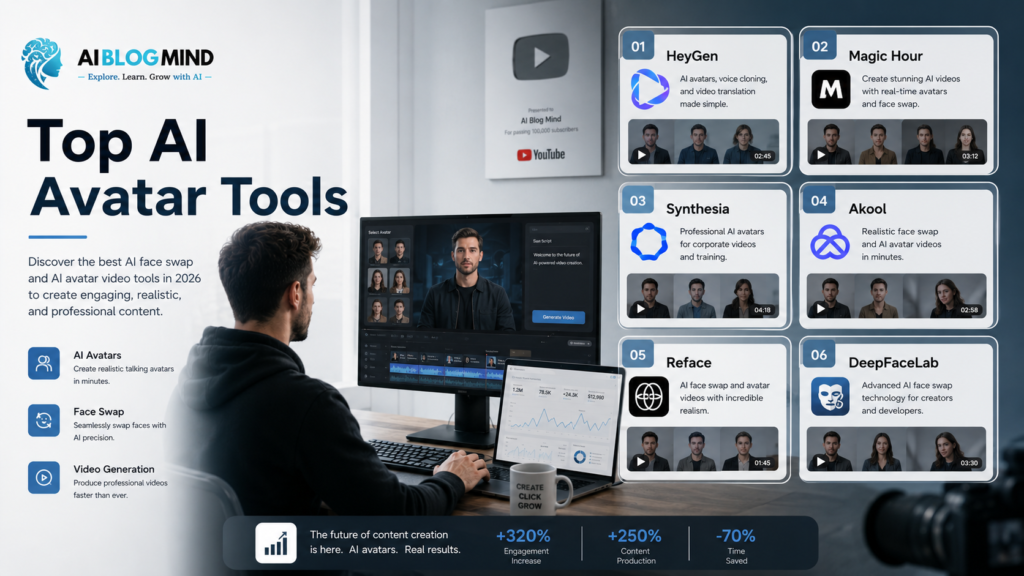
1. HeyGen
HeyGen is currently one of the most popular AI face swap tools for professional avatar videos. The platform specializes in realistic presenters, multilingual content, and business-focused video generation. Users can upload photos, generate avatars, and create complete AI talking avatar videos from simple text scripts.
One reason HeyGen dominates the market is its incredible ease of use. Beginners can generate polished avatar videos within minutes. The platform handles voice generation, lip syncing, facial animation, and translation automatically. This makes it perfect for businesses creating onboarding videos, marketing content, and product demonstrations.
The quality of HeyGen’s realistic AI avatars is impressive. Facial expressions appear natural, and the lip sync system performs extremely well compared to older AI video generators. Many creators use HeyGen for YouTube automation channels because it dramatically reduces filming time while maintaining professional visual quality.
2. Magic Hour
Magic Hour has quickly become one of the strongest all-in-one AI avatar generator platforms in 2026. The tool combines face swapping, image animation, lip syncing, and avatar generation into one streamlined workflow. Social media creators especially love Magic Hour because it simplifies content production for reels and short videos.
Unlike some competitors that focus only on corporate presentations, Magic Hour performs well in entertainment-focused content too. The platform handles fast facial movement and dynamic lighting conditions surprisingly well. This makes it ideal for TikTok creators producing high-energy videos.
The biggest strength of Magic Hour is accessibility. Users can test features without complicated installations or technical setup. For creators wanting fast and visually impressive AI face swap video content, Magic Hour offers one of the best balances between quality and simplicity.
3. Synthesia
Synthesia remains one of the biggest names in enterprise-level AI avatar video tools. Businesses use it heavily for training videos, educational lessons, and internal communication. The platform supports hundreds of AI avatars and multiple languages, making it extremely useful for international companies.
What separates Synthesia from other AI face swap tools is reliability. The platform focuses heavily on stable and professional video outputs. While some AI video apps prioritize cinematic creativity, Synthesia emphasizes consistency and clarity. This approach makes it highly trusted by organizations producing large amounts of business content.
The avatars in Synthesia may appear slightly more formal compared to entertainment-focused tools, but the platform excels at polished communication videos. Companies can generate onboarding content, presentations, and tutorials without hiring presenters or recording equipment.
4. Akool
Akool is becoming increasingly popular among creators looking for highly expressive AI talking avatar videos. The platform performs especially well with multilingual video translation and realistic facial movement. Marketers and agencies use Akool to localize content quickly for international audiences.
One major advantage of Akool is its facial consistency during motion. Some AI face swap tools struggle with fast head movement or dramatic expressions, but Akool handles these scenarios surprisingly well. The platform also integrates voice translation features that automatically synchronize speech with mouth movement.
For creators focused on global audiences, Akool offers a strong balance between realism, speed, and localization features. Its workflow is also beginner-friendly, making it accessible for non-technical users.
5. Reface
Reface remains one of the most recognizable consumer-focused AI face swap tools available today. The app became famous through meme culture and viral celebrity face swaps. Even in 2026, it continues to dominate casual entertainment-based AI content creation.
The main advantage of Reface is speed. Users can create an AI face swap video directly from their smartphones within seconds. The app provides trending templates, GIFs, and short clips optimized for social media sharing. Casual users love how easy it feels compared to more advanced AI video software.
Although Reface lacks some professional editing features found in enterprise platforms, it remains one of the best tools for quick entertainment content. For creators wanting fun, fast, and highly shareable videos, Reface still performs extremely well.
6. DeepFaceLab
DeepFaceLab is very different from modern browser-based AI avatar generator platforms. Instead of focusing on simplicity, it offers advanced customization and professional-level deepfake rendering. Many high-end face swap projects still rely on DeepFaceLab because of its unmatched realism potential.
The downside is complexity. DeepFaceLab requires GPU hardware, technical knowledge, and manual model training. Beginners often find the workflow difficult compared to simpler AI avatar video tools like HeyGen or Magic Hour. However, experienced editors can produce extremely realistic results with enough training data and rendering time.
For filmmakers and advanced creators, DeepFaceLab remains one of the most powerful AI face swap tools available in 2026.
For more free AI tools checkout our other articles
Comparison Table of AI Face Swap Tools
| Tool | Best For | Main Strength | Weakness |
|---|---|---|---|
| HeyGen | Business videos | Professional AI avatars | Less meme-focused |
| Magic Hour | Social creators | All-in-one workflow | Some angle limitations |
| Synthesia | Enterprise content | Stability and multilingual support | More corporate style |
| Akool | Marketing videos | Translation and lip sync | Premium pricing |
| Reface | Casual creators | Fast mobile face swaps | Limited advanced controls |
| DeepFaceLab | Professionals | Maximum realism | Technical complexity |
Best Use Cases for AI Avatar Video Tools
Modern AI face swap tools are useful far beyond entertainment. Content creators, marketers, educators, and businesses all use these systems differently depending on their goals. One of the most popular applications is short-form social media content. TikTok creators and YouTube Shorts channels use AI avatar generator platforms to publish videos consistently without recording themselves daily.
Faceless YouTube automation channels also rely heavily on AI avatar video tools. Instead of hiring actors or voice artists, creators use realistic AI avatars combined with AI narration to produce large volumes of content quickly. This business model has grown massively in 2026 because automation reduces production costs significantly.
Marketing teams use AI talking avatar systems for advertisements, onboarding videos, and multilingual campaigns. A single AI presenter can deliver content in several languages while maintaining the same facial identity and voice style. This allows companies to scale globally without recording separate videos for each market.
Educational platforms are adopting AI avatars too. Online courses now use AI-generated instructors to explain lessons, tutorials, and training material. This approach saves time while ensuring consistent presentation quality across multiple videos.
Ethical Concerns Around AI Face Swap Videos
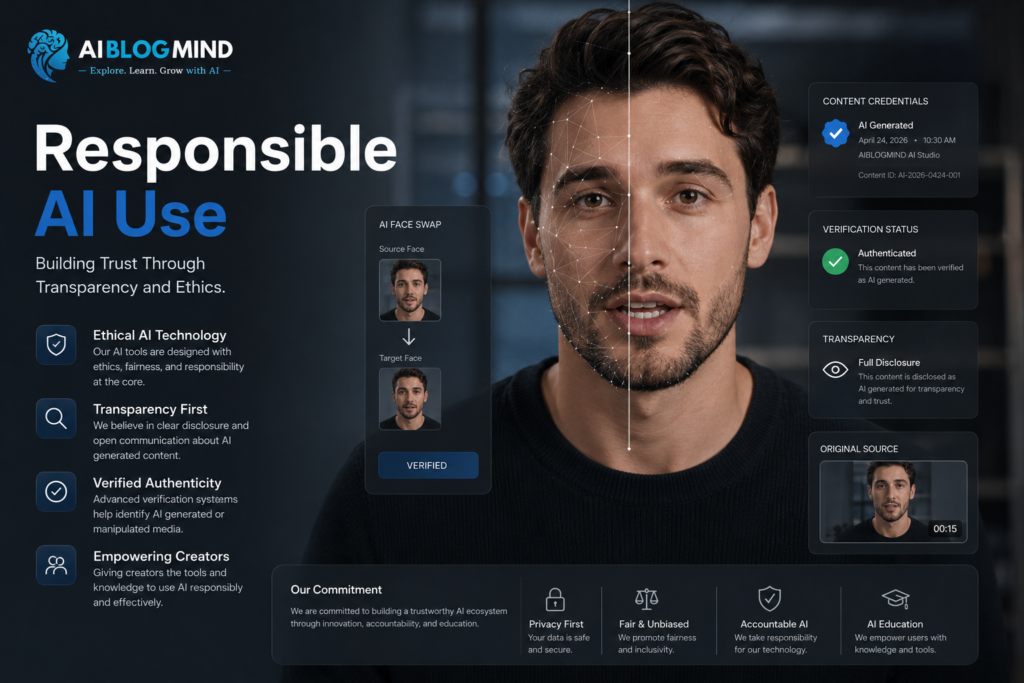
As AI face swap tools become more realistic, ethical concerns continue growing. Deepfake misuse is one of the biggest challenges facing the industry today. AI-generated videos can spread misinformation, impersonate individuals, or create harmful non-consensual content.
Responsible use is extremely important. Most major AI avatar generator platforms now include safety measures like watermarking, identity verification, and AI disclosure labels. These systems help viewers understand when content has been generated artificially.
Transparency matters because trust online is becoming harder to maintain. Audiences are increasingly aware that AI talking avatar videos exist, and creators who openly disclose AI usage usually face less criticism than those attempting to hide it.
The technology itself is not inherently harmful. Like photo editing software or CGI effects, the impact depends entirely on how people choose to use it.
Future of Realistic AI Avatars
The future of realistic AI avatars looks incredibly advanced. AI video systems are evolving rapidly toward real-time rendering, interactive streaming, and fully customizable digital humans. Future AI face swap tools will likely support live motion tracking, allowing creators to control avatars instantly during streams and meetings.
Another major trend is 3D avatar generation. Current systems mainly operate in 2D environments, but newer AI models are beginning to generate interactive 3D characters capable of existing inside virtual worlds and VR experiences.
The line between real and artificial content will continue shrinking. Future AI avatar video tools may become so realistic that audiences will rely heavily on verification systems and digital authenticity markers to identify genuine footage.
Conclusion
The rise of AI face swap tools is transforming content creation in 2026. Whether you are a TikTok creator, YouTube marketer, business owner, or educator, modern AI avatar generator platforms make video production faster and more scalable than ever before.
Tools like HeyGen, Magic Hour, Synthesia, Akool, Reface, and DeepFaceLab each offer unique strengths depending on your workflow. Some focus on professional AI talking avatar presentations, while others prioritize viral social media content and entertainment.
The most successful creators will combine AI automation with creativity and storytelling. Technology can generate faces and voices, but human imagination still drives engaging content.
Do checkout our social media for latest update
FAQs
1. What are the best AI face swap tools in 2026?
HeyGen, Magic Hour, Synthesia, Akool, Reface, and DeepFaceLab are among the best AI face swap tools currently available.
2. Which AI avatar generator is best for beginners?
HeyGen and Magic Hour are excellent beginner-friendly AI avatar generator platforms because they are browser-based and easy to use.
3. Can AI talking avatar videos be used for YouTube?
Yes. Many creators use AI talking avatar systems for YouTube Shorts, tutorials, educational videos, and faceless automation channels.
4. Are AI face swap videos legal?
Yes, as long as they are used ethically and with proper consent. Misleading or harmful deepfake content can violate laws and platform policies.
5. Do AI avatar video tools work on mobile devices?
Yes. Some AI avatar video tools like Reface are optimized specifically for smartphones and mobile editing workflows.

Syed Abubakkar is a content and SEO specialist responsible for article publishing, on-page SEO, keyword optimization, and AI-powered image generation. He is passionate about digital marketing and helping websites grow their online presence.