

AI Ethics: Principles, Challenges, and Future Trends
Imagine a world where a machine decides who gets a loan, who gets hired, or even who receives medical treatment all without a human ever reviewing the decision. That world is not coming. It is already here. And that is exactly why AI ethics has become one of the most critical conversations of our time.
Artificial intelligence is advancing faster than the rules designed to govern it. Every day, AI systems make billions of decisions that affect real human lives. Yet many of these systems operate without transparency, accountability, or fairness checks. The absence of proper AI ethics leaves individuals exposed to bias, privacy violations, and even harm.
The good news is that the field of AI ethics is growing rapidly. Governments, corporations, researchers, and civil society are all working together to build a safer, more responsible AI future. This article explores the core principles of AI ethics, the key challenges organizations face, the top AI ethics tools available today, and the future trends shaping how we govern intelligent systems. Whether you are a business leader, developer, or curious citizen, understanding AI ethics is no longer optional — it is essential.
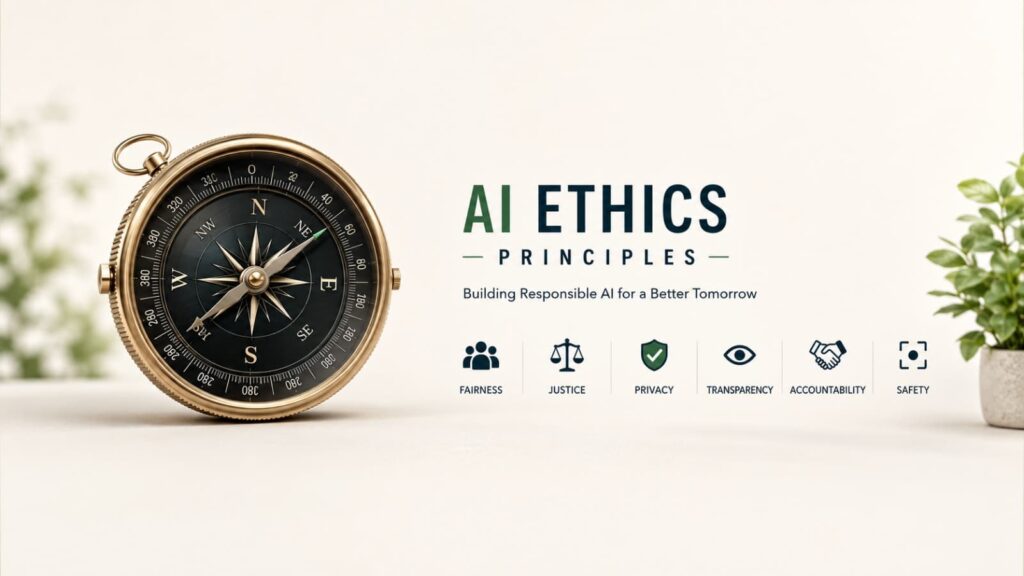
What Is AI Ethics?
AI ethics refers to the set of moral principles, guidelines, and standards that govern how artificial intelligence systems are designed, deployed, and used. At its core, AI ethics asks a simple but powerful question: just because we can build something with AI, does that mean we should?
AI ethics covers a wide range of concerns including fairness, accountability, transparency, privacy, safety, and human dignity. It also addresses broader societal questions about how AI affects employment, democracy, human rights, and the environment. Ethical AI considerations are not just about avoiding harm they are about actively designing AI systems that benefit all people, not just a privileged few.
AI ethics and governance go hand in hand. Governance refers to the policies, regulations, and oversight mechanisms that put ethical principles into practice. Without governance, AI ethics remains theoretical. Without ethics, governance has no moral compass.
Core Principles of AI Ethics
Understanding AI ethics starts with its foundational principles. These are the values that should guide every AI system from design to deployment.
1. Fairness AI systems must treat all people equally, regardless of race, gender, age, or socioeconomic background. Fairness in AI ethics means actively identifying and correcting algorithmic bias that can lead to discriminatory outcomes.
2. Transparency People affected by AI decisions have the right to understand how those decisions are made. Transparency is a cornerstone of AI ethics because it builds public trust and allows for accountability.
3. Accountability When an AI system causes harm, someone must be responsible. AI ethics demands clear lines of accountability whether that falls on developers, companies, or regulators.
4. Privacy Ethical AI systems must respect personal data and avoid unnecessary data collection. Privacy is a key ethical AI consideration because AI thrives on data, making it inherently risky without proper safeguards.
5. Safety and Security AI systems must be robust, reliable, and resistant to misuse. Safety is a non-negotiable part of AI ethics, especially in high-stakes fields like healthcare, finance, and criminal justice.
6. Human Oversight Even the most advanced AI should remain under meaningful human control. This principle of AI ethics ensures that automation never fully replaces human judgment in critical decisions.
7. Inclusivity AI ethics requires that AI systems are designed with diverse populations in mind, so that the benefits of AI reach everyone not just those with access to technology.
Benefits of AI Ethics Tools
Implementing AI ethics tools and frameworks brings significant advantages to organizations and society alike.
Building Public Trust When companies demonstrate a genuine commitment to AI ethics, they earn the trust of customers, employees, and the public. Trust is increasingly a competitive advantage in the digital economy, and ethical AI considerations are central to building it.
Reducing Legal and Regulatory Risk Governments worldwide are introducing AI regulations. The EU AI Act, for example, sets strict requirements for high-risk AI systems. Organizations that adopt AI ethics and governance frameworks early are better prepared for compliance and face fewer legal penalties.
Improving Decision Quality Ethical AI tools help detect bias and errors in AI models before they cause harm. This improves the overall quality and reliability of AI-driven decisions, making systems more accurate and fair.
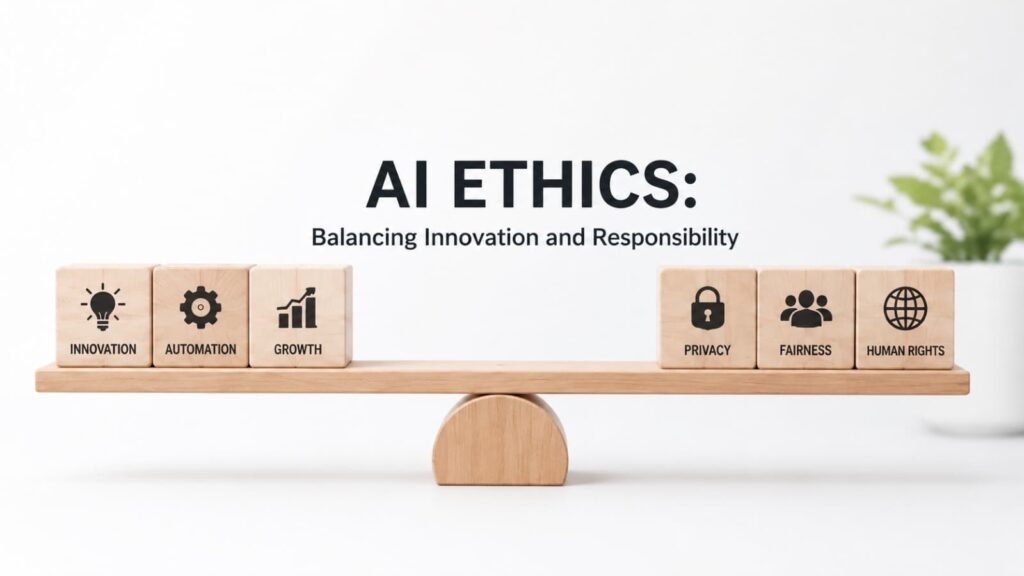
Promoting Innovation with Responsibility Contrary to popular belief, AI ethics does not slow down innovation — it guides it. Ethical AI considerations push developers to think more creatively about solutions that work for everyone, which often leads to more robust and scalable products.
Protecting Vulnerable Populations Without AI ethics, AI systems can reinforce existing inequalities. Ethical tools and frameworks help identify where AI may be unfairly targeting or excluding marginalized groups, protecting those who are most at risk.
Strengthening Organizational Culture Embedding AI ethics and governance into company culture encourages employees to think critically about the technology they build and use. This creates more responsible teams and better long-term outcomes.
Limitations and Challenges of AI Ethics
Despite its importance, AI ethics faces serious obstacles. These are challenges that no organization can afford to ignore.
The Definition Problem There is no universal agreement on what AI ethics means in practice. Different cultures, governments, and organizations have different values, making it difficult to create one-size-fits-all ethical standards. This fragmentation weakens AI ethics and governance efforts globally.
Bias in Training Data One of the biggest ethical AI considerations is the problem of biased data. AI systems learn from historical data, which often reflects past discrimination. Even well-intentioned developers can inadvertently build systems that perpetuate inequality.
Lack of Transparency in AI Models Many powerful AI systems, particularly large language models and deep learning networks, are “black boxes.” Their decision-making processes are difficult to interpret, making transparency a core principle of AI ethics extremely hard to achieve in practice.
Enforcement Gaps Even when AI ethics policies exist on paper, enforcement is inconsistent. Without strong regulatory oversight and meaningful penalties, companies may treat AI ethics as a public relations exercise rather than a genuine commitment.
Speed vs. Ethics The pace of AI development often outstrips the speed of ethical review. By the time regulators and ethicists catch up, problematic AI systems are already embedded in critical infrastructure. This is one of the most pressing challenges in AI ethics and governance today.
Resource Inequality Smaller organizations and developing countries often lack the resources to implement comprehensive AI ethics frameworks. This creates a global divide where only large, well-funded entities can afford to be ethical which is itself an ethical problem.
Accountability Diffusion In complex AI supply chains, it can be unclear who is responsible when something goes wrong. Multiple developers, vendors, and deployers share responsibility, making accountability a pillar of AI ethics difficult to assign.
Top AI Ethics Tools and Frameworks
Choosing the right tool is critical for organizations serious about AI ethics. Here are the leading tools and frameworks guiding ethical AI considerations today.
1. IBM OpenScale (Now IBM Watson OpenScale / AI Fairness 360) IBM’s AI Fairness 360 is an open-source toolkit that helps developers detect and mitigate bias in AI models. It supports multiple fairness metrics and is widely used in AI ethics research and enterprise applications. It directly addresses core ethical AI considerations around discrimination and equality.
2. Google’s What-If Tool Developed by Google, the What-If Tool allows users to visually explore the behavior of machine learning models. It helps identify how different inputs affect outcomes, making AI systems more transparent a key goal of AI ethics.
3. Microsoft Responsible AI Dashboard Microsoft offers a comprehensive Responsible AI Dashboard that integrates error analysis, model interpretability, and fairness assessment into a single interface. It reflects Microsoft’s commitment to ethical AI and governance across its product ecosystem.
4. Fairlearn (Microsoft) Fairlearn is an open-source Python package that helps developers assess and improve the fairness of AI systems. It provides algorithms to reduce disparity in predictions a core ethical AI consideration for any organization building predictive models.
5. LIME and SHAP (Explainability Tools) LIME (Local Interpretable Model-Agnostic Explanations) and SHAP (SHapley Additive exPlanations) are tools that make AI model predictions interpretable to humans. Explainability is essential in ethical AI because people cannot challenge or correct what they cannot understand.
6. Aether (Microsoft’s AI Ethics Framework) Aether is Microsoft’s internal committee and framework for ethical AI and governance. It guides how Microsoft develops and deploys AI responsibly, setting a model for corporate ethical AI governance.
7. Turing Institute’s AI Ethics Guidelines The Alan Turing Institute in the UK has published detailed guidelines on ethical AI, covering topics from fairness to environmental impact. These guidelines are widely used by researchers, policymakers, and practitioners.
8. Partnership on AI A multi-stakeholder organization including Google, Apple, Amazon, and academic institutions, the Partnership on AI develops best practices and research to support responsible ethical AI and governance globally.
Comparison: AI Ethics Frameworks and Tools
When comparing ethical AI tools, it helps to look at four key dimensions: accessibility, depth of fairness analysis, explainability features, and governance support.
IBM’s AI Fairness 360 excels in technical fairness metrics and is ideal for data scientists working on bias detection. However, it requires coding knowledge, making it less accessible to non-technical stakeholders concerned with ethical AI.
Google’s What-If Tool offers a user-friendly visual interface and strong model exploration features, but it is primarily designed for Google’s TensorFlow ecosystem, limiting broader application of ethical AI considerations.
Microsoft’s Responsible AI Dashboard is the most comprehensive all-in-one solution, combining fairness, interpretability, and error analysis. It is best suited for organizations deeply embedded in the Microsoft Azure ecosystem seeking full ethical AI and governance integration.
LIME and SHAP are technically powerful for explainability but require significant expertise to implement properly. They are best used as part of a broader ethical AI toolkit rather than standalone solutions.
The Partnership on AI and Turing Institute guidelines are not technical tools but policy frameworks. They provide essential context and best-practice guidance for organizations building ethical AI and governance strategies from the ground up.
For most organizations, a combination approach works best using technical tools like Fairlearn or SHAP alongside policy frameworks from bodies like the Partnership on AI to cover both the technical and governance dimensions of ethical AI.
How to Choose the Right AI Ethics Tool
Selecting the right tool for your ethical AI needs depends on several factors. Here is a practical guide to making the right choice.
Assess Your Risk Level Start by identifying how much risk your AI system carries. High-stakes applications in healthcare, criminal justice, or financial lending require more rigorous ethical AI tools and deeper ethical AI considerations than, say, a recommendation engine for a retail website.
Consider Your Team’s Technical Capacity If your team includes experienced data scientists, technical tools like AI Fairness 360 or SHAP are powerful choices. If your organization is less technical, start with policy frameworks and dashboards that offer more accessible interfaces for implementing ethical AI.
Match the Tool to Your Governance Structure AI ethics and governance are inseparable. Choose tools that integrate with your existing governance workflows. Microsoft’s Responsible AI Dashboard, for example, is ideal if your organization already uses Azure and needs ethical AI built into your MLOps pipeline.
Look for Multi-Dimensional Coverage A single tool rarely covers all aspects of ethical AI. Look for tools or combinations of tools that address fairness, explainability, privacy, and accountability together. Comprehensive ethical AI considerations require a layered approach.
Prioritize Stakeholder Inclusion The best ethical AI frameworks involve not just developers but also legal teams, ethicists, affected communities, and policymakers. Choose tools that generate reports and insights accessible to non-technical audiences so that ethical AI and governance becomes a company-wide responsibility.
Stay Updated on Regulation As AI laws evolve rapidly, ensure the tools you choose help you stay compliant. ethical AI tools that align with frameworks like the EU AI Act or the NIST AI Risk Management Framework will future-proof your organization against regulatory change.
Future Trends in AI Ethics
The field of AI ethics is evolving quickly. Here are the key trends that will shape its future.
Regulatory Expansion More governments are moving from voluntary guidelines to binding laws on ethical AI. The EU AI Act is already in force, and countries across Asia, North America, and Africa are developing their own frameworks. ethical AI and governance will increasingly be a legal requirement, not just a best practice.
Explainable AI (XAI) Goes Mainstream As demand for transparency grows, explainable AI will move from a niche research area to a standard requirement. Future ethical AI tools will automatically generate human-readable explanations for every AI decision, making ethical AI considerations easier to demonstrate and audit.
AI Ethics by Design Rather than retrofitting ethics onto existing systems, the future of ethical AI lies in designing it in from the start. This “ethics by design” approach embeds ethical AI considerations into every stage of the AI development lifecycle from data collection to deployment.
Global Collaboration on AI Ethics Standards No single country can govern AI alone. International bodies like the UN, OECD, and G7 are increasingly working on shared ethical AI and governance standards. This global convergence will reduce fragmentation and create more consistent protections worldwide.
AI Ethics in Generative AI The explosion of generative AI tools that create text, images, video, and code raises entirely new ethical AI considerations around intellectual property, misinformation, deepfakes, and consent. AI ethics frameworks will need to rapidly evolve to address these challenges.
Ethics Auditing as a Profession Just as financial auditing is a recognized profession, AI ethics auditing is emerging as a specialized field. Third-party ethical AI auditors will assess AI systems for bias, fairness, and compliance, providing independent assurance to regulators and the public.
Final Verdict
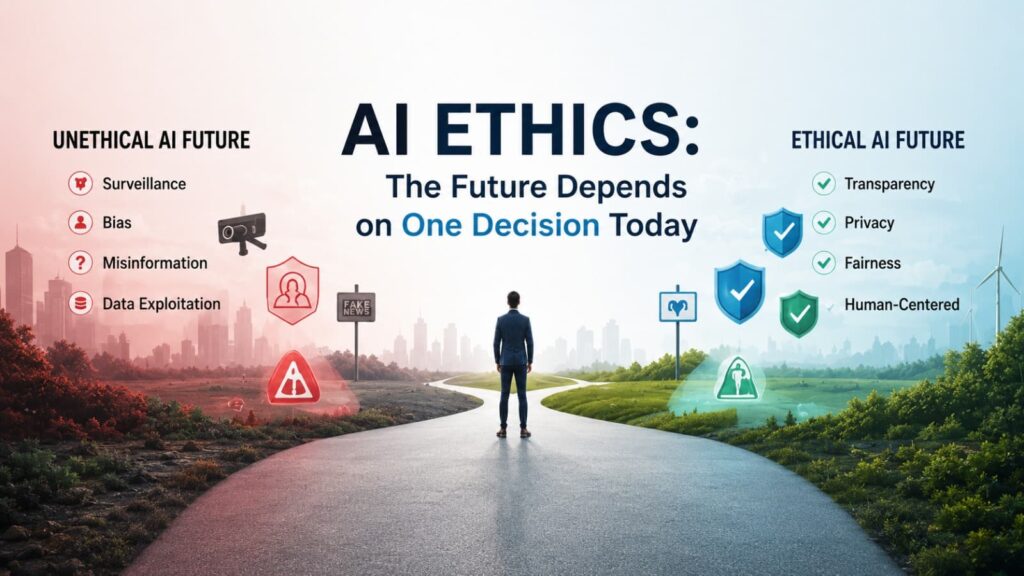
AI ethics is not a luxury it is a necessity. As artificial intelligence becomes embedded in every aspect of human life, the principles, tools, and governance structures that guide it will determine whether AI serves humanity or harms it.
The core message is clear: technical capability without ethical responsibility is dangerous. Organizations that take ethical AI seriously by adopting the right tools, building governance frameworks, and embedding ethical AI considerations into their culture will not only avoid harm but build stronger, more trusted brands.
From IBM’s AI Fairness 360 to Microsoft’s Responsible AI Dashboard, there are excellent tools available to help organizations practice responsible AI and governance at scale. But tools alone are not enough. What is needed is a genuine cultural and organizational commitment to treating responsible AI as a core business value, not an afterthought.
The future of AI belongs to those who build it responsibly. Start with responsible AI today.
Frequently Asked Questions (FAQs)
Q1. What is AI ethics in simple terms? AI ethics is a set of principles and guidelines that ensure artificial intelligence systems are built and used in ways that are fair, safe, transparent, and respectful of human rights and dignity.
Q2. Why are ethical AI considerations important? Ethical AI considerations matter because AI systems make decisions that affect real people. Without proper ethical AI , these systems can be biased, discriminatory, or harmful especially to vulnerable populations.
Q3. What are the main principles of AI ethics? The main principles of responsible AI include fairness, transparency, accountability, privacy, safety, human oversight, and inclusivity. These principles guide every aspect of responsible AI development and deployment.
Q4. What is the difference between AI ethics and AI governance? AI ethics refers to the moral principles guiding AI. responsible AI and governance together refer to both the values and the policies, regulations, and oversight mechanisms that turn those values into practice.
Q5. Which organizations are leading in AI ethics and governance? Leading organizations in responsible AI and governance include the Partnership on AI, the Alan Turing Institute, the OECD, the European Commission (through the EU AI Act), and major tech companies like Microsoft, Google, and IBM, each of which has developed substantial responsible AI frameworks and tools.
Q6. How can a business start implementing AI ethics? A business can start by conducting an AI risk assessment, adopting an responsible AI framework such as Microsoft’s Responsible AI principles, training staff on ethical AI considerations, using fairness and explainability tools, and establishing a governance committee dedicated to responsible AI and governance.
Q7. What is the future of AI ethics? The future of responsible AI includes more stringent regulations, global standards, ethics-by-design approaches, ethical AI auditing as a profession, and specialized frameworks to address the unique challenges posed by generative AI and advanced autonomous systems.
Follows Us on social media

Mohammed Viqar Ali is a Digital Marketer, UI/UX Designer, and content creator passionate about AI, technology, SEO, and digital growth. As the UI/UX Designer of aiblogmind, he focuses on creating user-friendly digital experiences while sharing practical insights on artificial intelligence, marketing trends, productivity tools, and online business growth. Through his content, he helps readers discover innovative solutions, stay updated with emerging technologies, and make informed decisions in the digital world.