



Build AI Voice Agents Fast With This Powerful 2026 Full Guide
The race to build AI voice agents is moving faster than ever in 2026. Businesses no longer want basic chatbots that only reply with robotic text. They want real-time voice conversations that sound natural, solve customer problems instantly, and automate repetitive tasks without human intervention. From startups to enterprise brands, companies are investing heavily in AI voice agents, conversational AI development, voice AI development, and AI voice assistant development because voice interaction is becoming the next major interface after mobile apps and websites.
Recent industry reports show that the global AI voice agents market could reach more than $35 billion by 2033, growing at a CAGR of nearly 39% Businesses are rapidly adopting voice automation because customers increasingly prefer speaking instead of typing, especially for customer support, appointment booking, and sales inquiries. At the same time, advances in low-latency speech models and multimodal AI are making conversations feel almost human.
Why AI Voice Agents Are Exploding in 2026
Market Growth and Industry Trends
The demand to build AI voice agents has exploded because voice is becoming the most natural way humans interact with technology. Think about it. Typing takes effort. Clicking through menus feels slow. Speaking, on the other hand, feels effortless. Businesses realized this simple truth, and now they are racing to implement AI voice agents across customer support, healthcare, e-commerce, banking, and education.
Reports published in 2026 reveal that the market for voice AI solutions is growing at an extraordinary pace. Industry researchers estimate that the AI voice agents market will exceed $35.24 billion by 2033, while enterprise deployments have already increased by over 340% year-over-year. The biggest reason behind this growth is improved conversational quality. Modern conversational AI development platforms can now handle interruptions, maintain context across long conversations, and respond in less than 500 milliseconds. That means users no longer feel like they are talking to a machine.
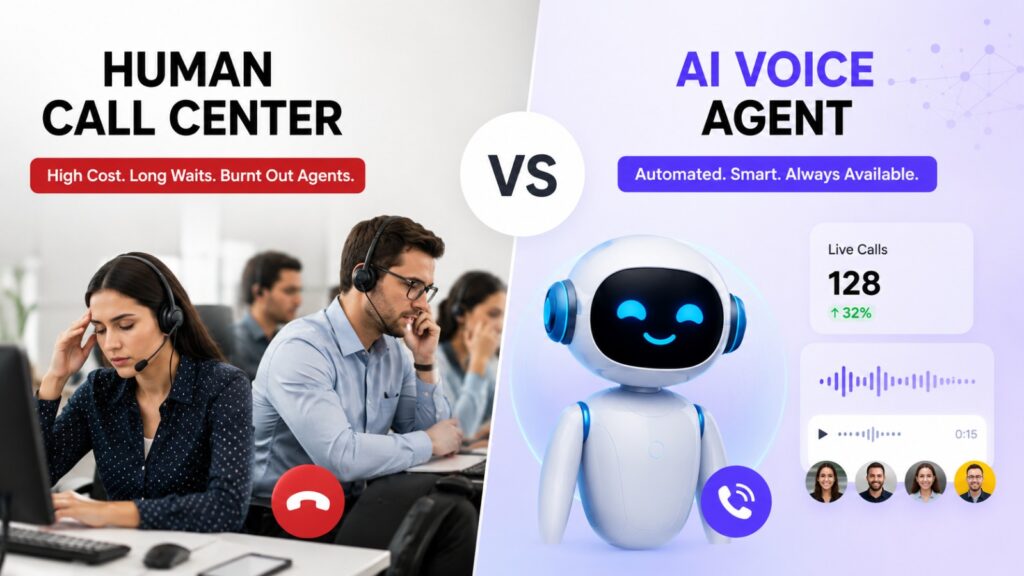
Another reason companies want to build AI voice agents is cost reduction. Human support teams are expensive, especially for 24/7 operations. Voice AI systems can handle thousands of simultaneous calls while significantly reducing operational costs. Research suggests businesses can reduce support expenses by nearly 90% compared to traditional call centers. This economic advantage alone is pushing companies toward aggressive voice AI development strategies.
Why Businesses Prefer Voice Automation
Businesses today operate in a world where customers expect instant responses. Nobody wants to wait on hold for 20 minutes anymore. AI voice systems solve this frustration by providing immediate assistance any time of day. Whether it’s booking appointments, checking order status, or qualifying sales leads, AI voice assistant development helps businesses scale without hiring massive support teams.
Voice agents also improve customer experience because they feel more personal than text chat. A warm, natural voice can create emotional trust faster than written responses. This is why many companies are replacing old IVR systems with advanced conversational AI solutions. Instead of “Press 1 for support,” customers can now speak naturally and get intelligent responses instantly.
At the same time, advancements in AI models from major tech companies are accelerating the shift toward voice-first experiences. Tech leaders showcased highly conversational multimodal systems at recent industry events, proving that voice AI is becoming deeply integrated into everyday products and services. This shift signals that businesses investing in AI voice agents today are preparing for the future of digital interaction.
What Are AI Voice Agents?
Difference Between Chatbots and Voice Agents
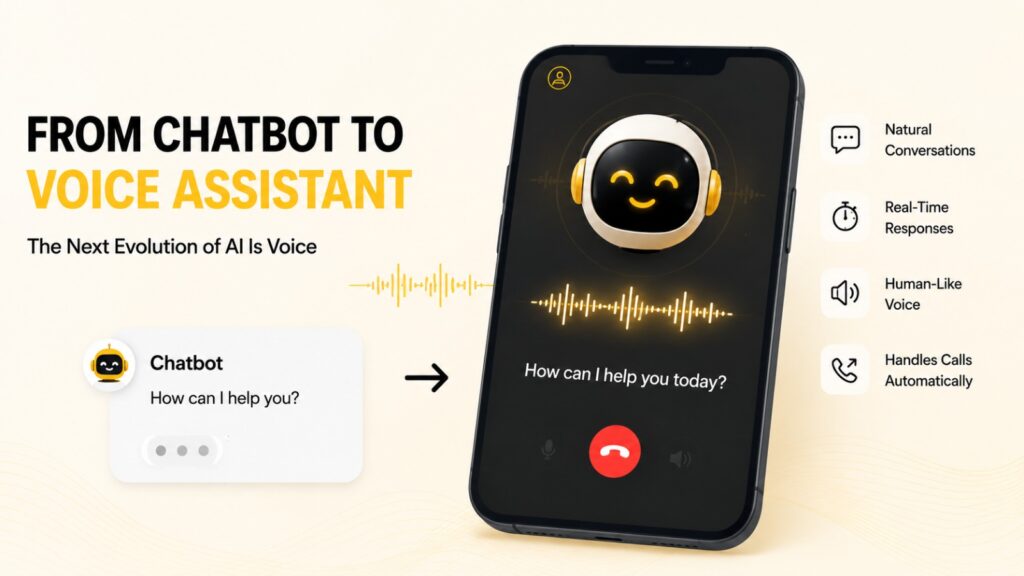
Many people confuse chatbots with voice agents, but they are not the same thing. Traditional chatbots mainly operate through text. They answer questions in a chat window, often following predefined scripts. Voice agents, however, combine speech recognition, language understanding, and voice generation to create real-time spoken conversations.
Imagine a chatbot as a cashier behind a glass window where you type requests. An AI voice agent is more like a human receptionist speaking directly with you. It listens, understands intent, processes information, and responds conversationally. That difference completely changes the user experience.
Modern AI voice agents are powered by advanced large language models combined with real-time speech systems. They can interrupt naturally, remember earlier parts of conversations, and adapt responses based on tone and context. Businesses building next-generation customer experiences are heavily investing in conversational AI development because users now expect interactions that feel natural instead of robotic.
Core Components of AI Voice Systems
To successfully build AI voice agents, you need to understand the major components behind the technology. Every voice AI system usually includes four essential layers:
| Component | Purpose |
|---|---|
| Speech-to-Text (STT) | Converts spoken audio into text |
| Natural Language Processing (NLP) | Understands meaning and intent |
| Large Language Models (LLMs) | Generates intelligent responses |
| Text-to-Speech (TTS) | Converts text responses into human-like voice |
These layers work together almost instantly. When a user speaks, the speech recognition engine converts audio into text. The NLP system analyzes the request. The language model decides how to respond. Finally, the TTS engine generates realistic speech.
The biggest breakthrough in 2026 is latency reduction. Older systems often paused awkwardly between responses. Modern voice AI development systems respond so quickly that conversations feel fluid and natural. Industry experts say sub-300ms latency has become a critical benchmark for creating truly human-like interactions.
How Conversational AI Development Works
Speech Recognition Technology
Speech recognition is the foundation of every successful AI voice assistant development project. Without accurate transcription, the rest of the system collapses. Modern STT systems use deep neural networks trained on millions of speech samples from different accents, languages, and speaking styles.
In 2026, speech recognition has improved dramatically. AI systems can now handle noisy environments, overlapping conversations, and regional accents far better than older technologies. Still, challenges remain. Developers testing production-grade systems discovered that accents, telecom compression, and packet loss can still reduce accuracy significantly.
That’s why businesses trying to build AI voice agents must prioritize real-world testing instead of relying only on polished demos. A voice agent performing perfectly in a controlled environment may struggle during real customer calls. Strong conversational systems need resilience, fallback handling, and context memory to maintain smooth interactions under imperfect conditions.
Natural Language Processing and LLMs
Natural Language Processing acts as the “brain” of conversational systems. Once speech is converted into text, NLP determines what the user actually means. This is where conversational AI development becomes truly intelligent.
Modern systems use advanced LLMs capable of understanding nuance, emotion, and conversational context. Instead of matching keywords like older bots, today’s AI voice systems interpret meaning dynamically. They can recognize frustration, identify customer intent, and even adjust tone accordingly.
The arrival of multimodal AI models in 2026 has accelerated this evolution further. These systems combine voice, text, and visual understanding into unified conversational experiences. That means future voice agents won’t simply answer questions. They will complete tasks autonomously, interact with databases, schedule meetings, process transactions, and manage workflows independently.
Text-to-Speech Systems
If speech recognition is the ears and NLP is the brain, TTS is the personality. A robotic voice instantly destroys user trust. Human-like speech creates emotional connection and improves engagement.
Modern voice AI development platforms now generate speech almost indistinguishable from human voices. Open-weight TTS models and commercial APIs allow developers to create natural, expressive voices with realistic pauses, emotional tone, and conversational rhythm.
This progress is why businesses increasingly want to build AI voice agents instead of relying on outdated phone systems. Customers are more likely to stay engaged when the interaction feels smooth and conversational rather than mechanical and frustrating.
Best Tech Stack to Build AI Voice Agents
APIs and Frameworks
Choosing the right technology stack can dramatically speed up AI voice assistant development. Developers today have access to powerful APIs and frameworks that simplify deployment.
Popular tools include:
| Technology | Main Purpose |
|---|---|
| OpenAI Realtime APIs | Conversational intelligence |
| ElevenLabs | Realistic voice generation |
| Deepgram | Speech recognition |
| Vapi | Voice agent orchestration |
| Twilio | Telephony integration |
| LangChain | Workflow orchestration |
The best approach depends on your use case. Customer support systems require reliable telephony integration, while healthcare applications may prioritize compliance and data privacy. Developers should focus on scalability, latency, and integration flexibility when selecting tools.
Cloud Infrastructure and Deployment
Cloud infrastructure plays a huge role in successful voice AI development. AI voice systems process large amounts of real-time audio data, so low latency is critical. Many businesses use cloud providers like AWS, Google Cloud, or Azure because they offer scalable AI infrastructure.
At the same time, some enterprises are shifting toward hybrid or on-premise deployments due to privacy concerns and rising AI inference costs. Industry leaders highlighted that resource demands for agentic AI systems are increasing rapidly, making infrastructure optimization a top priority.
Businesses that want to build AI voice agents successfully must think beyond the AI model itself. Infrastructure reliability, monitoring systems, and failover mechanisms are equally important.
Step-by-Step Guide to Build AI Voice Agents
Define the Use Case
The first step in any successful conversational AI development project is defining the exact purpose of the agent. A healthcare appointment assistant requires different workflows compared to a sales qualification bot.
Start by identifying:
- User goals
- Common conversation flows
- Required integrations
- Escalation scenarios
- Compliance requirements
Trying to create a “universal” voice agent often leads to failure. Focused systems usually perform better because they operate within well-defined conversational boundaries.
Choose the Right AI Models
Once the use case is clear, developers must select the right AI models. Fast response time is essential. Users quickly lose patience if conversations feel delayed.
Modern voice systems combine:
- Realtime speech recognition
- LLM reasoning engines
- Voice synthesis APIs
- Workflow automation tools
The ideal stack balances speed, intelligence, and affordability. Enterprise deployments increasingly prioritize interruption handling and conversational memory because users expect fluid interactions.
Train and Fine-Tune the Agent
Training is where AI voice agents become specialized. Fine-tuning allows systems to adopt brand tone, industry terminology, and business-specific workflows.
For example:
- Healthcare systems learn appointment terminology
- Banking assistants understand financial procedures
- E-commerce agents recognize product catalogs
The more contextual data developers provide, the more accurate and natural the system becomes.
Connect Voice Channels
Finally, the voice agent must connect to real communication channels. Businesses usually integrate with:
- Phone systems
- Websites
- Mobile apps
- Smart devices
- CRM platforms
Strong integrations transform voice agents from simple conversation tools into operational assistants capable of completing real tasks.
AI Voice Assistant Development for Businesses
Customer Support Automation
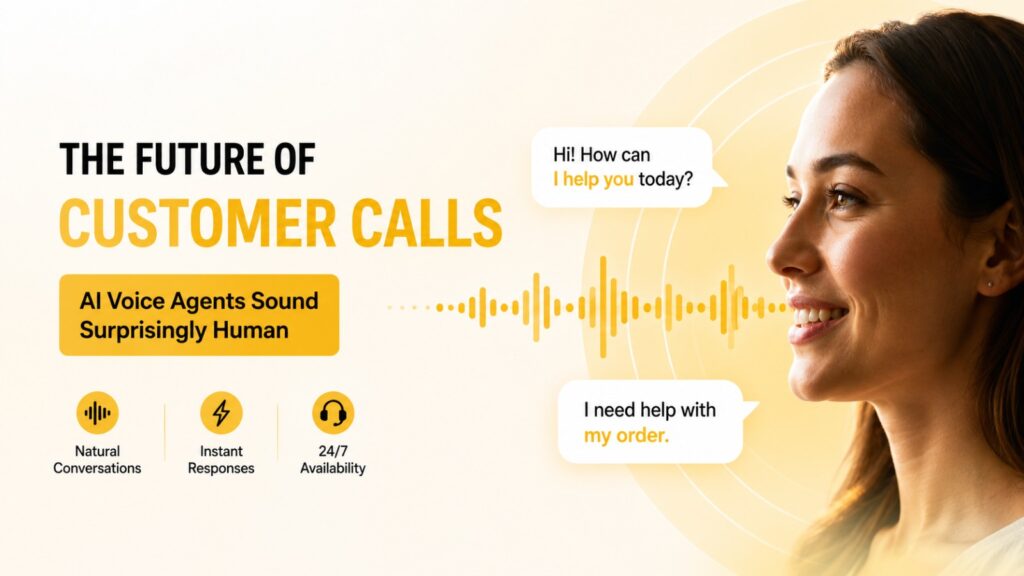
Customer service remains the biggest application for AI voice assistant development. Businesses use voice agents to handle repetitive inquiries like billing questions, order tracking, password resets, and appointment confirmations.
AI systems excel because they never sleep. They provide consistent responses, reduce wait times, and scale instantly during peak demand periods. Many companies now use hybrid models where AI handles basic interactions while humans focus on complex cases.
Sales and Lead Qualification
Sales teams are increasingly using AI voice agents for outbound lead qualification. Instead of cold callers manually contacting prospects, voice AI systems can initiate conversations, qualify leads, and schedule follow-up meetings automatically.
This approach dramatically improves efficiency. AI systems can handle thousands of conversations simultaneously while maintaining consistent messaging.
Healthcare and Appointment Booking
Healthcare providers are rapidly investing in voice AI development because appointment scheduling and patient communication consume enormous administrative resources.
Voice agents can:
- Schedule appointments
- Send reminders
- Answer FAQs
- Collect patient information
- Route emergency calls
Healthcare is also expected to become one of the fastest-growing sectors for AI voice adoption in the coming years.
Challenges in Voice AI Development
Latency and Response Delays
Latency remains one of the biggest obstacles in conversational AI development. Even slight delays make conversations feel unnatural.
Users expect instant responses. A one-second pause might seem small technically, but psychologically it feels awkward. Developers must optimize infrastructure carefully to minimize delays.
Accent and Dialect Recognition
Accents remain another major challenge. Real-world conversations involve diverse speaking styles, background noise, and imperfect audio quality.
Developers testing production deployments discovered that many AI systems still struggle with regional accents and telecom audio compression. This makes multilingual testing essential for businesses deploying global voice systems.
Privacy and Security Risks
As companies rush to build AI voice agents, privacy concerns are becoming increasingly important. Voice systems process sensitive information including payment details, medical records, and customer conversations.
Researchers have warned that conversational AI systems could potentially manipulate users or collect sensitive information if deployed irresponsibly.Strong governance, encryption, and transparency are critical for ethical deployment.
Future of AI Voice Agents in 2026 and Beyond
Agentic AI and Autonomous Systems
The future of AI voice agents is moving toward autonomous “agentic” systems capable of completing entire workflows independently. Instead of simply answering questions, future systems will perform tasks across connected software platforms.
Industry leaders increasingly describe this shift as the transition from generative AI to agentic AI. These systems will not only converse naturally but also reason, plan, and execute actions autonomously.
Hyper-Personalized Voice Experiences
Future AI voice assistant development will focus heavily on personalization. Voice agents will adapt tone, vocabulary, and conversational style based on individual users.
Imagine a system that remembers your communication preferences, understands emotional cues, and proactively solves problems before you ask. That future is rapidly approaching.
Voice technology may even influence human communication patterns themselves. Researchers suggest synthetic voices could shape how people speak and interact socially over time.
Conclusion
The decision to build AI voice agents in 2026 is no longer optional for businesses that want to stay competitive. Voice AI has evolved from experimental technology into real operational infrastructure. Companies using advanced AI voice agents are reducing costs, improving customer experiences, and automating workflows at unprecedented scale.
The combination of faster speech recognition, powerful LLMs, realistic voice synthesis, and agentic AI systems is transforming how humans interact with technology. Businesses investing in conversational AI development and voice AI development today are positioning themselves for the next major digital revolution.
The future belongs to systems that can listen, understand, and act naturally. Voice is becoming the interface layer connecting humans and AI, and the companies mastering that interaction first will gain a massive competitive advantage.
FAQs
What are AI voice agents?
AI voice agents are intelligent software systems that can understand spoken language, process meaning, and respond using human-like speech in real time.
How long does it take to build AI voice agents?
Simple systems can be built in a few days using APIs, while enterprise-grade solutions may require several months of development and testing.
Which industries use conversational AI development the most?
Customer support, healthcare, banking, e-commerce, and education are currently the biggest adopters of conversational AI development.
Is voice AI development expensive?
Costs vary depending on infrastructure, API usage, and scale. Small prototypes are affordable, but large enterprise deployments require significant investment.
What is the future of AI voice assistant development?
Future systems will become more autonomous, personalized, and deeply integrated into business workflows, enabling highly natural and intelligent human-AI conversations.
Quick Tips to Build AI Voice Agents Faster in 2026
- Start with a narrow use case instead of trying to create an all-in-one assistant. A focused AI voice agent performs better and delivers faster ROI.
- Use prebuilt APIs for speech recognition and text-to-speech to reduce development time dramatically.
- Optimize latency early because users expect instant replies during real-time conversations.
- Add fallback responses when the AI cannot understand a query instead of letting the conversation fail.
- Train your system using real customer conversations to improve contextual accuracy.
- Integrate CRM and automation tools so the voice agent can actually complete tasks instead of only talking.
- Test with different accents, noisy environments, and mobile connections to ensure reliability.
- Monitor conversations continuously and retrain the model regularly for better performance.
- Use multilingual support if your audience is global because modern voice AI development platforms now support dozens of languages.
- Prioritize security and encryption when handling customer data in AI voice assistant development projects.
Best Features Every AI Voice Agent Should Have
- Real-time speech recognition with ultra-low latency
- Human-like voice responses with emotional tone adaptation
- Context memory for longer and smarter conversations
- Interruption handling so users can speak naturally
- Smart lead qualification and appointment scheduling
- CRM and third-party software integrations
- Multi-language and accent understanding capabilities
- Sentiment analysis for detecting customer frustration or urgency
- Analytics dashboard to monitor conversations and performance
- Scalable cloud deployment for handling thousands of simultaneous calls
These features help businesses build AI voice agents that feel natural, intelligent, and highly useful instead of robotic and frustrating. Modern conversational AI development is no longer just about answering questions. It is about creating fully automated voice systems capable of managing real business workflows efficiently.
For more such Interesting content our follow our page. Thank You!

Syed Abubakkar is a content and SEO specialist responsible for article publishing, on-page SEO, keyword optimization, and AI-powered image generation. He is passionate about digital marketing and helping websites grow their online presence.