


How AI Chatbots Actually Work Behind the Scenes in 2026
Have you ever typed a question into an AI chatbot and received an answer so accurate it felt almost human? You are not alone. Millions of people interact with AI chatbots every single day — for customer support, writing help, coding assistance, medical guidance, and much more. But most people have no idea what is actually happening behind the scenes when they hit “send.”
The problem is that AI chatbots have become part of everyday life faster than most people can understand them. Businesses are deploying chatbot automation at scale, customers expect instant intelligent responses, and developers are racing to build smarter AI conversational systems. Yet the average person — and even many professionals — still treats an AI chatbot like a magic black box.
The solution is simple: understand how these systems actually work. Once you do, you will know how to use them better, choose the right tools for your needs, and set realistic expectations. This article breaks it all down in plain, easy-to-understand language — no engineering degree required.
What Is an AI Chatbot and Why Does It Matter in 2026?
An AI chatbot is a software program that uses artificial intelligence to simulate conversation with humans. Unlike the clunky rule-based bots of the early 2010s, modern AI chatbots are powered by large language models (LLMs), machine learning chatbots, and neural networks that can understand context, generate nuanced responses, and even reason through complex problems.
In 2026, AI chatbots are no longer novelties. They are core infrastructure. Businesses use chatbot automation to handle thousands of customer queries simultaneously. Doctors use AI conversational systems to pre-screen patients. Students use AI chatbots to learn new subjects. The demand for smarter, faster, and more reliable AI chatbots has never been higher.
What makes this moment unique is the convergence of better AI chatbot technology, more accessible AI chatbot APIs, and a massive increase in real-world data that machine learning chatbots can learn from. The result is AI chatbots that feel genuinely intelligent — because in many ways, they now are.
How AI Chatbots Actually Work Behind the Scenes
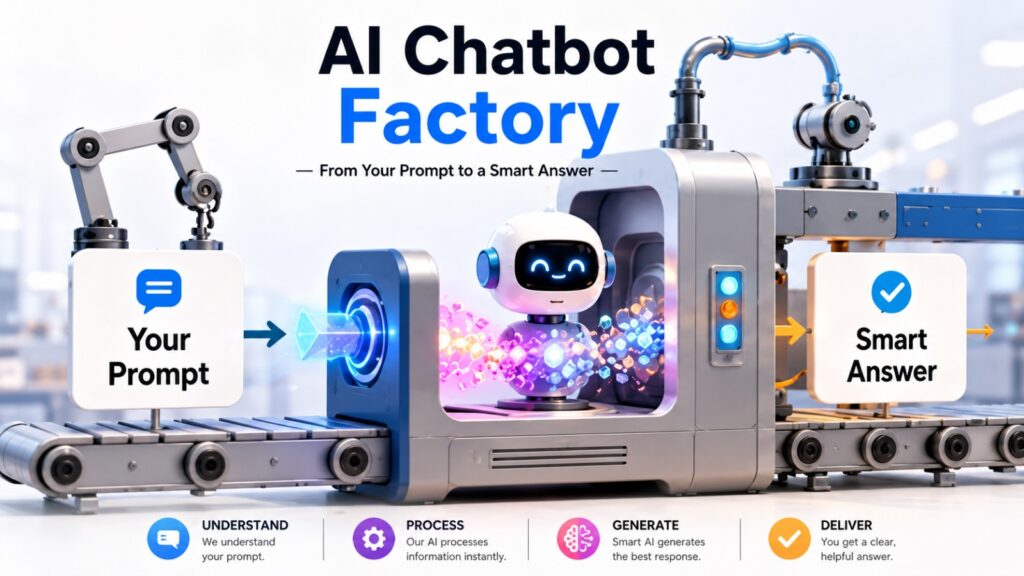
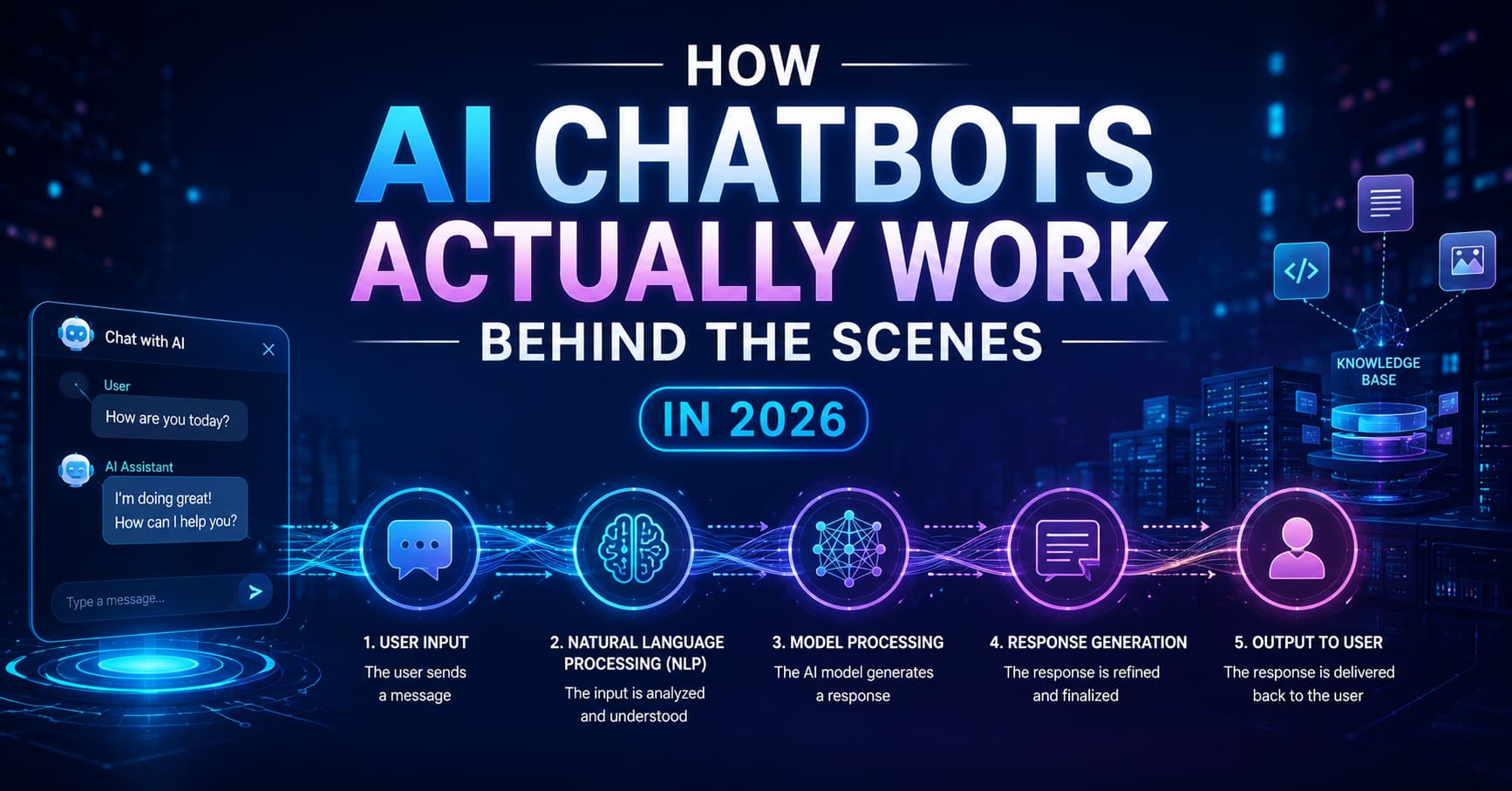
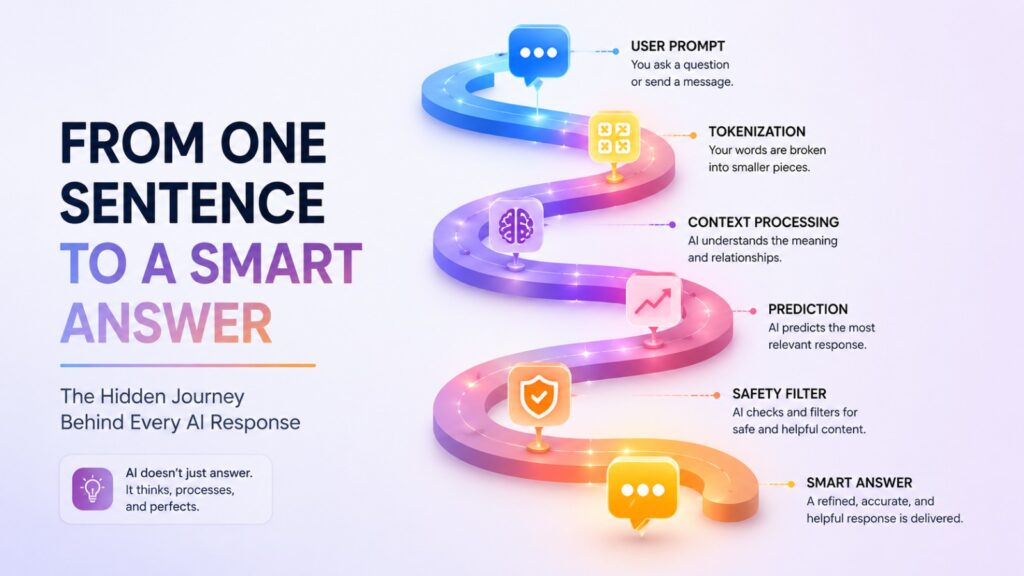
Understanding AI chatbot technology starts with understanding the basic pipeline that every modern AI chatbot follows when you send it a message.
Step 1: Your Input Gets Tokenized
When you type a message, the AI chatbot does not read it the way you do. Instead, AI chatbot technology breaks your text into small units called tokens — which can be words, parts of words, or punctuation marks. For example, the word “chatbot” might be split into “chat” and “bot.” This tokenization is the first step in how machine learning chatbots process language.
Step 2: The Model Processes Context
Modern AI chatbots are built on transformer-based neural networks. These networks are trained on enormous datasets of human-written text. When your tokenized message enters the model, it is compared against everything the model has learned. The AI chatbot uses a mechanism called “attention” to figure out which parts of your message are most relevant to each other and to the broader conversation.
This is why AI conversational systems can follow the thread of a long conversation. They do not just look at your last message — they look at the entire exchange to understand context.
Step 3: The Model Predicts the Best Response
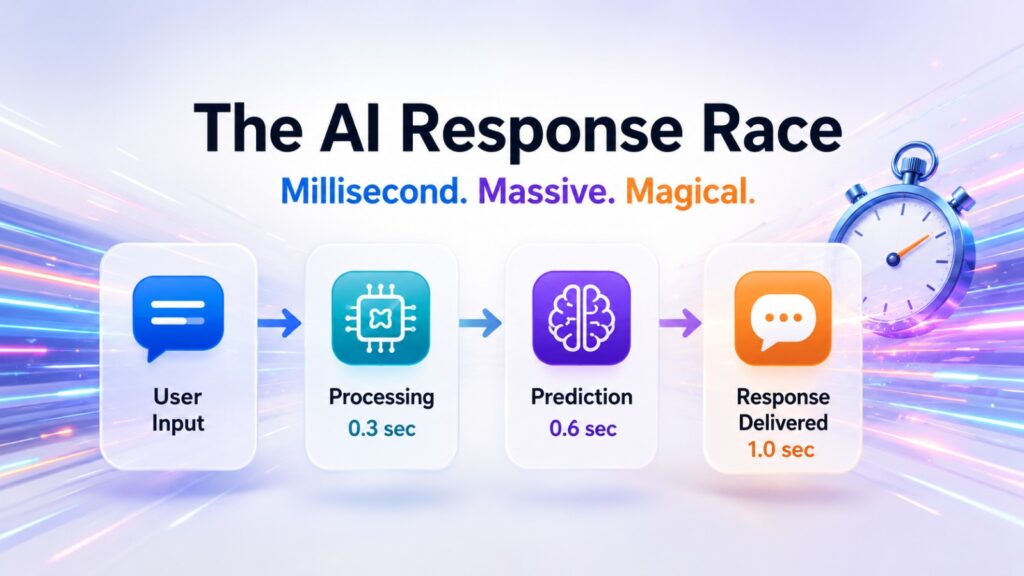
Here is the heart of how machine learning chatbots work: they predict. Given the input, the model calculates the most statistically likely next word, then the next, then the next — until it builds a complete response. This prediction process happens at incredible speed, generating fluent, relevant text in milliseconds.
This is not the AI chatbot “thinking” the way a human does. It is sophisticated pattern matching at a massive scale, shaped by training on trillions of words. The result, however, is often indistinguishable from thoughtful human writing.
Step 4: AI Chatbot APIs Deliver the Response
In most real-world deployments, the core model does not run on your device. It runs on powerful servers in the cloud. AI chatbot APIs act as the bridge between your app or website and the underlying model. When a business integrates an AI chatbot into their customer service platform, they are almost always using AI chatbot APIs to send messages to a hosted model and receive responses back.
AI chatbot APIs are what make chatbot automation possible at scale. A single company can deploy one AI chatbot that handles millions of conversations simultaneously — all routed through AI chatbot APIs without any human involvement.
Step 5: Safety Filters and Output Moderation
Before the response reaches you, modern AI chatbots run it through safety layers. These filters check for harmful content, misinformation, or policy violations. This is a critical part of responsible AI chatbot technology, and it is something the best AI conversational systems invest heavily in.
Benefits of AI Chatbots in 2026
The rise of AI chatbots has brought undeniable advantages to businesses, consumers, and developers alike.
Always-On Availability
AI chatbots do not sleep. Chatbot automation means businesses can provide 24/7 support without hiring overnight staff. Customers get answers instantly, at 3 AM or during peak holiday traffic, without waiting in a queue.
Cost Efficiency
Deploying an AI chatbot through AI chatbot APIs is dramatically cheaper than staffing a large customer service team. Machine learning chatbots can handle the volume of hundreds of human agents at a fraction of the cost. This makes high-quality support accessible even for small businesses.
Consistency and Accuracy
A human agent might give different answers on different days. AI chatbots, when well-configured, give consistent, accurate responses every time. AI chatbot technology allows businesses to ensure that every customer receives the same quality of information.
Scalability
With chatbot automation, scaling is nearly instant. If your website suddenly receives ten times the usual traffic, AI chatbot APIs can handle the load without missing a beat. Human teams cannot scale that fast.
Personalization
Modern AI conversational systems can personalize responses based on user history, preferences, and behavior. Machine learning chatbots get better over time as they accumulate more interaction data. The more you use an AI chatbot, the more it can adapt to your communication style.
Multilingual Support
Leading AI chatbot technology now supports dozens of languages fluently. Businesses can deploy a single AI chatbot that serves customers in English, Spanish, Hindi, Mandarin, and more — all through the same AI chatbot APIs.
Also, checkout our more articles related to Ai chatbot tools
Limitations of AI Chatbots in 2026
Despite their impressive capabilities, AI chatbots still have real limitations that users and businesses need to understand.
Hallucinations
Machine learning chatbots can confidently produce incorrect information. This is called “hallucination.” Because AI chatbots predict the most statistically likely response rather than retrieving verified facts, they can sometimes generate plausible-sounding but completely false answers. This is one of the biggest ongoing challenges in AI chatbot technology.
Lack of True Understanding
AI chatbots process patterns, not meaning. They do not truly understand what they say. AI conversational systems can discuss philosophy without having opinions, describe emotions without feeling them, and explain medical symptoms without actually knowing what is wrong. This distinction matters in high-stakes situations.
Context Window Limits
Every AI chatbot has a limit on how much text it can consider at once — called the context window. In very long conversations, AI chatbots may start to forget earlier parts of the discussion. While context windows have expanded significantly, this remains a real limitation for chatbot automation in complex workflows.
Over-Reliance Risks
As AI chatbots become more capable, there is a growing risk that users over-rely on them. Blindly trusting AI chatbot responses without verification can lead to poor decisions, especially in medical, legal, or financial contexts.
Privacy Concerns
When you use AI chatbot APIs hosted by third parties, your conversation data travels through external servers. Businesses using chatbot automation must carefully evaluate the data practices of their AI chatbot providers to protect user privacy.
Bias
Machine learning chatbots are trained on human-generated data — and human data contains biases. AI chatbots can reflect and amplify these biases in their responses. Responsible AI chatbot technology development requires ongoing auditing and correction of these patterns.
Top AI Chatbot Tools in 2026
The AI chatbot market has matured considerably. Here are the leading platforms that define the state of AI chatbot technology today.
Claude by Anthropic
Claude is widely regarded as one of the most thoughtful and safety-focused AI chatbots available. Built on Anthropic’s Constitutional AI framework, Claude excels at nuanced reasoning, long-document analysis, and responsible responses. Claude’s AI chatbot APIs are popular with developers building enterprise applications that require reliable, trustworthy AI conversational systems.
ChatGPT by OpenAI
ChatGPT remains one of the most recognized AI chatbots in the world. With strong AI chatbot APIs, broad integrations, and a massive user base, ChatGPT is a dominant force in chatbot automation. Its GPT-4 series models offer strong performance across writing, coding, and research tasks.
Gemini by Google
Google’s Gemini AI chatbot integrates deeply with Google’s ecosystem — Search, Docs, Gmail, and more. Gemini’s AI chatbot technology leverages Google’s vast data infrastructure, making it particularly strong for real-time information retrieval and multimodal tasks involving both text and images.
Copilot by Microsoft
Microsoft Copilot brings AI chatbot capabilities directly into Office 365, Teams, and Windows. For businesses already in the Microsoft ecosystem, Copilot’s chatbot automation features offer a natural and powerful extension of existing workflows.
Meta AI
Meta’s AI chatbot is embedded across WhatsApp, Instagram, and Facebook. With billions of potential users, Meta AI is focused on making AI conversational systems accessible in everyday social contexts. Its machine learning chatbots benefit from Meta’s vast research investments in LLM development.
Comparison of Leading AI Chatbots
Choosing the right AI chatbot depends on your specific needs. Here is a plain-language comparison of the top options.
Claude stands out for its safety, reliability, and performance on complex reasoning tasks. It is an excellent choice for businesses that need trustworthy AI chatbot APIs and want AI conversational systems that avoid harmful outputs.
ChatGPT is the most versatile all-rounder. It has the largest ecosystem of third-party integrations and one of the most mature sets of AI chatbot APIs. It is a strong default choice for general chatbot automation.
Gemini is the best choice if you need real-time web access and deep integration with Google Workspace. Its AI chatbot technology is built for users who live inside the Google ecosystem.
Copilot wins for enterprise Microsoft users. If your team is already using Teams and Office 365, Copilot’s chatbot automation features will slot in naturally without additional setup.
Meta AI is ideal for consumer-facing social applications. If you need to reach users where they already spend time on their phones, Meta AI’s embedded AI chatbots offer unmatched reach.
How to Choose the Right AI Chatbot Tool
With so many AI chatbots available, the decision can feel overwhelming. Here is a simple framework to guide your choice.
Define Your Use Case
Are you building customer support chatbot automation? Creating an internal knowledge assistant? Writing content? Different AI chatbots excel in different areas. Machine learning chatbots trained on specialized data may outperform general-purpose AI chatbots for niche applications.
Evaluate the AI Chatbot APIs
If you are a developer or building a product, the quality of the AI chatbot APIs matters enormously. Look at documentation quality, rate limits, pricing, and the range of features available through the API.
Consider Data Privacy
For enterprise deployments, examine how each AI chatbot provider handles your data. Some AI chatbot APIs offer private deployment options that keep your data off shared infrastructure.
Test Response Quality
Before committing, test each AI chatbot on the types of queries it will actually face in your use case. AI conversational systems vary widely in their performance on specific domains.
Check Integration Compatibility
The best AI chatbot technology is the kind that works seamlessly with your existing tools. Verify that the AI chatbot you choose integrates easily with your CRM, helpdesk, website, or app.
Budget Appropriately
AI chatbot pricing ranges from free consumer tiers to enterprise contracts worth hundreds of thousands of dollars per year. Match your investment to your actual usage volume and the criticality of the application.
Checkout are social platforms for latest & free tools
Final Verdict
AI chatbots are no longer a futuristic concept — they are the present reality of how businesses operate and how people access information. In 2026, the question is not whether to use AI chatbots but how to use them well.
The best AI chatbots today are the result of years of advances in AI chatbot technology, machine learning chatbots, and AI chatbot APIs. They are powerful tools that can transform productivity, reduce costs, and improve customer experiences. But they are still tools — and like all tools, they work best when users understand both their capabilities and their limits.
Whether you are a business leader evaluating chatbot automation, a developer building with AI chatbot APIs, or a curious individual who just wants to understand the technology shaping your world, the message is the same: AI chatbots work best when you work with them intelligently.
The era of AI conversational systems is here. The more you understand how AI chatbots work behind the scenes, the better equipped you are to use that power responsibly and effectively.
Frequently Asked Questions
What is the difference between a rule-based chatbot and an AI chatbot?
A rule-based chatbot follows pre-written scripts and can only respond to specific commands. An AI chatbot uses machine learning chatbots and natural language processing to understand freeform input and generate dynamic, contextual responses. AI chatbot technology is far more flexible and capable than rule-based systems.
Are AI chatbots safe to use for sensitive information?
It depends on the provider and deployment. Reputable AI chatbot APIs from major providers have strong security measures, but you should always review the privacy policy before sharing sensitive personal or business information with any AI chatbot.
How do AI chatbot APIs work for developers?
AI chatbot APIs allow developers to send text (and sometimes images) to a hosted AI model and receive generated responses. Developers integrate these AI chatbot APIs into their applications using standard HTTP requests, and the AI chatbot does the heavy lifting of generating intelligent responses in the cloud.
Can AI chatbots replace human customer service agents?
AI chatbots can handle a large volume of routine queries through chatbot automation, but they cannot fully replace human agents for complex, emotionally sensitive, or highly specialized situations. The most effective approach combines AI conversational systems for routine tasks with human escalation paths for edge cases.
Why do AI chatbots sometimes give wrong answers?
AI chatbots predict responses based on statistical patterns in their training data. This means they can generate confident but incorrect answers — a phenomenon called hallucination. This is one of the key ongoing challenges in AI chatbot technology, and users should always verify critical information from authoritative sources.
What is the future of AI chatbots?
The future of AI chatbots involves more personalization, better reasoning, tighter integration with real-world data, and more specialized machine learning chatbots built for specific industries. AI chatbot technology will continue to evolve rapidly, with AI conversational systems becoming more capable, more reliable, and more deeply embedded in everyday life.

Syed Abubakkar is a content and SEO specialist responsible for article publishing, on-page SEO, keyword optimization, and AI-powered image generation. He is passionate about digital marketing and helping websites grow their online presence.