

Augmented Reality in 2026: Benefits, Challenges & Future Trends
Introduction: The World Is No Longer Just What You See
Imagine pointing your phone at an empty wall and watching a fully furnished living room appear in front of you. Or sitting in a classroom where historical events play out in 3D right on your desk. This is not science fiction anymore. This is augmented reality and in 2026, it has moved from novelty to necessity.
Augmented reality (AR) is one of the most transformative technologies of our time, yet many people still struggle to understand what it truly is, how it works, and why it matters. The gap between what augmented reality can do and what most of us know about it is surprisingly wide. Businesses are losing competitive advantages because they are not adopting it. Students are missing out on immersive learning because schools are slow to integrate it. And consumers are making expensive purchasing decisions without tools that augmented reality could easily provide.
The solution is awareness and education. Once you understand what augmented reality is, how it is already reshaping industries, and where it is headed, you can make smarter decisions — whether you are a business owner, educator, developer, or everyday user.
This article covers everything you need to know about augmented reality in 2026: its real-world benefits, honest limitations, the top AR tools available today, and the future trends that will define the next decade.
What Is Augmented Reality?
Before diving into specifics, it is important to answer a foundational question: what is augmented reality?
Augmented reality is a technology that overlays digital information images, sounds, text, or 3D models onto the real world in real time. Unlike virtual reality, which replaces your environment entirely, augmented reality enhances what you already see. You remain in the physical world, but with an added digital layer that provides context, entertainment, guidance, or interaction.
The term was first coined by researcher Tom Caudell in 1990, but augmented reality as we know it today became widely recognized through apps like Pokémon GO in 2016. Since then, augmented reality has evolved far beyond mobile games into a multi-billion-dollar ecosystem spanning healthcare, retail, manufacturing, education, and defense.
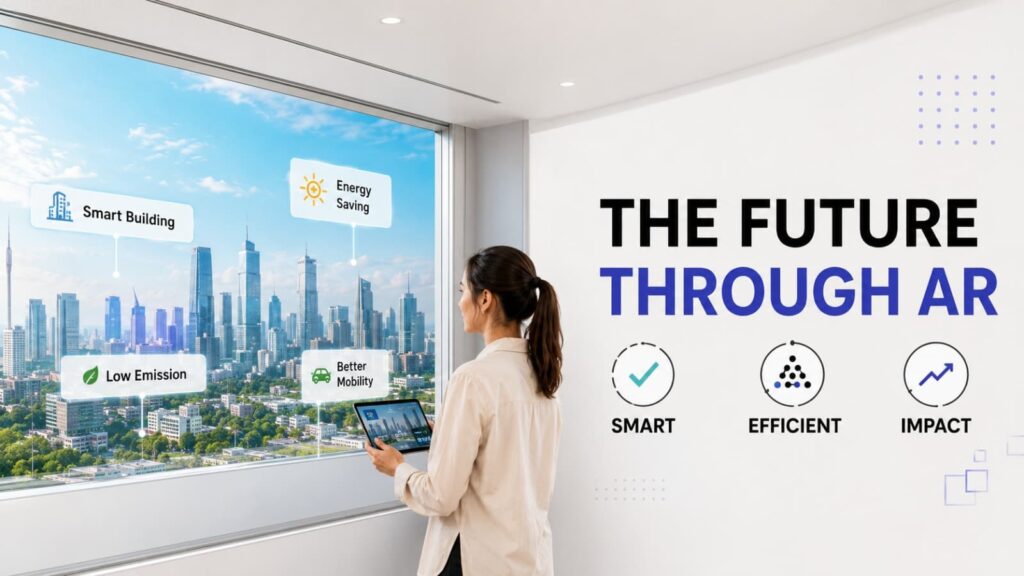
In 2026, augmented reality is powered by faster processors, more accurate computer vision, smarter AI integration, and lighter hardware. It runs seamlessly on smartphones, tablets, smart glasses, and enterprise headsets. It is no longer a feature — it is a platform.
Benefits of Augmented Reality
Understanding the benefits of augmented reality helps explain why so many industries are investing heavily in this technology. Here are the most significant advantages.
Enhanced Learning and Education
Augmented reality in education is one of the most exciting and impactful applications of this technology. Traditional textbooks present information in flat, two-dimensional formats that can be difficult to absorb. Augmented reality in education transforms static content into interactive, three-dimensional experiences.
A biology student can use augmented reality to watch a cell divide in front of them. A history class can walk through an AR reconstruction of ancient Rome. Medical students can practice surgical procedures using augmented reality simulations before ever touching a real patient. Studies consistently show that immersive learning through augmented reality in education improves retention rates, boosts engagement, and helps students with different learning styles grasp complex concepts more effectively.
Augmented reality in education also removes geographic and economic barriers. A student in a rural area can access the same high-quality AR lab simulations as someone in a well-funded urban school. This democratization of learning is one of the most powerful promises of augmented reality in education.
Improved Customer Experience in Retail
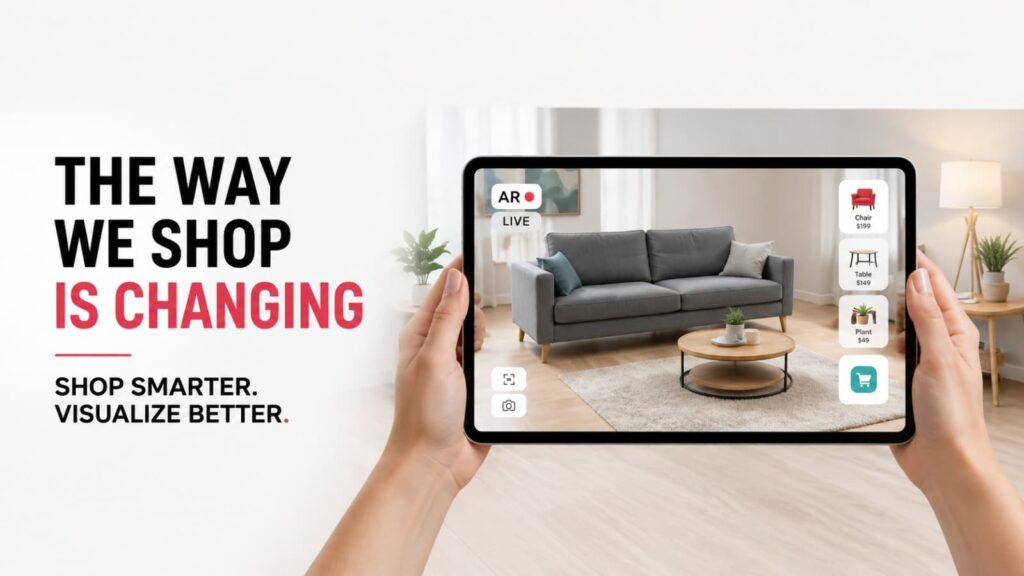
Retailers are using augmented reality to let shoppers try products virtually before buying. IKEA’s AR app lets you place furniture in your room. Sephora allows customers to try on makeup digitally. Nike lets you see how shoes look on your feet through your phone camera. These applications reduce return rates, increase customer confidence, and drive sales.
In 2026, augmented reality shopping experiences have become a standard expectation rather than a premium add-on. Brands that do not offer augmented reality features are increasingly seen as behind the curve.
Streamlined Industrial and Manufacturing Operations
Augmented reality is revolutionizing how technicians and engineers work. By overlaying step-by-step instructions directly onto machinery or components, augmented reality reduces errors, speeds up training, and minimizes downtime. Workers using augmented reality headsets can complete complex assembly tasks with greater accuracy because the guidance appears precisely where they need it — on the actual object in front of them.
Boeing reported a 25 percent reduction in wiring production time after introducing augmented reality into its assembly process. This kind of efficiency gain is why enterprise adoption of augmented reality is accelerating rapidly.
Better Healthcare Outcomes
In medicine, augmented reality is being used for surgical planning, real-time navigation during procedures, and patient education. Surgeons can overlay CT scans onto a patient’s body during an operation to improve precision. Physical therapists use augmented reality exercises to make rehabilitation more engaging and trackable.
Richer Entertainment and Gaming
Gaming was one of the earliest proving grounds for augmented reality, and the space has grown enormously. ARK augmented reality — the technology behind games like ARK: Survival Evolved’s AR companion features — represents how gaming companies are integrating augmented reality to deepen player immersion. ARK augmented reality experiences blend real-world environments with game-world mechanics, creating gameplay loops that feel genuinely novel.
Beyond ARK augmented reality, location-based AR games, AR escape rooms, and mixed-reality concerts are all growing categories that demonstrate the entertainment power of this technology.
Limitations and Challenges of Augmented Reality
No honest discussion of augmented reality is complete without addressing its very real limitations. Despite its promise, augmented reality faces significant hurdles in 2026.
Hardware Constraints
The ideal augmented reality experience requires hardware that is lightweight, affordable, and powerful. In 2026, we are closer than ever, but not quite there. Smart glasses capable of full AR experiences still tend to be either bulky or expensive. Consumer-grade devices like Meta’s glasses and Apple Vision Pro have pushed the industry forward, but widespread adoption of AR hardware remains limited by cost and form factor.
Privacy and Security Concerns
Augmented reality raises serious questions about data privacy. AR devices capture continuous video of your environment. They can identify faces, read documents, and log locations. In workplaces and public spaces, this creates complex legal and ethical challenges. Augmented reality news coverage in 2026 has increasingly focused on regulatory battles around AR privacy, especially in Europe under GDPR frameworks and in the United States where federal AR data legislation is still being debated.
Content Quality and Standardization
The augmented reality ecosystem lacks standardization. Developers work across fragmented platforms — ARKit for Apple, ARCore for Android, WebAR for browsers — and creating consistent, high-quality augmented reality content across all of them is resource-intensive. This fragmentation slows adoption and inflates development costs.
User Fatigue and Adoption Barriers
Not everyone is ready to engage with enhanced reality. Older demographics, users in lower-income markets, and people unfamiliar with smartphone-based interfaces often find enhanced reality experiences confusing or inaccessible. Designing AR for broad audiences without alienating non-technical users is a persistent challenge.
Health and Safety Considerations
Extended use of enhanced reality headsets has raised questions about eye strain, disorientation, and the psychological effects of blending digital and physical realities over long periods. Enhanced reality news outlets have reported growing calls for ergonomic and health guidelines from AR hardware manufacturers.
Top Augmented Reality Tools and Platforms in 2026
The augmented reality landscape is populated by a rich set of tools serving different use cases. Here are the most significant ones to know.
Apple Vision Pro and ARKit
Apple remains one of the most influential players in the enhanced reality space. ARKit, Apple’s enhanced reality development framework, gives developers a powerful toolkit for building AR apps on iOS. The Vision Pro headset has expanded Apple’s AR ambitions into spatial computing. For businesses targeting iOS users, ARKit-based enhanced reality development is often the starting point.
Google ARCore and Android AR
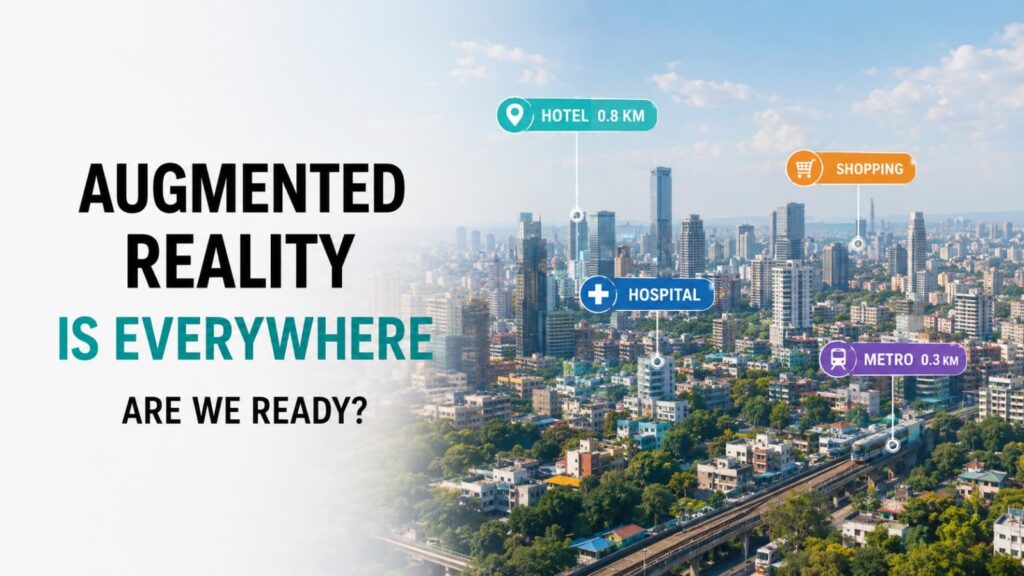
ARCore is Google’s answer to ARKit, enabling enhanced reality development on Android devices. With billions of Android phones in circulation, ARCore-powered enhanced reality apps have enormous reach. Google’s continued investment in ARCore, combined with its integration with Google Maps for AR navigation, makes it a foundational platform in the enhanced reality ecosystem.
Meta Spark and Meta AR Glasses
Meta has built one of the largest enhanced reality content creation platforms through Meta Spark, formerly Spark AR. It powers AR filters and effects across Instagram and Facebook used by millions daily. Meta’s hardware division continues pushing toward lightweight AR glasses that could eventually replace smartphones as primary AR devices.
Microsoft HoloLens and Azure Mixed Reality
For enterprise applications, Microsoft’s HoloLens remains a leading enhanced reality platform. Paired with Azure Mixed Reality services, it enables complex AR workflows in manufacturing, healthcare, and field services. For businesses needing robust, enterprise-grade enhanced reality, Microsoft’s ecosystem is hard to beat.
Niantic Lightship
Niantic, the company behind Pokémon GO, has opened its augmented reality platform Lightship to third-party developers. Lightship offers tools for creating shared, multiplayer enhanced reality experiences grounded in real-world geography. It is particularly relevant for gaming and location-based AR applications, including experiences related to ARK enhanced reality-style gameplay.
Snap AR
Snapchat’s enhanced reality tools have made it one of the most popular consumer-facing AR platforms in the world. Snap Lens Studio allows creators to build enhanced reality lenses viewed billions of times per day. For brands targeting younger audiences, Snap AR is a powerful channel.
Comparing Key Augmented Reality Platforms
When comparing enhanced reality platforms, the right choice depends on your goals, audience, and resources.
ARKit versus ARCore comes down to platform. If your audience is primarily iPhone users, ARKit offers tighter hardware integration and better performance on Apple devices. If you need broader reach, ARCore’s Android coverage is unmatched. For cross-platform enhanced reality, WebAR solutions built on frameworks like 8th Wall allow enhanced reality to run inside any mobile browser without a dedicated app.
For enterprise use, Microsoft HoloLens with Azure Mixed Reality offers the most mature ecosystem for complex workflows. For consumer marketing and social enhanced reality, Meta Spark and Snap AR lead in reach and ease of creation. For location-based and multiplayer AR, Niantic Lightship is the specialist choice.
Key Benefits of Augmented Reality
- Enhanced User Experience – Creates immersive and interactive experiences that engage users more effectively.
- Improved Customer Engagement – Helps businesses attract and retain customers through interactive product demonstrations and virtual try-ons.
- Better Learning and Training – Provides hands-on, visual learning experiences that improve knowledge retention.
- Increased Sales and Conversions – Allows customers to visualize products before purchasing, reducing uncertainty and boosting sales.
- Higher Productivity – Assists employees with real-time information, guidance, and task support in various industries.
- Cost Savings – Reduces training, prototyping, and operational costs by using virtual simulations and digital overlays.
- Enhanced Marketing Campaigns – Enables brands to create memorable and interactive marketing experiences.
- Improved Decision-Making – Displays real-time data and insights, helping users make informed decisions faster.
- Remote Assistance and Collaboration – Supports virtual collaboration and expert guidance from any location.

How to Choose the Right Augmented Reality Tool
Choosing the right augmented reality solution starts with defining your specific use case and audience.
Start by asking: who are your users, and where will they access this enhanced reality experience? If they are on mobile devices, you are likely choosing between ARKit, ARCore, or WebAR. If they are enterprise workers using dedicated devices, Microsoft or custom-built solutions are more appropriate.
Next, consider your budget. Developing native enhanced reality apps is significantly more expensive than using no-code or low-code enhanced reality platforms. For small businesses and educators exploring enhanced reality in education, tools like CoSpaces Edu, Merge EDU, or ZapWorks offer approachable entry points.
Think about content complexity. A simple product visualization for e-commerce needs very different enhanced reality capabilities than a surgical training simulation or a multiplayer ARK augmented surroundings game environment.
Finally, evaluate the platform’s support ecosystem, documentation quality, and community activity. Augmented development is still evolving rapidly, and choosing a well-supported platform protects your investment over time.
Final Verdict: Is Augmented Reality Worth It in 2026?
Yes unambiguously and enthusiastically. Enhanced reality has moved past its experimental phase and is delivering real, measurable value across industries. Whether it is augmented is in education improving student outcomes, AR in retail reducing return rates, or industrial augmented cutting training costs, the ROI on augmented investment is increasingly well-documented.
The challenges are real. Hardware is still maturing, privacy questions remain unresolved, and content quality varies widely. But the trajectory is clear: augmented surroundings is becoming as fundamental to digital experience as the internet itself.
For individuals, learning the basics of enhanced reality now understanding what is enhanced reality, how to use AR tools, and where the technology is headed is a career and business advantage. For organizations, waiting is no longer a neutral choice. Every year you delay augmented adoption is a year your competition gains experience, builds AR muscle, and captures AR-first customers.
Stay current with enhanced reality news, experiment with available tools, and start building your augmented strategy today. The future is already layered on top of the present.
FAQs About Augmented Reality in 2026
What is augmented reality in simple terms?
Augmented reality is technology that adds digital content like images, text, or 3D objects to your view of the real world. Unlike virtual reality, it does not replace your environment. You see the real world plus digital additions through a screen or headset.
How is augmented reality different from virtual reality?
Virtual reality replaces your entire environment with a digital one. Augmented surroundings keeps the real world visible and adds digital elements on top of it. Enhanced reality is generally more practical for everyday use because it does not require full immersion or isolation from your surroundings.
What are the best examples of augmented reality in education?
Enhanced reality in education includes apps like Google Expeditions for virtual field trips, Merge EDU for 3D science simulations, and Anatomage for medical anatomy training. These tools let students interact with content in ways traditional materials cannot support, making augmented surroundings in education one of the most impactful applications of this technology.
What is ARK augmented reality?
ARK enhanced reality refers to augmented surroundings features associated with the ARK gaming franchise and similar location-based AR gameplay environments. ARK augmented Surroundings blends game world mechanics with real-world environments, creating location-aware gaming experiences. The term also appears in broader augmented news when discussing how gaming studios are adopting AR as a core experience layer.
Where can I find reliable augmented reality news?
Reliable enhanced reality news is available through technology publications like The Verge, Wired, Road to VR, and XR Today. Extended reality news from these sources covers hardware launches, platform updates, enterprise deployments, and regulatory developments affecting the extended reality industry.
Is augmented reality safe to use?
Augmented reality is generally safe for typical use. However, extended use of AR headsets can cause eye strain, and using augmented while driving or in unsafe environments creates risk. Privacy is also a concern, as extended reality devices often capture environmental data. Using extended reality responsibly and staying informed through extended reality news about evolving guidelines is recommended.
Will augmented reality replace smartphones?
Many industry analysts believe enhanced reality glasses could eventually replace smartphones as primary personal computing devices, but this transition is likely still many years away. In 2026, smartphones remain the dominant platform for consumer extended reality, though dedicated AR hardware is advancing quickly.
Follows Us on social media

Mohammed Viqar Ali is a Digital Marketer, UI/UX Designer, and content creator passionate about AI, technology, SEO, and digital growth. As the UI/UX Designer of aiblogmind, he focuses on creating user-friendly digital experiences while sharing practical insights on artificial intelligence, marketing trends, productivity tools, and online business growth. Through his content, he helps readers discover innovative solutions, stay updated with emerging technologies, and make informed decisions in the digital world.