



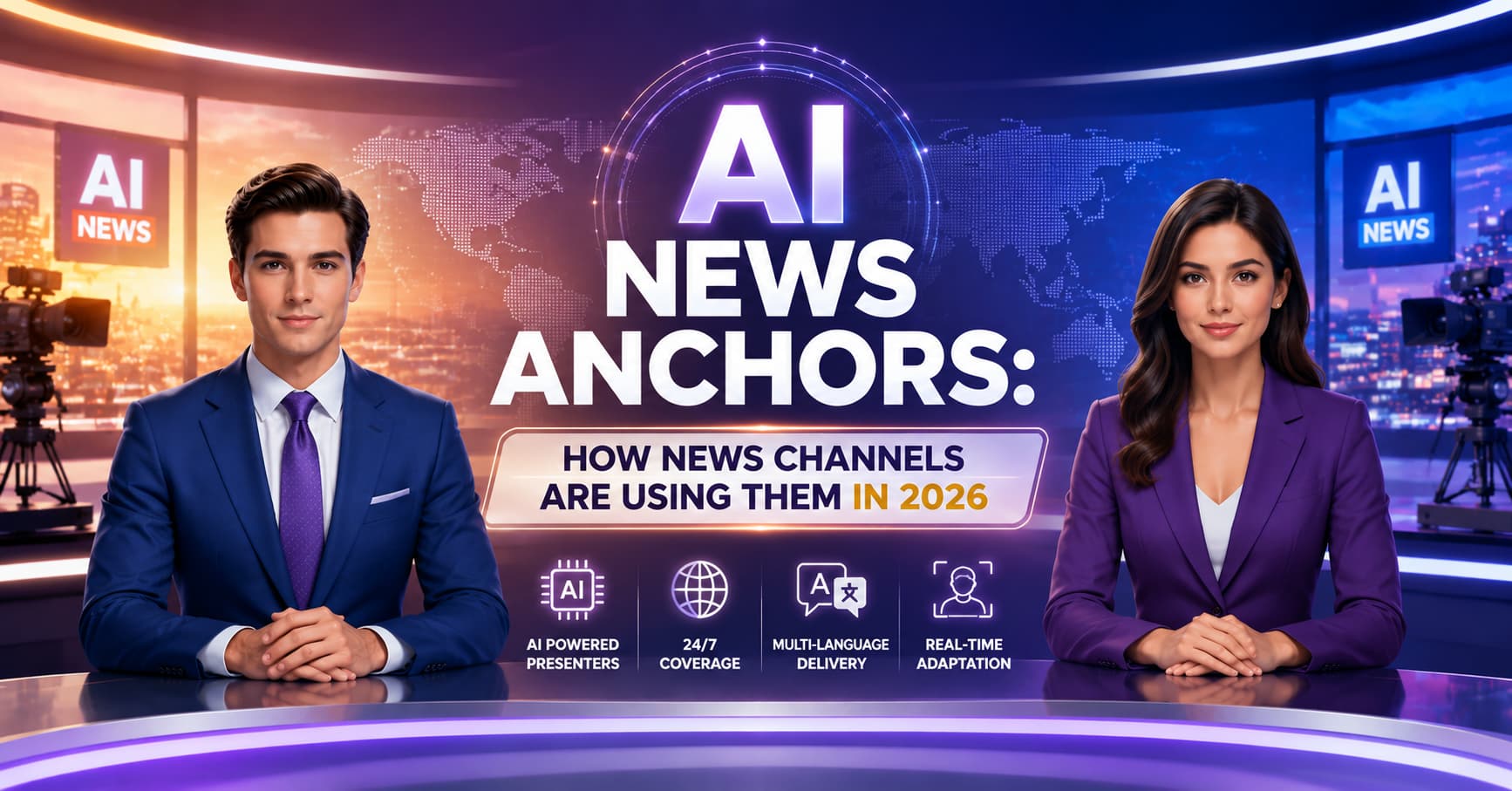
AI News Anchors: How News Channels Are Using Them in 2026
Introduction
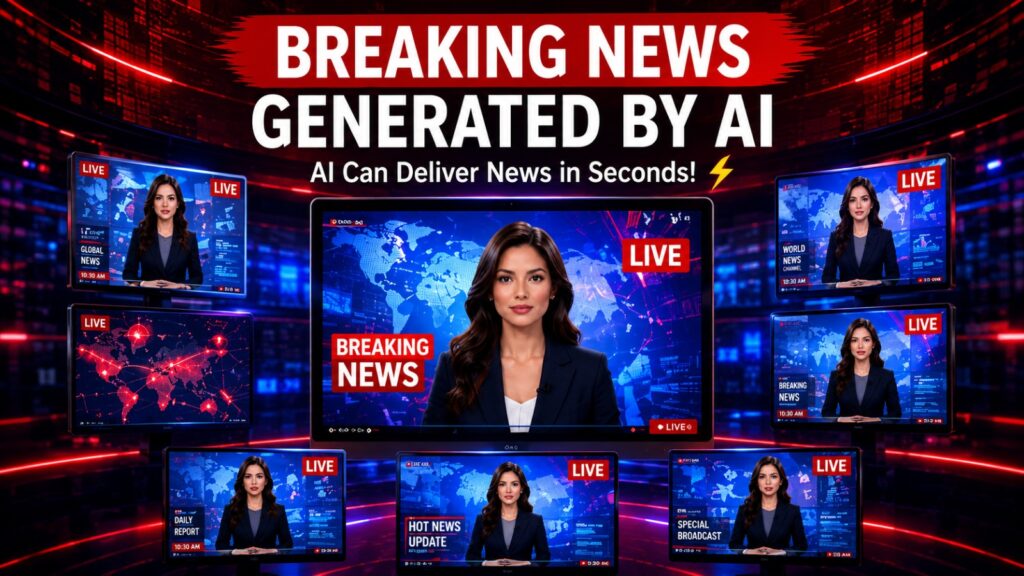
Imagine turning on your television at 3 a.m. and seeing a news anchor deliver breaking news with perfect clarity, zero fatigue, and in five different languages — all at the same time. This is not science fiction anymore. In 2026, AI news anchors are transforming how media organizations deliver information to audiences around the world.
For decades, news broadcasting relied entirely on human presenters. While talented and relatable, human anchors come with real-world limitations: they need sleep, they get sick, they make on-air mistakes, and they cost significant money to hire, train, and retain. News channels — especially 24/7 operations — have always struggled with the challenge of keeping broadcasts consistent, affordable, and scalable.
AI news anchors solve this problem directly. By combining advanced natural language processing, realistic avatar technology, and real-time voice synthesis, AI news anchors can now read the news, deliver updates, and engage audiences with remarkable human-like precision. The solution has arrived, and news organizations across Asia, the Middle East, Europe, and North America are already deploying it at scale.
This article explores how news channels are using AI news anchors in 2026, what benefits and limitations come with this technology, which AI tools are leading the space, and how broadcasters can choose the right solution for their newsroom.
What Are AI News Anchors?
AI news anchors are digitally generated on-screen presenters powered by artificial intelligence. They are designed to look, speak, and behave like human journalists. These virtual news anchors use a combination of deepfake-style avatar rendering, text-to-speech engines, and real-time script feeding to deliver news content without any human physically standing in front of a camera.
AI news anchors first gained global attention in 2018 when Xinhua News Agency in China unveiled one of the first working models. By 2026, the technology has matured dramatically. AI news anchors now express nuanced facial emotions, adjust their tone based on the nature of the story, support multilingual delivery, and can go live within seconds of a script being finalized.
The rise of AI news anchors is part of a broader shift in AI journalism, where newsrooms are using artificial intelligence not just for writing and research, but for full broadcast presentation.
Benefits of AI News Anchors
News organizations that have adopted AI news anchors report a wide range of benefits. Here is a clear breakdown of why this technology is gaining momentum.
1. Round-the-Clock Availability
AI news anchors do not sleep, take breaks, or call in sick. For 24-hour news channels, this is a game-changer. AI broadcasters can deliver live updates at any hour of the day or night without any drop in quality or delivery consistency. This makes AI news anchors particularly valuable for breaking news scenarios where speed is everything.
2. Significant Cost Reduction
Hiring, training, and retaining on-screen talent is expensive. AI news anchors dramatically reduce production costs. Once an AI anchor is created and integrated into the broadcast workflow, the ongoing cost per hour of broadcast is a fraction of what it would cost with a human presenter. Smaller regional news channels, which cannot afford full anchor teams, benefit enormously from this.
3. Multilingual Capabilities
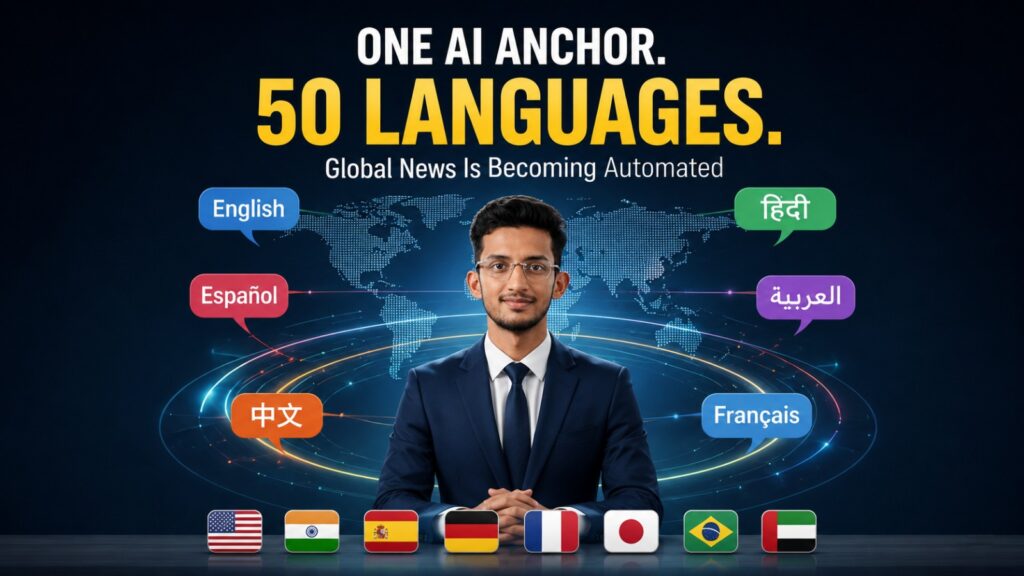
One of the most powerful features of modern AI news anchors is their ability to deliver news in multiple languages without needing separate human anchors for each language. Virtual news anchors can be programmed to switch between languages seamlessly, making it possible for a single broadcast operation to serve diverse linguistic audiences. In markets like India, Southeast Asia, and the Middle East, this capability is transforming local news delivery.
4. Consistency and Accuracy
Human anchors occasionally mispronounce names, lose their train of thought, or deviate from the script. AI news anchors deliver the script exactly as written, every single time. For technical or financial news where precision matters, this reliability is highly valued.
5. Speed to Broadcast
In the age of social media, being first matters. AI news anchors can be fed a script and go live within minutes of a story breaking. Traditional production workflows that require a human anchor to be in a studio, made up, and briefed can take considerably longer. AI broadcasters eliminate that delay entirely.
6. Scalability for Digital Platforms
News channels today are not just on television. They publish across websites, YouTube, mobile apps, and social media. AI news anchors make it easy to produce consistent video content across all these platforms simultaneously, supporting the growing demand for short-form news videos and vertical video formats.
Do checkout our Articles related to your content
Limitations of AI News Anchors
Despite the impressive capabilities of AI news anchors, there are real and important limitations that newsrooms must acknowledge.
1. Lack of Genuine Emotional Intelligence
While AI news anchors have improved significantly in mimicking human expression, they still struggle with authentic emotional delivery. When covering tragedies, human interest stories, or emotionally charged events, a human anchor’s genuine empathy resonates differently with audiences. Virtual news anchors can simulate emotions, but many viewers still detect the artificiality.
2. Ethical and Trust Concerns
The use of AI news anchors raises serious ethical questions about transparency. Should audiences always be informed that they are watching an AI presenter? Many media ethics bodies say yes. Without clear disclosure, AI journalism risks undermining public trust in news broadcasting. Several major broadcasters have faced criticism for not being upfront about their use of AI broadcasters.
3. Dependence on Script Quality
AI news anchors can only be as good as the scripts they are given. They do not improvise, ask spontaneous follow-up questions, or respond to live events with independent judgment. The quality of what they deliver is entirely dependent on the humans writing behind the scenes.
4. Limited Interviewing Capability
Live interviews, press conferences, and panel discussions remain largely beyond the capability of current AI news anchors. While some experimental formats are being tested, AI broadcasters are not yet equipped to hold dynamic, unscripted conversations in a meaningful way.
5. Reputational Risk from Errors
If an AI news anchor delivers incorrect information due to a flawed script or a system error, the broadcaster bears the reputational risk. Unlike a human anchor who might catch a mistake and self-correct on air, AI news anchors will deliver whatever they are given without question.
6. Technical Infrastructure Requirements
Deploying high-quality AI news anchors requires significant investment in rendering infrastructure, integration with content management systems, and ongoing technical maintenance. For small newsrooms, the upfront setup can still be a barrier.
Top AI Tools Used for AI News Anchors in 2026
The market for AI news anchor technology has expanded rapidly. Here are the leading platforms that news organizations are using in 2026 to power their virtual news anchors.
1. Synthesia
Synthesia remains one of the most widely adopted platforms for creating AI news anchors. It offers a large library of photorealistic AI avatars, multilingual text-to-speech, and a straightforward script-to-video workflow. News organizations use Synthesia to produce daily news briefings, social media clips, and regional language editions without additional production staff. Its avatars have become notably more expressive since their 2023 versions, making them far more suitable for mainstream broadcast.
2. HeyGen
HeyGen has become a major player in the AI broadcaster space, particularly for news channels targeting digital-first audiences. The platform allows news organizations to clone the likeness and voice of real anchors (with consent) or use entirely synthetic presenters. HeyGen supports real-time avatar rendering and integrates well with newsroom automation tools, making it a strong choice for channels that want AI news anchors that look and sound like familiar faces.
3. D-ID
D-ID specializes in turning still photographs and written scripts into fully animated AI news anchors. It is widely used by regional and emerging market news channels that want to introduce AI journalism capabilities without building complex production pipelines. D-ID’s technology is also used to create personalized news digest videos for individual users on mobile apps.
4. Hour One
Hour One is a dedicated AI news anchor platform built specifically for media and corporate communications. Its virtual presenters are designed for professional broadcast environments and support teleprompter-style delivery, segment transitions, and brand customization. Several European and Asian news networks use Hour One to power their after-hours and weekend broadcasts with AI broadcasters.
5. Deepbrain AI (Now AI Studios)
Deepbrain AI, now operating as AI Studios, offers some of the most photorealistic AI news anchors in the industry. The platform is used by broadcasters in South Korea, the Middle East, and parts of Latin America. AI Studios supports live news feeds, where the AI anchor reads incoming wire copy in real time — a capability that makes it particularly valuable for fast-moving news environments.
6. NAVER Clova
Primarily used in South Korea and other Asian markets, NAVER Clova powers AI news anchors with strong multilingual capabilities and a focus on natural Korean-language delivery. MBN, a South Korean cable news network, was among the first broadcasters in the world to use an AI news anchor in regular rotation, powered by Clova’s technology.
How AI News Anchors Compare to Human Anchors
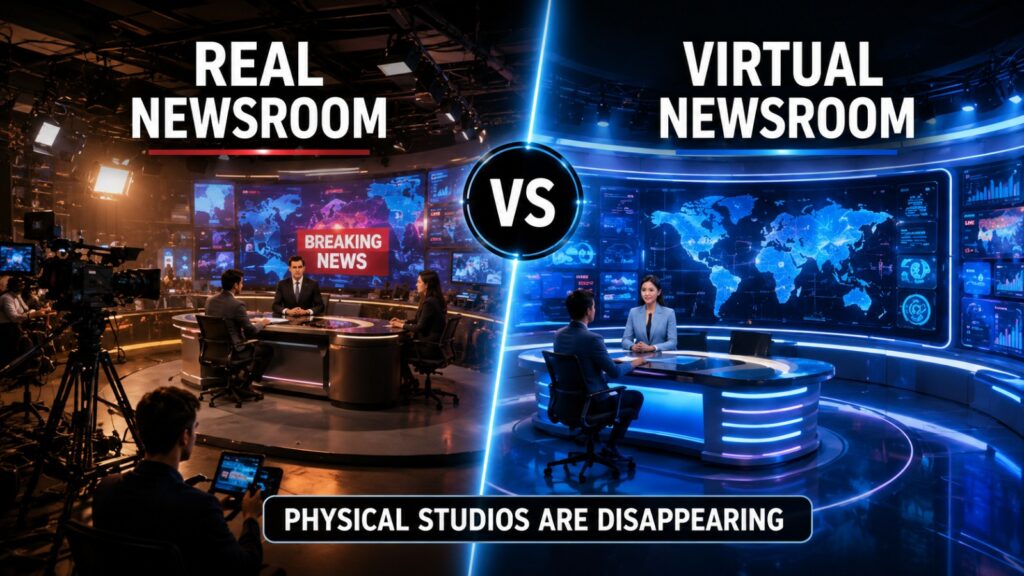
When comparing AI news anchors to their human counterparts, the differences come down to capability, cost, and context.
On pure availability and output volume, AI news anchors win easily. They can produce more content, in more formats, across more languages, at lower cost than any human team. For straightforward news reading — headlines, financial updates, weather summaries, sports scores — AI broadcasters perform at a level that is largely indistinguishable from humans to general audiences.
However, human anchors retain a clear advantage in high-stakes, emotionally significant, and unpredictable broadcast situations. Major breaking news events, political crises, disaster coverage, and in-depth investigative reporting still benefit from a human presence that can adapt, empathize, and respond in real time.
The most forward-thinking news organizations in 2026 are not choosing between AI news anchors and human anchors — they are using both. AI journalists handle the high-volume, routine, and around-the-clock delivery, while human anchors focus on the high-value, complex, and emotionally resonant coverage that audiences trust human faces to deliver.
How to Choose the Right AI News Anchor Tool
If you are a news organization evaluating AI news anchor platforms, here are the key factors to consider.
Define Your Use Case First
Are you looking to automate overnight broadcasts? Produce multilingual editions? Create social media video clips? The right AI news anchor tool depends entirely on what you need it to do. Platforms like Synthesia and HeyGen are well-suited for digital-first content production, while AI Studios and Hour One are built for more traditional broadcast environments.
Evaluate Realism and Emotional Range
Watch sample videos closely. The quality of lip sync, eye movement, facial expression, and voice naturalness varies significantly between platforms. For mainstream broadcast, you need AI news anchors that can pass a casual viewer’s scrutiny without creating discomfort.
Check Language Support
If your audience is multilingual, prioritize platforms with strong support for your target languages. Not all AI broadcaster platforms perform equally across languages — some are built primarily for English and deliver noticeably lower quality in other languages.
Assess Integration Capabilities
Your AI news anchor tool needs to fit into your existing newsroom workflow. Look for platforms that offer API access, integration with content management systems, and support for your video production pipeline.
Consider Disclosure and Ethics Policies
Choose a platform that supports transparent disclosure practices. Your audiences deserve to know when they are watching virtual news anchors. Platforms that provide easy on-screen labeling tools support responsible AI journalism.
Review Pricing and Scalability
Pricing models vary widely. Some platforms charge per minute of rendered video; others offer subscription-based unlimited rendering. Calculate your expected monthly output and compare total costs carefully before committing.
Final Verdict
AI news anchors are no longer an experiment — they are a proven part of the modern newsroom. In 2026, AI news anchors are delivering billions of minutes of news content every month across television, digital, and mobile platforms. They are helping news channels reduce costs, expand reach, increase output, and serve audiences in more languages than ever before.
The technology is not perfect. Questions around emotional authenticity, ethical transparency, and the limits of AI journalism remain real and important. But the direction is clear: AI news anchors are becoming a standard part of how news is made and delivered worldwide.
For news organizations that have not yet adopted virtual news anchors, the question is no longer whether to use them — it is how quickly to start and how thoughtfully to integrate them alongside human talent.
The future of broadcasting is a partnership between human journalists and AI broadcasters. The organizations that get this balance right will be the ones that lead the next era of news media.
Follow us to stay updated.
FAQs
What are AI news anchors?
AI news anchors are artificial intelligence-powered digital presenters that read and deliver news content on-screen. They are created using avatar rendering technology, text-to-speech engines, and AI-driven animation to produce realistic, human-like news presenters without a physical human in front of a camera.
Are AI news anchors replacing human journalists?
Not entirely. AI news anchors are being used to handle routine, high-volume, and round-the-clock news delivery, but human journalists remain essential for investigative reporting, live interviews, and emotionally complex coverage. Most leading news organizations use AI and human anchors together.
Which countries are using AI news anchors the most?
China, South Korea, India, and several Middle Eastern countries have been the earliest and most aggressive adopters of AI news anchors. In 2026, adoption has expanded significantly into Europe, Latin America, and parts of North America.
Is it ethical to use AI news anchors without telling viewers?
Most media ethics organizations say no. Audiences should be clearly informed when they are watching virtual news anchors or AI broadcasters. Transparency is a core principle of trustworthy AI journalism, and responsible news organizations disclose their use of AI presenters.
How much does it cost to create an AI news anchor?
Costs vary widely depending on the platform and the level of customization required. Basic AI news anchor production using platforms like Synthesia or D-ID can start at a few hundred dollars per month. Custom high-realism AI broadcasters built for major television networks can cost significantly more in setup and integration fees.
Can AI news anchors speak multiple languages?
Yes. One of the strongest capabilities of modern AI news anchors is multilingual delivery. Platforms like HeyGen, AI Studios, and NAVER Clova support a wide range of languages, allowing a single virtual news anchor to serve diverse audiences across different regions.
How do AI news anchors get their scripts?
AI news anchors receive scripts from human editors or automated content systems. Some advanced newsrooms use AI writing tools to draft scripts from wire feeds, which are then reviewed by editors and fed directly to the AI news anchor for broadcast.
Will AI news anchors improve in the future?
Absolutely. The technology behind AI news anchors is advancing rapidly. Future developments are expected to include more natural emotional expression, real-time conversational capabilities, and tighter integration with live news data feeds — making AI broadcasters even more capable and indistinguishable from human presenters.

Syed Abubakkar is a content and SEO specialist responsible for article publishing, on-page SEO, keyword optimization, and AI-powered image generation. He is passionate about digital marketing and helping websites grow their online presence.