
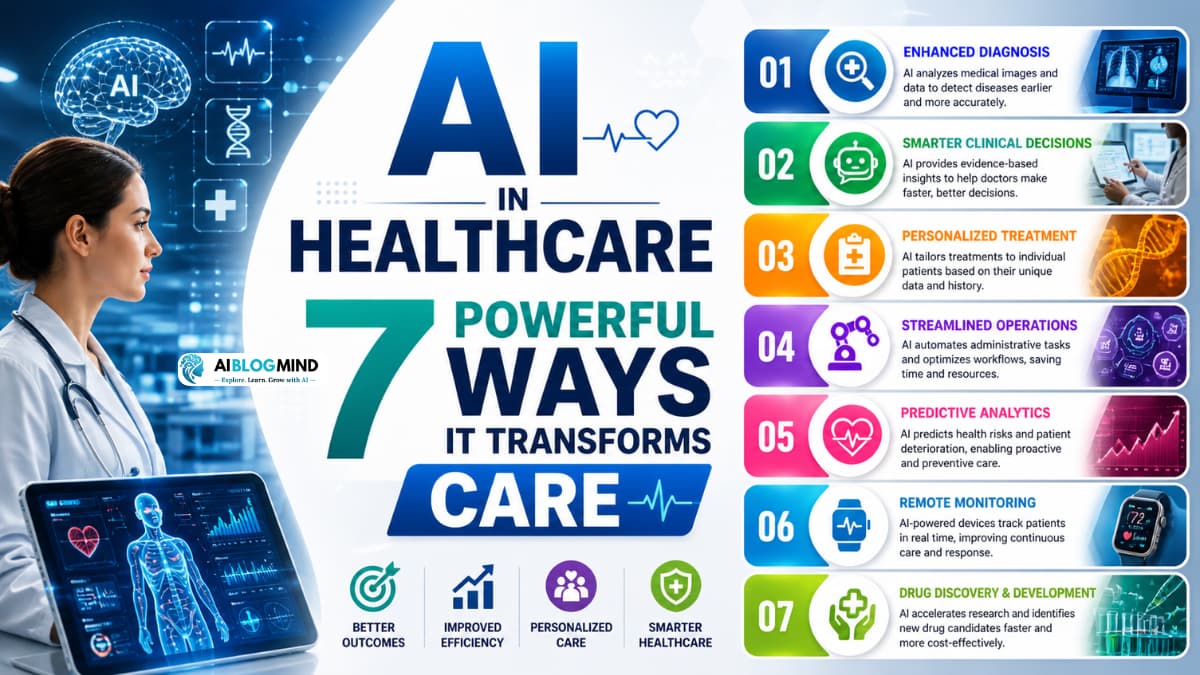
AI in Healthcare: 7 Powerful Ways It Transforms Care
What if your doctor could predict a disease before you even felt a single symptom? What if a machine could read your medical scan in seconds with greater accuracy than a trained specialist?
This is not science fiction. This is AI in healthcare and it is happening right now.
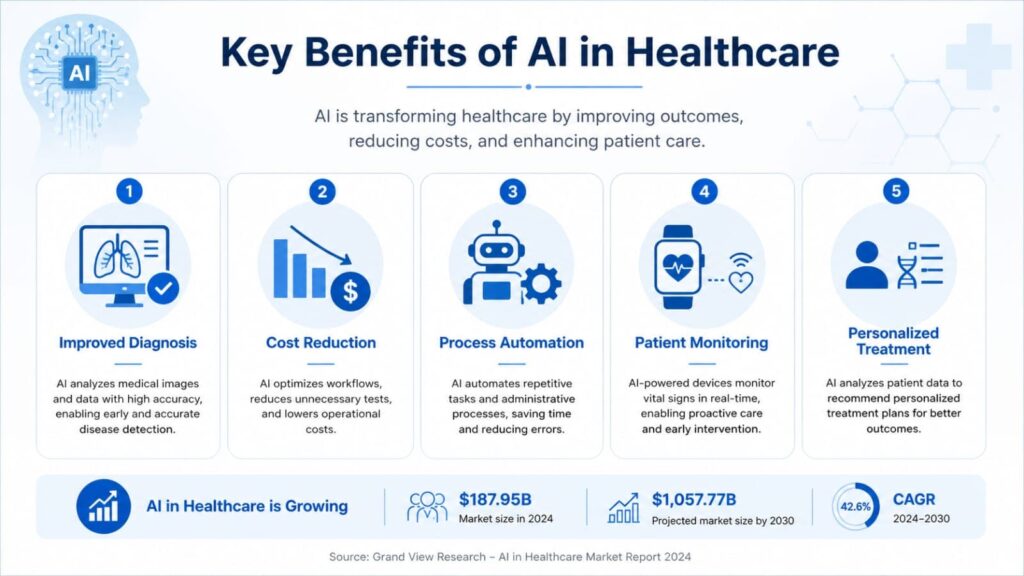
Today, millions of patients around the world are benefiting from smarter, faster, and more personalized medical care, all thanks to artificial intelligence. The global AI in healthcare market was valued at over $22 billion in 2023 and is expected to exceed $187 billion by 2030. That is not just growth that is a revolution.
(This article is for informational purposes only and does not replace professional medical advice.)
The Future of Medicine Is Already Here
Healthcare has always faced enormous challenges: overworked doctors, long wait times, misdiagnoses, rising costs, and unequal access to care. For decades, these problems seemed impossible to solve at scale. But AI in healthcare is changing the equation.
From AI medical diagnosis to mental health AI tools, artificial intelligence is helping healthcare providers work smarter, catch diseases earlier, and give patients a better experience. In this article, we will explore exactly how AI in healthcare is transforming the way we receive and deliver care and why it matters for every single one of us.
Key Benefits of AI in Healthcare
Before diving into the specific ways AI is making an impact, let us look at the big picture. Why is AI in healthcare such a game-changer?
Faster and More Accurate Diagnosis
AI can analyse thousands of data points in seconds. When it comes to reading X-rays, MRI scans, or blood test results, AI healthcare tools are often faster and in many cases more accurate than human clinicians. This means patients get answers faster and treatment starts sooner.
Improved Patient Outcomes
AI in healthcare allows doctors to make more informed decisions. When a physician has access to predictive data, personalized treatment recommendations, and real-time monitoring, patients simply get better care.
Automation of Repetitive Tasks
Doctors and nurses spend enormous amounts of time on administrative work scheduling, billing, documentation. AI healthcare tools can automate these repetitive tasks, freeing up medical professionals to spend more time with patients.
Cost Reduction
AI in healthcare can reduce unnecessary tests, hospital readmissions, and treatment errors. This saves money for both patients and healthcare systems.
Key benefits at a glance:
- Earlier and more accurate disease detection
- Personalized treatment plans based on patient data
- Reduced administrative burden for healthcare staff
- Lower costs through efficiency and error reduction
- Improved access to care for remote or underserved populations
- Better patient monitoring through wearables and sensors
- Faster drug discovery and clinical research
Limitations of AI in Healthcare
No technology is perfect, and AI in healthcare comes with real challenges that deserve honest discussion.
Data Privacy and Security Concerns
AI systems rely on massive amounts of patient data. Protecting that data from breaches, misuse, or unauthorized access is a serious and ongoing challenge. Regulations like HIPAA in the United States and GDPR in Europe aim to address this, but risks remain.
High Implementation Costs
Deploying AI healthcare tools requires significant investment in technology, infrastructure, and staff training. Smaller clinics or hospitals in developing countries may struggle to afford these systems.
Dependence on Technology
When AI systems fail due to a software bug, a power outage, or poor data quality the consequences in a medical setting can be severe. Over-reliance on AI without proper human oversight is a real risk.
Lack of Emotional Intelligence
AI in healthcare can process data, but it cannot replace the empathy, intuition, and human connection that are central to good medical care. Patients need doctors, not just algorithms.
Understanding these limitations does not diminish the promise of AI in healthcare it simply reminds us that responsible implementation is key.
Top 7 Powerful Ways AI in Healthcare Transforms Care
Now, let us get into the heart of this article. Here are the seven most impactful ways AI in healthcare is changing medicine today.
1. AI Medical Diagnosis: Catching Disease Before It’s Too Late
One of the most powerful applications of AI in healthcare is in the area of diagnosis. AI medical diagnosis refers to the use of machine learning algorithms to detect diseases from medical images, lab results, patient history, and other clinical data.
AI medical diagnosis tools have shown remarkable results in detecting conditions like:
- Cancer: Google’s DeepMind developed an AI system that can detect breast cancer from mammograms with greater accuracy than human radiologists, reducing both false positives and false negatives.
- Diabetic Retinopathy: The FDA-approved IDx-DR system uses AI medical diagnosis to screen for eye damage caused by diabetes without requiring a specialist to be present.
- Heart Disease: AI systems can analyse electrocardiograms (ECGs) to detect irregular heart rhythms that might take a human doctor much longer to identify.
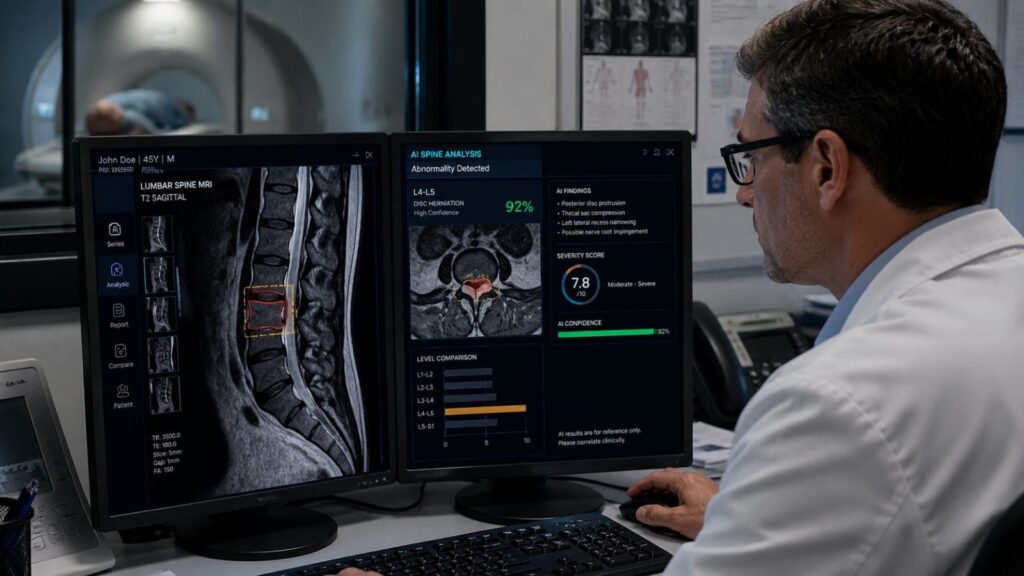
AI medical diagnosis is not replacing doctors it is giving them a powerful second opinion. Think of it as having the world’s most experienced specialist looking over every single scan, every single time.
AI in healthcare, through better diagnosis, is directly saving lives. That is not an exaggeration it is a documented fact.
2. Personalized Treatment Plans: Medicine Made for You
Every patient is different. Two people with the same diagnosis can respond very differently to the same treatment. Traditional healthcare often relies on a “one-size-fits-all” approach that does not always serve patients well.
AI in healthcare is enabling something called precision medicine treatment plans that are tailored specifically to a patient’s genetic makeup, lifestyle, medical history, and even real-time health data.
For example, IBM Watson for Oncology analyses a cancer patient’s records and cross-references them with thousands of research papers to suggest individualized treatment options. Oncologists can then use these AI-generated recommendations to choose the most effective therapy for each specific patient.
In pharmacogenomics the study of how genes affect drug response AI in healthcare helps predict which medications will work best for a given patient and which might cause harmful side effects.
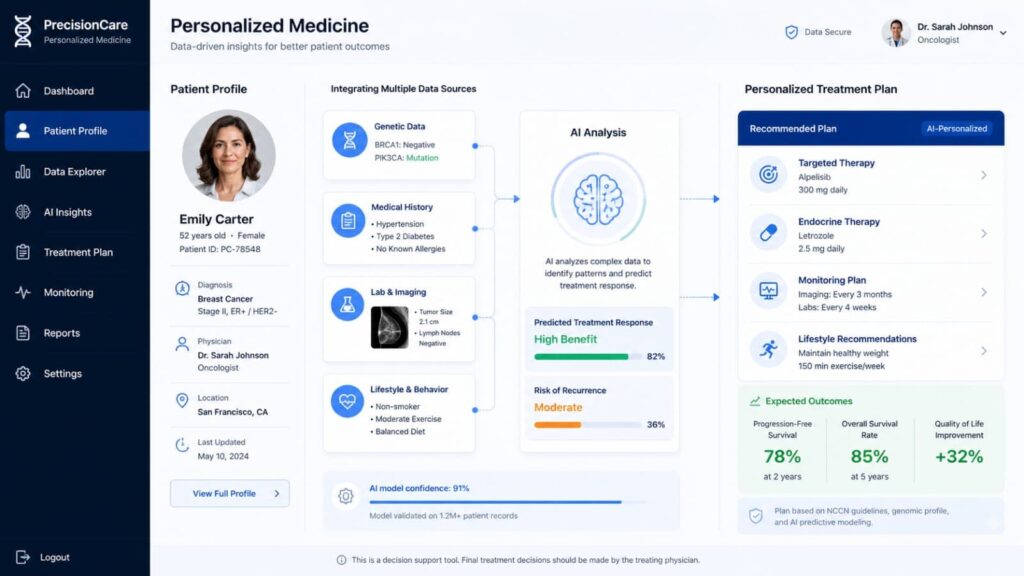
Personalized treatment powered by AI in healthcare means less trial and error, fewer side effects, and better outcomes. It is medicine that truly puts the patient first.
3. AI Healthcare Tools for Doctors: Working Smarter, Not Harder
Physicians are under enormous pressure. Long hours, mountains of paperwork, and constant decision-making lead to burnout. AI healthcare tools are designed to ease this burden and help doctors do their jobs more effectively.
Here are some of the most impactful AI healthcare tools in use today:
- Clinical Decision Support Systems (CDSS): These AI healthcare tools analyse patient data in real time and alert doctors to potential risks, drug interactions, or missed diagnoses.
- Natural Language Processing (NLP) Tools: AI healthcare tools like Nuance Dragon Ambient experience (DAX) listen to doctor-patient conversations and automatically generate clinical notes saving hours of documentation time.
- Radiology AI: AI healthcare tools like Aidoc and Zebra Medical Vision help radiologists analyse medical images faster, flagging urgent findings so critical cases are never missed.
- Surgical Planning AI: AI healthcare tools help surgeons plan complex procedures by creating 3D models from patient scans, improving precision and reducing risk.
By integrating AI healthcare tools into daily workflows, hospitals have reported significant reductions in documentation time, diagnostic errors, and overall costs. Doctors who use AI healthcare tools can see more patients, make better decisions, and experience less burnout.
AI in healthcare is not just for patients it is a lifeline for the healthcare workforce too.
4. Predictive Analytics: Knowing What Will Happen Before It Does
What if hospitals could predict which patients are likely to deteriorate before it happens? What if a health system could identify communities at high risk of a disease outbreak weeks in advance?
This is the power of predictive analytics in AI in healthcare.
Predictive AI systems use patient data vital signs, lab results, medication history, demographics and identify patterns that indicate future health events. This allows healthcare providers to intervene early, before a condition becomes critical.
Real-world example: Sepsis is a life-threatening infection that kills hundreds of thousands of patients every year, partly because it is so difficult to detect early. Johns Hopkins Hospital developed an AI system called Targeted Real-time Early Warning Score (TREWS) that monitors patient data continuously and alerts clinicians hours before sepsis fully develops. Studies showed that early detection through this AI in healthcare tool significantly improved patient survival rates.
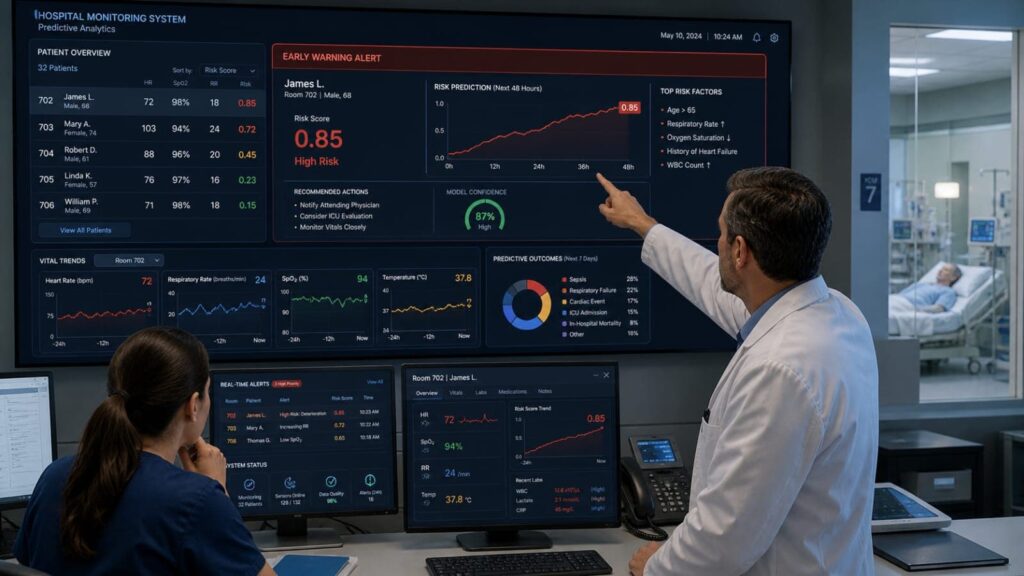
Predictive analytics through AI in healthcare is also being used to:
- Predict hospital readmissions so at-risk patients receive follow-up care
- Identify patients likely to develop chronic conditions like diabetes or heart disease
- Optimize hospital resource planning, including staff scheduling and bed management
AI in healthcare, when applied to predictive analytics, shifts medicine from being reactive to truly preventive.
5. Robotic Surgeries: Precision That Human Hands Alone Cannot Match
Surgery requires extraordinary precision. Even the most skilled surgeon’s hands can tremble. Fatigue sets in. The human eye has limits.
AI-powered robotic surgery systems are addressing these limitations and bringing a new level of precision to the operating room.
The da Vinci Surgical System is the most well-known example of AI in healthcare applied to surgery. It allows surgeons to perform minimally invasive procedures with robotic arms that can move with sub-millimetre precision, translate the surgeon’s hand movements into smaller, more exact motions, and filter out any natural tremors.
AI in healthcare has made robotic surgery safer and more effective. Studies have shown that patients who undergo robotic surgery often experience less pain, shorter hospital stays, lower infection rates, and faster recovery compared to traditional open surgery.
Beyond the operating room, AI in healthcare is enabling autonomous or semi-autonomous robots for tasks like:
- Delivering medications within hospitals
- Disinfecting patient rooms using UV light
- Assisting with physical rehabilitation through robotic exoskeletons
As AI in healthcare continues to evolve, robotic systems will become even more sophisticated potentially one day performing complex procedures in remote locations where human surgeons are unavailable.
6. Virtual Assistants and Chatbots: Healthcare Available 24/7
When you have a health concern at 2 AM, you cannot always call your doctor. But you can talk to an AI.
Virtual health assistants and chatbots are one of the fastest-growing applications of AI in healthcare. These tools provide patients with instant access to medical information, symptom checking, appointment scheduling, medication reminders, and more anytime, anywhere.
Babylon Health, used by millions of patients in the UK and other countries, is an AI-powered app that lets users describe their symptoms and receive instant health guidance. The app uses AI in healthcare to assess risk, provide advice, and connect users with real doctors when needed.
Ada Health is another popular AI in healthcare chatbot that walks users through a series of questions about their symptoms and generates a personalized health assessment. It has been used over 22 million times in more than 130 countries.
AI in healthcare chatbots are also being deployed within hospitals to:
- Answer frequently asked questions from patients
- Help patients navigate complex insurance and billing processes
- Follow up with patients after discharge to monitor recovery
- Triage patients in emergency departments, reducing wait times
Virtual assistants powered by AI in healthcare are not replacing doctors. They are filling the gaps giving patients a knowledgeable, always-available first point of contact and ensuring people get the right care at the right time.
7. Mental Health AI Tools: Breaking Barriers to Mental Wellness
Mental health is one of the most underfunded and underserved areas of healthcare globally. Hundreds of millions of people suffer from depression, anxiety, PTSD, and other conditions — yet most never receive the care they need, due to stigma, cost, or lack of access.
Mental health AI tools are helping to change this.
Woebot is one of the most well-known mental health AI tools. It is a chatbot that uses principles from Cognitive Behavioural Therapy (CBT) to help users manage anxiety, depression, and stress through daily conversations. Unlike a human therapist, mental health AI tools like Woebot are available 24/7, completely private, and free or low-cost. Clinical studies published in peer-reviewed journals have found that regular use of Woebot reduces symptoms of depression and anxiety.
Wysa is another mental health AI tool that uses AI-driven conversations combined with evidence-based therapeutic techniques to support emotional wellbeing. It is now used by employees at major corporations as part of mental health benefits programs.
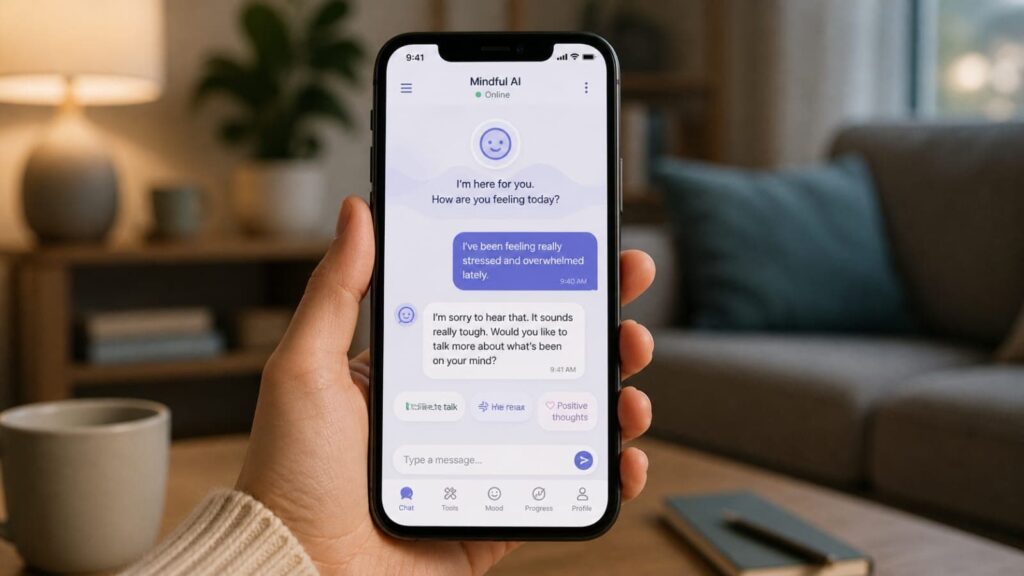
Mental health AI tools are also helping clinicians:
- Detect early signs of depression or suicidal ideation through analysis of speech patterns or written text
- Monitor patient progress between therapy sessions
- Personalize therapy plans based on individual response data
Mental health AI tools are not a replacement for professional therapy they are a bridge, helping people access support when a human therapist is unavailable, and encouraging those who need more intensive care to take that step.
AI in healthcare, through mental health AI tools, is making mental wellness accessible to people who were previously left behind.
Traditional Healthcare vs. AI-Driven Healthcare: A Clear Comparison
| Factor | Traditional Healthcare | AI-Driven Healthcare |
|---|---|---|
| Diagnosis Speed | Hours to days | Minutes to seconds |
| Accuracy | Dependent on individual clinician experience | Consistently high, data-driven |
| Personalization | General treatment protocols | Individualized, precision medicine |
| Availability | Office hours only | 24/7 via AI tools and chatbots |
| Cost | Often high, driven by labour | Potentially lower through efficiency |
| Error Rate | Human error possible | Reduced, but not eliminated |
| Mental Health Access | Limited by geography and stigma | Broader access through mental health AI tools |
| Preventive Care | Largely reactive | Proactive through predictive analytics |
| Surgical Precision | Dependent on surgeon skill | Enhanced by robotic systems |
| Administrative Burden | High | Reduced through automation |
The table above makes one thing clear: AI in healthcare does not simply improve medicine it fundamentally reimagines what is possible.
Final Verdict: AI in Healthcare Is Not the Future It Is the Present
AI in healthcare is no longer a distant promise. It is here, it is real, and it is already saving lives.
From AI medical diagnosis that detects cancer earlier than ever before, to mental health AI tools that support millions of people who would otherwise go without care, to AI healthcare tools that empower doctors to make better decisions the impact is profound and growing.
Yes, there are challenges. Data privacy must be protected. Implementation costs must be managed. Human oversight must remain central to every clinical decision. AI in healthcare works best not as a replacement for human care, but as a powerful partner to it.
The goal of AI in healthcare is not to remove the human touch from medicine. It is to give healthcare providers better tools, better data, and better insights so that every patient, everywhere in the world, gets the best possible care.
We are at a turning point. The healthcare systems that embrace AI in healthcare today will be the ones that lead tomorrow. And ultimately, it is patients who will benefit the most.
AI in healthcare is not just a technological shift. It is a humanitarian one.
FAQs About AI in Healthcare
What is AI in healthcare?
AI in healthcare refers to the use of artificial intelligence technologies including machine learning, natural language processing, and computer vision to improve how healthcare is delivered, diagnosed, managed, and researched. AI in healthcare helps doctors, hospitals, and patients make better decisions, faster.
How does AI help in medical diagnosis?
AI medical diagnosis tools analyse medical data such as images, lab results, and patient records to identify patterns associated with diseases. These tools can detect conditions like cancer, heart disease, and diabetic retinopathy with high accuracy, often faster than human clinicians and sometimes before visible symptoms appear.
Are AI healthcare tools safe to use?
Most AI healthcare tools that are currently in clinical use have been rigorously tested and, in many cases, approved by regulatory bodies like the FDA. However, AI healthcare tools work best when used alongside not instead of trained medical professionals. Like any tool, their safety depends on how responsibly they are implemented and monitored.
Can AI replace doctors?
No. AI in healthcare is designed to assist doctors, not replace them. Physicians bring empathy, ethical judgment, and holistic understanding that AI cannot replicate. AI healthcare tools handle data-heavy, repetitive tasks so that doctors can focus on the human aspects of care. The most effective model is human-AI collaboration.
What are mental health AI tools?
Mental health AI tools are AI-powered applications that provide emotional support, mental health assessments, and therapeutic guidance to users. Examples include Woebot and Wysa, which use Cognitive Behavioural Therapy principles to help users manage anxiety, depression, and stress. Mental health AI tools increase access to support for people who face barriers to traditional therapy.
Is patient data safe when AI in healthcare is used?
Data privacy is one of the most important concerns in AI in healthcare. Reputable AI healthcare tools comply with strict regulations such as HIPAA (in the US) and GDPR (in Europe) to protect patient information. However, risks do exist, and healthcare organizations must prioritize cybersecurity and transparent data practices.
How does AI in healthcare reduce costs?
AI in healthcare reduces costs by automating administrative tasks, minimizing diagnostic errors, predicting and preventing hospital readmissions, optimizing resource allocation, and enabling earlier treatment of conditions before they become expensive emergencies. Over time, AI healthcare tools help healthcare systems do more with less without sacrificing quality of care.
“This article is intended for general informational purposes only and should not be considered medical advice. Always consult a qualified healthcare professional for diagnosis, treatment, or any medical concerns.”

Hi, I’m Rufqha, the SEO Manager at AIBlogMind. I focus on building content strategies that help websites improve visibility, attract the right audience, and create sustainable organic growth. My expertise includes on-page SEO, keyword research, content optimization, and aligning SEO with user experience and business goals.